

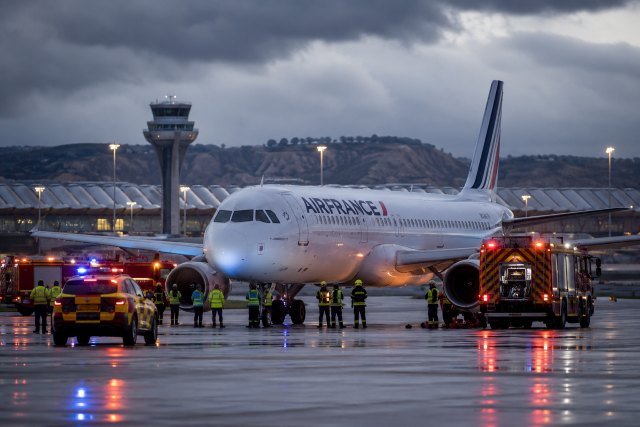
The Air France Flight Emergency Madrid Diversion has drawn attention because emergency landings, even when handled safely, remind passengers how quickly a normal journey can become a serious aviation event. According to aviation reporting outlet AIRLIVE, Air France flight AF1896 from Paris Charles de Gaulle to Casablanca declared a general emergency while cruising over Spain and diverted to Adolfo Suárez Madrid–Barajas Airport. The report stated that the Airbus A320, registration F-GKXC, landed safely on runway 18R and later went to stand.
- What Happened in the Air France Flight Emergency Madrid Diversion?
- Why Madrid Was a Logical Diversion Airport
- Air France Flight Emergency Madrid Diversion and Aviation Safety
- What Passengers May Experience During an Emergency Diversion
- Passenger Rights After a Diversion
- What Air France Should Do After a Diversion
- Why Transparent Communication Builds Trust
- What Travelers Should Do During and After a Flight Diversion
- Broader Lessons for Aviation
- Common Questions About the Air France Flight Emergency Madrid Diversion
- Conclusion
For passengers, a diversion is not just a delay. It creates fear, missed connections, uncertainty, and questions about what happened inside the aircraft. For airlines, it becomes a test of crew training, aircraft maintenance, crisis communication, and post-incident passenger care.
This is why the phrase “demands action” matters. The action is not panic. It is not blame before facts are confirmed. It is a call for clear investigation, transparent communication, better passenger support, and continued investment in aviation safety systems.
What Happened in the Air France Flight Emergency Madrid Diversion?
The reported incident involved Air France flight AF1896, operating from Paris Charles de Gaulle to Casablanca. While the aircraft was cruising at around 35,000 feet, the crew reportedly declared a general emergency, also known in aviation tracking as squawk 7700, and diverted to Madrid. AIRLIVE later updated that the aircraft touched down and was on stand, with the airline reportedly planning a short stopover.
A squawk 7700 does not automatically mean a crash is likely. It means the crew has declared an emergency situation and needs priority handling from air traffic control. In many cases, this can involve technical warnings, medical emergencies, smoke indications, pressurization concerns, engine issues, or other safety-related reasons. The exact cause should only be treated as confirmed when the airline, airport authority, or safety investigator releases verified details.
That distinction is important for responsible reporting. Many online posts quickly use dramatic language after aviation emergencies, but the safer and more accurate approach is to say what is known, what is reported, and what remains unconfirmed.
Why Madrid Was a Logical Diversion Airport
Madrid-Barajas is one of Europe’s major airports, with long runways, emergency response capability, technical support, and international passenger handling facilities. When a crew diverts, the choice of airport depends on aircraft condition, weather, runway length, available emergency services, air traffic control coordination, and proximity.
In an emergency, the goal is not to reach the original destination at all costs. The goal is to land at the safest practical airport. If the aircraft is already over Spain, Madrid can become a sensible option because it has the infrastructure to receive commercial aircraft and support passengers after landing.
This is where modern aviation safety shows its strength. Diversions are inconvenient, but they are also evidence that crews are trained to make conservative decisions before a situation becomes worse.
Air France Flight Emergency Madrid Diversion and Aviation Safety
The Air France Flight Emergency Madrid Diversion should be viewed through the lens of aviation safety management, not just passenger fear. The International Civil Aviation Organization says safety management standards are designed to help states manage aviation safety risks in coordination with aviation service providers.
That means airlines, regulators, airports, and air navigation services all play a role. A safe outcome is rarely the result of one person making one good decision. It is the result of systems working together: cockpit procedures, aircraft alerts, crew training, air traffic control priority handling, airport emergency readiness, and post-flight maintenance checks.
The European Union Aviation Safety Agency also emphasizes that relevant civil aviation occurrences should be reported, collected, protected, exchanged, analyzed, and followed by appropriate safety action. This is why every serious diversion should lead to documentation and review, even if the aircraft lands safely.
Aviation improves because incidents are studied. A safe landing does not mean “nothing happened.” It means the safety chain worked, and now the industry must understand why the chain was needed.
What Passengers May Experience During an Emergency Diversion
For passengers, the most frightening part of an emergency diversion is uncertainty. They may notice a change in altitude, a turn away from the planned route, crew movement in the cabin, announcements from the cockpit, or emergency vehicles waiting near the runway.
Even when everything is under control, passengers may feel anxious because they do not have the same information as the crew. This is why communication matters so much. A short, calm, accurate announcement can reduce panic and help passengers follow instructions.
Airlines should avoid vague messaging after landing. Passengers need to know whether they will continue on the same aircraft, transfer to another flight, receive hotel accommodation, get meal vouchers, or rebook connections.
Passenger Rights After a Diversion
Passenger rights depend on the route, delay length, cause of disruption, and applicable law. Air France states that its compensation scheme is based on EU Regulation 261/2004 for eligible cases, while other rules may apply when flights depart outside the EU and arrive in an EU country.
The EU’s official passenger rights guidance says passengers may be entitled to care such as meals, refreshments, and accommodation when delays meet certain conditions. It also explains that compensation may apply when passengers arrive at their final destination with a delay of three hours or more, unless extraordinary circumstances apply.
This does not mean every emergency diversion automatically qualifies for cash compensation. Safety-related events can be complex, and some may fall under extraordinary circumstances. However, passengers should still document everything. Keep boarding passes, emails, app notifications, meal receipts, hotel receipts, and written explanations from the airline.
What Air France Should Do After a Diversion
After an emergency diversion, the airline’s responsibility does not end when the aircraft reaches the gate. Passengers need clarity. Crew members need support. Maintenance teams need full access to aircraft data. Regulators may need reports depending on the nature of the event.
Air France already provides an official flight status tool where passengers can check real-time updates about flights. In a disruption, passengers should also monitor the airline app, airport screens, SMS alerts, and email updates.
The airline should explain the next travel steps in plain language. Passengers do not need technical speculation. They need practical answers: what happened generally, whether the aircraft will continue, when the next departure is expected, and what support is available.
Why Transparent Communication Builds Trust
The biggest damage after a diversion is not always the delay. Often, it is the feeling that passengers were left confused. When people are frightened, silence can make the situation feel worse.
A strong airline response should include timely updates, consistent information across airport staff and digital channels, visible ground support, and a clear claim process. If the aircraft needs inspection, passengers should be told that safety checks are underway rather than being given uncertain departure times that keep changing.
Transparency does not require revealing sensitive technical details before investigation. It means respecting passengers enough to explain the process.
What Travelers Should Do During and After a Flight Diversion
During a diversion, passengers should stay seated, listen carefully to crew instructions, keep seat belts fastened when required, and avoid blocking aisles. Recording videos or rushing for overhead bags can slow down emergency procedures and create risk for others.
After landing, passengers should check the official airline app or website, save disruption notices, ask airline staff for written confirmation if a delay affects onward travel, and keep receipts for reasonable expenses. The official Air France flight status page can be useful for checking live updates, while the Air France passenger rights page explains assistance and compensation information. See Air France flight status and Air France passenger rights.
Passengers should also avoid relying only on viral posts. Social media can be useful for awareness, but official airline notices, airport updates, and regulator-backed passenger rights pages are more reliable for claims and travel decisions.
Broader Lessons for Aviation
The Air France Flight Emergency Madrid Diversion is a reminder that safety culture must remain stronger than schedule pressure. Airlines operate complex networks where delays are expensive, but safety decisions must always come first.
A diversion may frustrate passengers, but it can also show that pilots and air traffic control made a conservative decision. In commercial aviation, conservative decisions save lives. The real question after such an event is not simply, “Why was the flight delayed?” The better question is, “What did the airline learn, and how will it improve communication, maintenance review, and passenger support?”
EASA’s occurrence reporting framework supports this idea by focusing on collecting and analyzing aviation occurrences so that appropriate safety action can be taken.
Common Questions About the Air France Flight Emergency Madrid Diversion
What does an emergency diversion mean?
An emergency diversion means the crew decided not to continue to the planned destination and instead landed at another airport for safety reasons. The reason may be technical, medical, weather-related, operational, or security-related.
Was the Air France Madrid diversion dangerous?
The reported Air France AF1896 diversion ended with the aircraft landing safely in Madrid, according to AIRLIVE. However, the exact seriousness depends on the confirmed cause, which should come from official airline or aviation safety sources.
Can passengers claim compensation after a diversion?
They may be eligible for care, rerouting, reimbursement, or compensation depending on the delay, route, and cause. EU guidance says compensation can apply when arrival at the final destination is delayed by three hours or more, unless extraordinary circumstances caused the delay.
Where should passengers check official updates?
Passengers should use the Air France app, airport information screens, email or SMS alerts, and the official Air France flight status page.
Conclusion
The Air France Flight Emergency Madrid Diversion shows why aviation safety depends on preparation, calm decisions, and strong communication. A diversion is disruptive, but it is also one of the tools that keeps passengers safe when something needs attention before continuing the journey.
The key action now is not speculation. It is careful reporting, proper safety review, transparent passenger communication, and fair support for affected travelers. When airlines handle diversions with honesty and urgency, passengers may still be delayed, but they are less likely to feel abandoned.
For travelers, the lesson is simple: stay calm during the event, follow crew instructions, save all travel documents, check official updates, and understand your passenger rights before filing a claim.