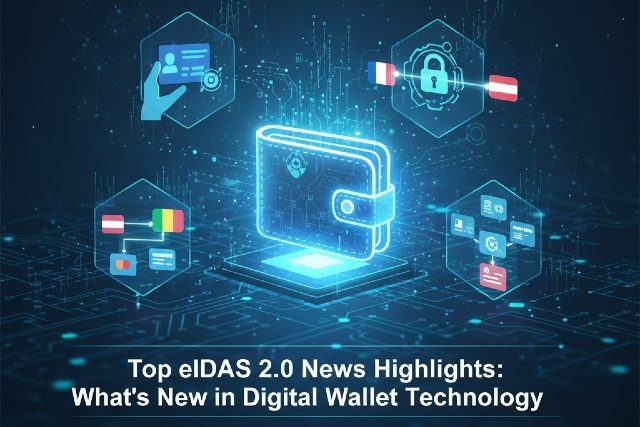
The acceleration of digital identity transformation across the European Union has made eIDAS 2.0 news a central topic for businesses, governments, and technology providers. As the revised regulation moves closer to practical rollout, organizations are adapting their digital strategies to align with new standards for identity verification, electronic signatures, and cross-border trust services. Within the first 100 words, it has become increasingly clear that the new European Digital Identity Wallet (EUDI Wallet) will redefine how individuals authenticate online, access public services, and manage personal data securely.
- What Is eIDAS 2.0 and Why It Matters Right Now
- eIDAS 2.0 News Update: The European Digital Identity Wallet Takes Center Stage
- How the EUDI Wallet Works: A Simple Explanation
- What’s New: Key Technological Enhancements Under eIDAS 2.0
- How Businesses Should Prepare for eIDAS 2.0
- Industry Use Cases: Where eIDAS 2.0 Will Have the Biggest Impact
- Latest eIDAS 2.0 News: Regulatory Updates to Watch
- Frequently Asked Questions (FAQ)
- Conclusion: Why Staying Updated on eIDAS 2.0 News Matters
This article explores the most important updates, industry insights, and technology innovations shaping the new era of eIDAS 2.0, offering a comprehensive, SEO-friendly guide for readers who want to stay ahead of the transition.
What Is eIDAS 2.0 and Why It Matters Right Now
The original eIDAS Regulation (EU 910/2014) created the legal foundation for electronic identification and trust services in the EU. However, digital transformation, rising cyber threats, and fragmented identity solutions revealed the need for an upgraded framework. eIDAS 2.0 addresses these gaps by introducing stronger security standards, new trust service categories, and, most notably, the European Digital Identity Wallet.
eIDAS 2.0 matters because it makes secure digital identity not only a public-sector concern but a universal requirement across industries — banking, telecom, healthcare, travel, and eCommerce. This widens opportunities for more seamless customer onboarding, passwordless authentication, and legally recognized digital transactions.
eIDAS 2.0 News Update: The European Digital Identity Wallet Takes Center Stage
One of the biggest highlights in recent eIDAS 2.0 news is the continuing development and trial rollout of the European Digital Identity Wallet (EUDI Wallet). The wallet will provide every EU citizen with a secure, user-controlled digital identity that works across borders and online platforms.
Several milestones have been confirmed through 2023–2024 pilot programs:
1. Large-Scale Pilot Programs Demonstrate Real Use Cases
The European Commission funded four major pilot projects — POTENTIAL, EWC, NOBID, and DC4EU — to test real-world applications of the EUDI Wallet. These include:
- Cross-border digital payments with secure identity verification
- University credentials such as diplomas and transcripts
- eHealth services including prescription access
- Age verification for online purchases and controlled services
The pilots involve public administrations, banks, mobile operators, and identity providers, illustrating how diverse industries will implement wallet-based authentication.
2. Wallet Security Architecture Undergoes Finalization
Security is central to the wallet’s success. New frameworks emphasize:
- Zero-knowledge proofs for privacy-preserving verification
- Qualified electronic attestations of attributes (QEAAs)
- Enhanced cryptographic standards for digital signatures
- Secure hardware-based credentials for mobile devices
Early architecture drafts have been shaped significantly by public consultations and cybersecurity agencies such as ENISA.
3. Member States Prepare for Wallet Deployment by 2026
The target date for universal availability is 2026, though several countries — Germany, France, Italy, and Spain — are moving faster in their national digital identity modernization efforts.
How the EUDI Wallet Works: A Simple Explanation
The new digital wallet is designed to give users control over their personal data. Instead of repeatedly uploading documents or sharing unnecessary information, users can selectively disclose verified identity attributes such as age, residency, or licenses.
Here is how a typical use case works:
- A user downloads a government-approved EUDI Wallet app.
- They add verified identity data, such as passports or ID cards.
- When accessing a service — banking, travel, healthcare — they approve only the required information.
- Verification happens instantly using EU-standardized trust services.
This user-centric model reduces friction, increases trust, and enhances cross-border interoperability.
What’s New: Key Technological Enhancements Under eIDAS 2.0
Cross-Border Interoperability Standards
A major innovation is the development of unified standards for authentication and attribute verification. This ensures a wallet issued in one country works seamlessly in another, meeting the EU’s Digital Single Market goals.
Qualified Electronic Attestations of Attributes (QEAAs)
These new trust services allow private and public organizations to issue verifiable credentials, such as:
- Proof of bank account ownership
- Professional qualifications
- Driver’s licenses or permits
QEAAs significantly reduce administrative overhead and fraud.
Decentralized Identity Principles (DID)
While eIDAS 2.0 is not purely decentralized, it incorporates DID concepts for user-controlled data and selective disclosure — bridging traditional PKI with modern identity frameworks.
Stronger Cybersecurity Requirements
The regulation mandates:
- Multi-factor authentication
- Cryptographically secure wallets
- Certification for wallet providers
- Detailed incident reporting rules
This positions eIDAS 2.0 as one of the world’s strongest digital identity frameworks.
How Businesses Should Prepare for eIDAS 2.0
Organizations across the EU will be required to accept the EUDI Wallet where strong identity verification is needed. Companies should start preparing by:
- Updating digital onboarding workflows to support wallet credentials
- Integrating attribute-based verification through APIs
- Ensuring legal compliance with cross-border signature and identity rules
- Training teams in trust services, cybersecurity, and identity management
Early adoption will give companies a competitive edge as customers increasingly prefer wallet-enabled experiences.
Industry Use Cases: Where eIDAS 2.0 Will Have the Biggest Impact
Banking & Financial Services
Banks will benefit from faster KYC/AML processes, reduced fraud, and compliance with PSD2 requirements. Wallet-based identity verification will simplify account creation and online banking security.
Healthcare
Patients will securely store and share medical credentials, prescriptions, and insurance documents — enhancing cross-border care and telemedicine.
Travel & Mobility
Wallets will streamline airport check-ins, rental agreements, cross-border driving permits, and hotel registration. Some pilot projects already demonstrate frictionless travel experiences.
Education & Employment
Universities and employers can issue verifiable qualifications, reducing diploma fraud and making digital recruitment more efficient.
Latest eIDAS 2.0 News: Regulatory Updates to Watch
Recent discussions in the European Parliament highlight several key regulatory clarifications:
Mandatory Acceptance for Major Platforms
Large online platforms — such as marketplaces, financial apps, and telecom services — must allow users to authenticate via the EUDI Wallet.
Certification Requirements for Wallet Providers
Companies offering wallets must meet stringent cybersecurity and data protection requirements, including secure storage, encryption, and independent certification audits.
Governance Framework for Trust Services
A new EU governance board will oversee interoperability, disputes, cybersecurity, and consistent implementation across Member States.
These updates confirm the EU’s commitment to making digital identity both secure and widely accessible.
Frequently Asked Questions (FAQ)
What is the primary purpose of eIDAS 2.0?
To provide a harmonized, secure, and interoperable digital identity framework for EU citizens, businesses, and public services.
When will the EUDI Wallet be available?
The target is 2026, though pilot versions are already being tested in several Member States.
Is the EUDI Wallet mandatory?
Citizens are not required to use it, but major online platforms and service providers must accept it.
How is eIDAS 2.0 different from the original eIDAS?
It introduces the EUDI Wallet, new trust services, stronger cybersecurity requirements, and wider applicability across industries.
Will businesses outside the EU be affected?
Yes — any organization serving EU users may need to support wallet-based authentication.
Conclusion: Why Staying Updated on eIDAS 2.0 News Matters
The evolution of eIDAS 2.0 news reveals a profound shift in how digital identity, trust services, and authentication will function across the EU. As the European Digital Identity Wallet becomes a cornerstone of secure online interaction, organizations must stay informed and prepared. The transition promises enhanced security, frictionless cross-border services, and user-controlled identity models that align with modern expectations for privacy and convenience. Those who adapt early will gain a significant advantage in the emerging digital identity ecosystem.