

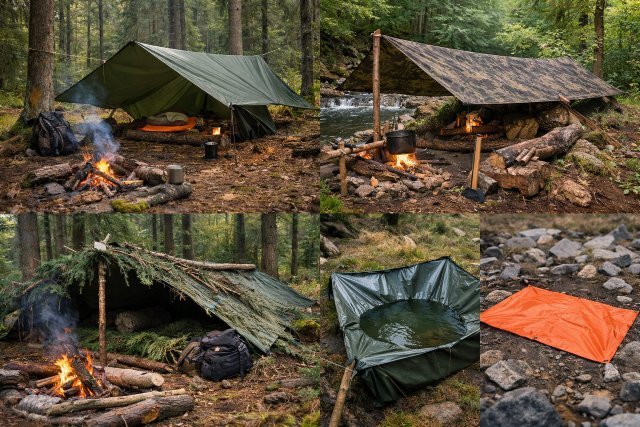
If you’ve spent any time in bushcraft circles or browsing rugged outdoor gear, you’ve probably seen the word Tarnplanen pop up. In plain terms, Tarnplanen refers to camouflage tarps (often military-inspired) that function as lightweight shelter, rain protection, wind block, and a versatile “do-it-all” fabric tool in the field.
- What Is a Tarnplanen?
- Why Tarnplanen Works So Well for Camping
- Tarnplanen for Bushcraft: More Than a Roof
- Tarnplanen in Survival: Shelter, Heat, and Time
- Tarnplanen Waterproofing: What “Waterproof” Really Means
- How to Pitch Tarnplanen for Real-World Weather
- Choosing the Right Tarnplanen: What Actually Matters
- Tarnplanen Maintenance: Keep It Reliable for Years
- Safety and Ethics: Stealth vs. Responsibility
- Common Questions (FAQ)
- Conclusion: Why Tarnplanen Deserves a Spot in Your Kit
What makes Tarnplanen so popular isn’t just the camo look. It’s the combination of packability, adaptability, and durability — especially when you need a fast shelter before weather turns. Cold exposure becomes dangerous when your body loses heat faster than it can produce it, and hypothermia is defined as a core temperature below 95°F (35°C). A well-pitched tarp can be the difference between an uncomfortable night and a genuinely risky situation.
You’ll learn exactly how Tarnplanen are used for camping, bushcraft, and survival, how to choose the right one, and how to set it up in ways that work in real terrain — not just perfect Instagram forests.
What Is a Tarnplanen?
A Tarnplanen is a camouflage-pattern tarp (tarpaulin) designed to provide quick environmental protection outdoors. Think of it as a modular shelter wall: it can be your roof, your windbreak, your gear cover, or your improvised workspace.
In many cases, “Tarnplanen” is used to describe tarps inspired by (or made for) military field use — typically featuring multiple tie-out points, reinforced corners, and fabric that can handle abrasion better than bargain plastic sheets.
Because naming varies by region and seller, you’ll also see related terms like:
- camouflage tarp
- military tarp / army tarp
- bushcraft tarp
- survival tarp
- rain fly tarp
- lightweight shelter tarp
Why Tarnplanen Works So Well for Camping
Camping is where Tarnplanen shines for people who want flexibility without carrying a full tent. A tent is convenient, but it locks you into one shape. Tarnplanen lets you adapt to trees, slope, wind direction, and the size of your group.
Rain protection without the “tent footprint” problem
A tarp can cover a wider area than many tents of similar weight. That matters when you want a dry cooking spot, a place to sit, or a gear staging zone. If you’ve ever had rain funnel off a tent fly directly into your boots, you already understand why coverage shape matters.
Better airflow and less condensation
Many campers switch to tarps because they dislike tent condensation. While tarp camping doesn’t eliminate moisture, open-sided pitching can drastically reduce the wet “greenhouse” effect. Condensation is often about ventilation and temperature differences — tarps give you more control over both.
Quiet, low-profile camps
Some Tarnplanen fabrics are quieter than crinkly ultralight tarps, and the camouflage pattern visually blends into forest environments. Even if you’re not trying to be “stealth,” low visual impact can feel calmer in crowded backcountry areas.
Tarnplanen for Bushcraft: More Than a Roof
Bushcraft is about skills, systems, and self-reliance. Tarnplanen fits that mindset because it becomes part of your “field architecture.”
A work shelter that changes with your task
One of the most practical bushcraft uses is pitching a high, open shelter while you process wood, carve, or cook — then lowering it later for warmth and wind resistance.
You’ll also appreciate the way a tarp creates a dry “workshop” zone. Dry tinder, dry tools, dry hands — those are productivity multipliers.
A training tool for knots and campcraft
Tarps are basically a hands-on classroom for tensioning systems, ridgelines, and reliable knots. You’ll naturally practice fundamentals like:
- choosing anchor points
- building a ridgeline that won’t sag
- managing cordage stretch and wind load
- pitching angles to shed rain
The practical payoff is huge: you become faster and more confident at building shelter in unfamiliar terrain.
Ethical bushcraft matters
It’s easy to damage vegetation when you’re learning. Follow low-impact guidelines — especially when selecting durable surfaces and avoiding “site creep,” where repeated trampling expands a campsite footprint over time. Using a Tarnplanen doesn’t automatically make you low impact; your site choice and habits do.
Tarnplanen in Survival: Shelter, Heat, and Time
In survival contexts, your priorities are often: shelter, water, warmth, and signaling (situation-dependent). A Tarnplanen contributes to all of these — especially shelter, which directly supports heat retention and rest.
Cold stress is real (even above freezing)
Wind and rain accelerate heat loss dramatically. OSHA notes that exposure to cold can cause the body to lose heat faster than it’s produced, which can lead to hypothermia. Even if you’re not in snow, wet clothing plus wind can push you toward a dangerous energy deficit.
A Tarnplanen helps by:
- blocking wind (reducing convective heat loss)
- keeping precipitation off your insulation layers
- creating a dry zone to rest and recover
Time is the survival resource people forget
In real emergencies, the best tool is often the one that buys you time with the least effort. A tarp can go up faster than most improvised debris shelters, especially when you’re exhausted or injured.
Tarnplanen Waterproofing: What “Waterproof” Really Means
A common mistake is assuming “tarp = waterproof.” In reality, waterproof performance depends on material, coatings, seams, and how you pitch it.
Hydrostatic head: the rating you should understand
Hydrostatic head measures how much water pressure fabric can withstand before leaking. It’s commonly used for outdoor fabrics including tarps. Higher numbers generally indicate better water resistance.
What this means in practice: if you expect heavy, sustained rain, don’t rely on vague marketing terms. Look for actual waterproof ratings or field-tested reviews, and remember that pooling water (from a saggy pitch) increases pressure and can force leaks even in decent fabric.
How to Pitch Tarnplanen for Real-World Weather
Below are setups that consistently work outdoors because they solve specific problems: wind, rain direction, and heat loss.
1) The A-frame: the dependable all-rounder
This is the classic ridgeline setup: simple, fast, and strong in rain. Make sure the ridgeline is tight, and angle the sides steep enough to shed water.
When it shines: steady rain, moderate wind, general camping.
2) The lean-to: the “workshop” shelter
A lean-to gives open space and visibility. It’s excellent for cooking or demonstrating bushcraft skills. The downside is that it’s directional — if wind shifts, you’ll feel it.
When it shines: fair weather, light rain, daytime shelter, group hangout.
3) The low storm pitch: when conditions get serious
When wind and rain are aggressive, go low. Lower edges reduce wind entry and improve warmth. If you have extra cordage, add more tie-outs to distribute load.
When it shines: cold wind, storms, exposed ridges, emergency shelter.
Choosing the Right Tarnplanen: What Actually Matters
Camouflage pattern is fun, but performance comes from build quality.
Fabric and durability
Look for tougher weaves and reinforced stress points. If you’re doing bushcraft (not just fair-weather camping), abrasion resistance matters more than shaving grams.
Tie-out points and reinforcement
More tie-out points = more pitching options. Reinforced corners and strong grommets/loops reduce failure risk when wind loads spike.
Size: don’t under-buy
A common regret is buying too small. A bigger tarp gives you margin for wind-driven rain and space to manage gear. For solo use, “just enough” often becomes “not enough” once the weather changes.
Tarnplanen Maintenance: Keep It Reliable for Years
A tarp that smells like mildew is a tarp that’s slowly losing performance.
- Dry it fully before long-term storage.
- Clean off sap and grit (abrasion happens during packing, not just use).
- Avoid prolonged UV exposure when you don’t need it — sunlight degrades many coatings over time.
- Check tie-outs and seams periodically.
Safety and Ethics: Stealth vs. Responsibility
Camouflage gear can raise questions in some places. In general:
- Use Tarnplanen for practical outdoor shelter, not to trespass or create conflict.
- Follow local land rules and campsite regulations.
- Camp on durable surfaces and minimize trampling to avoid long-term impact.
The best “stealth” skill is leaving no trace that you were ever there.
Common Questions (FAQ)
What is Tarnplanen used for?
Tarnplanen is used as a versatile camouflage tarp for shelter, rain protection, wind blocking, gear cover, and camp setup flexibility in camping, bushcraft, and survival contexts.
Is a Tarnplanen better than a tent?
It depends. A tent offers convenience and bug protection, while a Tarnplanen offers adaptability, airflow, and multi-use value. Many people bring a tarp to complement a tent, not replace it.
How do I keep a Tarnplanen from leaking in heavy rain?
Use a steep pitch, keep the ridgeline tight, and avoid sagging fabric where water can pool. Understanding waterproof ratings like hydrostatic head helps set realistic expectations.
Can Tarnplanen help prevent hypothermia?
It can reduce exposure by blocking wind and keeping you dry, which supports heat retention. Hypothermia occurs when core temperature drops below 95°F (35°C), and cold exposure accelerates heat loss.
Conclusion: Why Tarnplanen Deserves a Spot in Your Kit
A Tarnplanen isn’t just a camo tarp — it’s a flexible shelter system that scales from casual camping comfort to serious bushcraft utility and survival readiness. When weather flips, a tarp’s speed and adaptability can reduce exposure risk, support warmth, and keep your gear functional — key factors when cold stress and hypothermia become real concerns.
Choose a Tarnplanen with solid tie-outs and durable fabric, learn a few dependable pitches, and treat it like critical equipment: dry it, maintain it, and practice with it before you truly need it. Done right, it’s one of the highest value-per-weight tools you can carry outdoors.