If Switching 2nd (downshifting into second gear) makes you a little nervous, you’re not alone. Second gear sits in that sweet spot where the car can either feel beautifully controlled… or suddenly jerky and unstable if the speed and engine RPM don’t match.
- What Switching 2nd means (and why it matters)
- The Safe Downshift Method for Switching 2nd
- Switching 2nd before a corner (the “set it up early” approach)
- Switching 2nd on downhill roads (control without cooking brakes)
- Should you coast in neutral instead of Switching 2nd?
- Does Switching 2nd save fuel? (the DFCO reality)
- The safe RPM zone for Switching 2nd (without overthinking it)
- Switching 2nd smoothly: common mistakes (and quick fixes)
- Manual vs automatic: how Switching 2nd differs
- Real-world scenarios where Switching 2nd is the right move
- FAQs
- Conclusion: Switching 2nd is a safety skill, not a stunt
Done correctly, Switching 2nd helps you stay in the right power band for corners, downhill stretches, and slow-moving traffic — while keeping your vehicle balanced and predictable. Driver handbooks even teach a key principle: slow to a safe speed and downshift to the right gear before entering a curve, so the vehicle remains stable and you can accelerate smoothly out of it.
This guide walks you through a safe, repeatable method for Switching 2nd — whether you drive a manual, an automatic with manual mode, or anything in between.
What Switching 2nd means (and why it matters)
Switching 2nd is simply the act of moving from a higher gear (often 3rd, 4th, or sometimes 5th) down into 2nd gear while the car is still moving.
The point isn’t to “save brakes” by itself or to drive like a race car. The point is to:
- keep the car in a useful gear for control and responsiveness
- reduce “lugging” (engine struggling at too-low RPM)
- prepare for situations where you’ll need smooth power (like corners, hills, merges, or slow traffic)
Government driver guidance commonly emphasizes being in the correct gear before the situation demands it — downshift before starting down a hill and before entering a curve.
The Safe Downshift Method for Switching 2nd
There are many ways to describe downshifting, but the safest method is the one that prioritizes traction + stability first, and smoothness second.
Step 1: Brake first, then shift (the stability rule)
Before Switching 2nd, use your brake pedal to bring the car down to a speed that 2nd gear can actually support without forcing the engine to jump to an extreme RPM.
This is the biggest beginner mistake: shifting to 2nd while still too fast, which can cause a sudden drag effect (and in low-traction conditions, even wheel slip).
Driver manuals teach the same sequencing idea in other words: slow down to a safe speed, then choose the right gear before the curve/hill.
Step 2: Clutch in (manual) or select 2 (automatic manual mode)
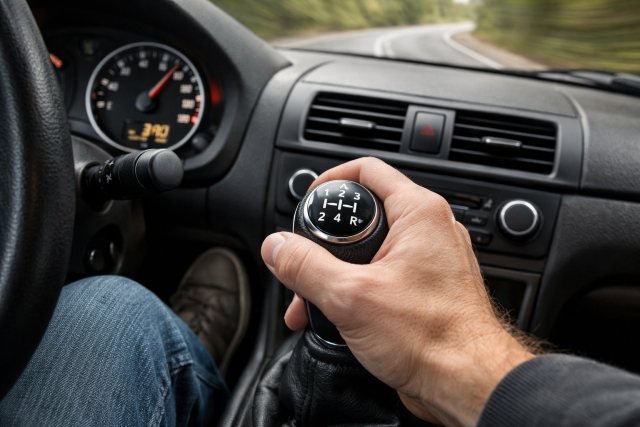
- Manual: clutch in, move the shifter from 3rd to 2nd (or from a higher gear down to 2nd if appropriate).
- Automatic with manual mode: you’ll tap/select down to “2” or “M2.” The car may refuse the shift if the speed is too high — this is a built-in safety strategy on many vehicles.
Step 3: Match revs (simple version, not racing)
To make Switching 2nd smooth, you want engine RPM to rise to what 2nd gear “expects” at that road speed.
The beginner-friendly way:
- clutch in
- shift to 2nd
- give a small throttle “blip” (quick, light press)
- clutch out smoothly
That “blip” reduces the mismatch between engine speed and transmission speed, which reduces the jerk.
Step 4: Ease the clutch out — don’t dump it
Release the clutch smoothly. If the car jerks forward/back, that’s feedback: either the rev match was off, or the speed was too high for 2nd.
Step 5: Rebalance the car (steady throttle)
Once you’re in 2nd, apply light throttle as needed to keep the car settled — especially mid-corner or on a downhill.
Switching 2nd before a corner (the “set it up early” approach)
Corners are one of the best reasons to Switching 2nd — when it’s done early enough.
A solid principle from driver guidance is: downshift before entering the curve, so you can maintain stability and have usable power through and out of the turn.
Here’s how that looks in real life:
You’re approaching a tight right-hand turn in 3rd gear.
- Brake in a straight line to get to a safe entry speed
- Switching 2nd while still straight
- Release the clutch smoothly
- Enter the turn with a stable car and predictable throttle response
- Lightly accelerate out
When drivers shift mid-corner, they often create an unwanted weight transfer or a sudden traction change. “Set it up early” prevents that.
Switching 2nd on downhill roads (control without cooking brakes)
On long descents, the goal is controlled speed without overheating your brakes. Many driver guides recommend using a lower gear and downshifting before starting down the hill.
This is where “engine braking” helps: when you’re in gear with your foot off the accelerator, the engine creates resistance that slows the vehicle.
A key safety note: excessive engine braking (or a too-aggressive downshift) can contribute to wheel slip on low-traction surfaces. Engine braking resources specifically warn that improper technique can cause skidding/shift-locking on slippery surfaces.
So on wet/icy roads, be extra conservative with Switching 2nd: reduce speed more first, and release the clutch even more smoothly.
Should you coast in neutral instead of Switching 2nd?
For everyday driving: generally, no — especially downhill.
Some jurisdictions explicitly prohibit coasting downhill in neutral. For example, California Vehicle Code §21710 states a driver on a downgrade “shall not coast with the gears… in neutral.”
Even where it isn’t illegal, staying in gear improves control. Commercial driving guidance also flags “unsafe coasting” as being out of gear (neutral or clutch depressed) beyond a short distance.
Does Switching 2nd save fuel? (the DFCO reality)
A common myth is that neutral coasting saves fuel. In many modern fuel-injected vehicles, deceleration fuel cut-off (often called DFCO/overrun fuel cut) can stop fuel injection during certain in-gear deceleration conditions.
This varies by vehicle calibration, temperature, RPM, and other factors, but the big takeaway is:
- In many modern cars, coasting in gear during deceleration may use very little fuel (sometimes essentially none during fuel cut conditions).
- Coasting in neutral can remove engine braking and reduce control — so it’s a questionable trade even if fuel savings were possible.
(Practical note: treat fuel as a bonus, not the reason. The main reason to Switching 2nd is control and stability.)
The safe RPM zone for Switching 2nd (without overthinking it)
Every car’s gearing is different, so there isn’t one universal speed for 2nd gear.
Instead, use these safe guardrails:
- If shifting into 2nd would spike RPM dramatically, you’re still too fast — brake more first.
- If the engine sounds strained or “luggy” in 2nd, you’re too slow for that gear or should use 1st (in very slow situations).
If your car has a tachometer, you’re generally aiming for a moderate RPM after the shift — not a screaming redline and not an idle stumble.
Switching 2nd smoothly: common mistakes (and quick fixes)
Mistake 1: Downshifting too early (too fast)
Symptom: the car jolts, tires chirp, or the front end feels like it “dives” suddenly.
Fix: brake a little more first. Make the shift later, at a lower road speed.
Mistake 2: Dumping the clutch
Symptom: harsh jerk even at a reasonable speed.
Fix: slow your clutch release, especially in the last inch of travel.
Mistake 3: Over-blipping the throttle
Symptom: the car surges forward when the clutch engages.
Fix: smaller, quicker blip.
Mistake 4: Shifting mid-corner
Symptom: the car feels unsettled or traction feels inconsistent.
Fix: finish braking and Switching 2nd before turn-in (straight line rule).
Manual vs automatic: how Switching 2nd differs
Manual transmissions
You control everything — great feel, but you must manage revs and clutch engagement.
Automatics with manual mode (“+/-”, paddles, “M”)
Most will:
- refuse a dangerous downshift if it would over-rev the engine
- downshift smoothly but may still feel abrupt if you command 2nd too early at high speed
The same principle still applies: brake first, then shift.
Real-world scenarios where Switching 2nd is the right move
Scenario 1: Tight urban corner after a straight
You’re in 3rd, approaching a slow turn with pedestrians and uneven pavement.
Switching 2nd before the corner gives you smoother throttle control and reduces the “wrong gear” hesitation on exit.
Scenario 2: Stop-and-go traffic that keeps hovering
Traffic fluctuates between crawling and short bursts.
2nd gear often lets you flow smoothly without constant clutch slipping in 1st (manual) or constant hunting (some automatics).
Scenario 3: Long downhill in the rain
You don’t want to ride the brakes.
A conservative downshift strategy (often 3rd, sometimes 2nd depending on slope and speed) helps maintain controlled descent — while you stay mindful that aggressive engine braking can reduce traction on slippery surfaces.
FAQs
What is Switching 2nd?
Switching 2nd is downshifting from a higher gear into second gear while the vehicle is moving, usually to improve control for corners, hills, or slow traffic.
Is Switching 2nd bad for your car?
Not when done correctly. The risk comes from shifting into 2nd at too high a speed or releasing the clutch too quickly, which can shock the drivetrain and reduce traction.
Should I brake before Switching 2nd?
Yes. Braking first helps you reach a safe speed for 2nd gear, making the shift smoother and keeping the car stable — especially before curves and downhill sections.
Can Switching 2nd help on downhill roads?
Yes. Using a lower gear can help control speed on descents and reduce reliance on the brakes, and guidance commonly recommends downshifting before starting down a hill.
Is coasting in neutral safer than Switching 2nd?
Generally no. It reduces engine braking and control, and some places explicitly prohibit coasting downhill in neutral (for example, California).
Conclusion: Switching 2nd is a safety skill, not a stunt
Switching 2nd becomes easy — and safe — once you follow one rule: slow the car first, then choose the gear. That’s how you keep the chassis settled, avoid surprise traction loss, and stay ready to accelerate smoothly when you need it. Driver guidance reinforces the same idea: downshift before curves and before starting down hills, so the vehicle stays stable and predictable.
If you practice Switching 2nd in a quiet area — brake first, light blip, smooth clutch — you’ll build the muscle memory that makes everyday driving calmer, safer, and more controlled.