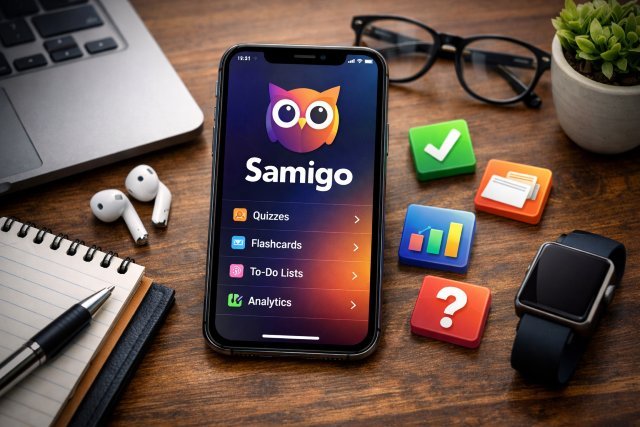
If you’ve ever needed a reliable way to create, deliver, and grade digital assessments inside an LMS, the Samigo App is one of the most widely recognized tools in that space — especially for institutions using Sakai.
- Samigo App Overview (Quick Definition)
- Why the Samigo App Matters in 2026
- Samigo App Key Features (Complete Breakdown)
- Samigo App User Experience: What It’s Like to Use
- Samigo App Pros and Cons (Balanced Review)
- Who Should Use the Samigo App?
- How Samigo App Compares to Other Assessment Tools
- Actionable Tips to Get Better Results with Samigo App
- Common Questions About the Samigo App
- Conclusion: Is the Samigo App Worth Using?
The Samigo App (also called SAMigo or Tests & Quizzes) is an online assessment engine built into Sakai that helps educators create quizzes, exams, surveys, and other assessment activities. It’s designed to support both structured testing and flexible learning evaluation, with settings that allow precise control over submissions, grading, feedback, and delivery rules.
Samigo App Overview (Quick Definition)
The Samigo App is Sakai’s built-in tool for online testing and assessment management, enabling instructors to build tests and quizzes, organize question pools, automate grading for many question types, and analyze performance using reporting features.
Why the Samigo App Matters in 2026
Online assessment is no longer optional. Globally, digital learning platforms continue to grow quickly, and institutions increasingly need tools that:
- support remote and hybrid exams,
- reduce manual grading,
- offer secure testing controls,
- generate actionable performance insights.
As part of the Sakai ecosystem, Samigo fits well into academic and institutional environments where reliability and scale matter more than flashy UI.
Samigo App Key Features (Complete Breakdown)
1) Assessment Creation (Tests, Quizzes, Surveys)
At its core, the Samigo App exists to help instructors build assessments efficiently. It supports:
- tests and quizzes for formal grading,
- exams with structured rules,
- surveys for feedback collection,
- practice/self-study activities.
Sakai’s official documentation describes this “Tests & Quizzes” functionality as an online assessment tool designed primarily for administering tests but also capable of surveys and informal feedback collection.
Why it’s valuable:
You can create assessments for multiple learning goals without switching to third-party tools.
2) Flexible Assessment Parts (Section-Based Exams)
One of Samigo’s most powerful features is its ability to divide an assessment into parts, similar to sections in a paper exam. Each part can have:
- its own ordering,
- its own set of questions,
- attachments or instructions,
- random draws from question pools.
Sakai’s help documentation confirms that “parts allow you to create sections of an assessment,” with separate ordering and content controls.
Real-world scenario:
A midterm exam may have Part A: MCQs, Part B: short answers, Part C: essay — each with different rules and randomization.
3) Multiple Question Types (With Auto-Grading Support)
Samigo supports a wide range of question formats, including auto-graded types.
For example, Sakai documentation describes “Fill in the Blank” questions where student answers are compared to allowed answers automatically.
What this means:
If you build exams with auto-gradable formats (MCQs, matching, fill-in-the-blank, etc.), Samigo can save hours of grading time.
4) Question Pools and Reuse (One of Samigo’s Best Features)
Samigo enables instructors to build reusable question pools, letting you:
- reuse questions across multiple tests,
- randomize questions per student,
- build versions of the same exam,
- reduce cheating by changing assessment variations.
Even third-party reviews note that Samigo supports reusing old questions and exporting data for later analysis.
Expert tip:
Create pools by difficulty level (easy/medium/hard), then pull a random mix into each student’s attempt.
5) Import & Export for Portability
Samigo supports importing and exporting assessments and question pools via external file formats.
Sakai’s documentation confirms exported files include the entire assessment — title, settings, questions, and options — making migrations and reuse much easier.
Why it matters for institutions:
Schools migrating courses between semesters or instructors can reuse entire assessment libraries without rebuilding them.
6) Preview Mode Before Publishing
Samigo includes a built-in preview feature so instructors can test exactly how the assessment will appear.
Sakai’s help guide explains that preview is accessible from the Actions menu and works for both draft and published assessments.
Practical benefit:
Preview mode reduces “surprise errors” that can disrupt real exams.
7) Delivery Controls: Timing, Submissions, and Access Rules
Samigo allows instructors to control:
- availability dates,
- time limits,
- number of attempts,
- layout options,
- grading and feedback release timing.
Sakai documentation highlights that the tool includes many settings to control delivery, grading, review options, and layout.
This is where Samigo excels:
It’s not just a quiz builder — it’s a full assessment policy engine.
8) Reporting & Learner Insights
Samigo includes reporting tools that display student activity such as submission date, score, and percentage.
Sakai’s “User Activity Report” documentation confirms that instructors can view assessment title, ID, submit date, and scores for selected students.
How this helps:
You can spot patterns like late submissions, repeated low performance on certain topics, or progress over time.
9) Event Logging and Audit Trails
Samigo logs user events such as:
- accessing assessments,
- submitting assessments,
- reviewing feedback.
This is particularly useful for institutions needing compliance and exam accountability.
Samigo App User Experience: What It’s Like to Use
Instructor Experience
The instructor side feels structured, settings-heavy, and designed for control. This can feel slightly complex at first, but it’s an advantage for institutions needing strict exam governance.
Student Experience
Students generally experience Samigo through a clean assessment interface. Since it runs within Sakai, their experience depends partly on the institution’s Sakai theme and configuration.
Samigo App Pros and Cons (Balanced Review)
Pros
Samigo App is strongly positioned for educational institutions because it offers a reliable assessment engine with deep integration into Sakai and advanced settings control.
Cons
While powerful, Samigo’s UI can feel less modern than stand-alone tools like Google Forms or newer LMS quiz engines. Instructors also face a learning curve due to the large number of settings.
Who Should Use the Samigo App?
Best For:
- universities using Sakai
- schools running online exams at scale
- educators who need question banks and randomized quizzes
- institutions needing audit logs and reporting
Not Ideal For:
- users looking for a stand-alone mobile quiz app
- creators wanting flashy gamification or modern UX-first design
How Samigo App Compares to Other Assessment Tools
If you compare Samigo App to modern quiz builders, it’s less about flashy design and more about:
- reliability,
- policy enforcement,
- assessment governance,
- institution-grade reporting.
Many platforms focus on quick quiz creation; Samigo focuses on secure, repeatable assessment delivery.
Actionable Tips to Get Better Results with Samigo App
Tip 1: Use Assessment Parts for Clarity
Break exams into sections so students don’t feel overwhelmed. Samigo’s part-based structure supports this naturally.
Tip 2: Build Question Pools Early
Question pools become more valuable every semester because they reduce workload long-term.
Tip 3: Preview Every Assessment
Always preview in draft mode before publishing to avoid errors.
Tip 4: Export Assessments for Backup
Export exams regularly for easy reuse and recovery.
Tip 5: Use Reporting to Improve Teaching
If many students miss the same question, that’s a lesson gap you can address quickly.
Common Questions About the Samigo App
What is the Samigo App used for?
The Samigo App is used to create, deliver, and grade online assessments like quizzes, exams, and surveys inside the Sakai LMS.
Is Samigo the same as Tests & Quizzes in Sakai?
Yes. In Sakai, Tests & Quizzes is also known as SAMigo, which is the assessment tool module inside the LMS.
Can Samigo automatically grade assessments?
Samigo supports auto-grading for many question types (such as fill-in-the-blank) and can post grades to the system based on setup.
Can you reuse questions in Samigo App?
Yes. Samigo supports question pools, enabling instructors to reuse questions across different tests and randomize them for different students.
Can you export tests from Samigo App?
Yes. Sakai confirms you can export assessments and question pools into external files for backup, reuse, or migration.
Conclusion: Is the Samigo App Worth Using?
If your institution runs on Sakai, the Samigo App is not just worth using — it’s arguably one of the most important tools in the platform. It combines structured exam creation, advanced delivery settings, question reuse, auto-grading support, detailed reporting, and compliance-friendly event logging into one integrated assessment system.
The learning curve is real, especially for instructors new to complex assessment settings. But once you establish good templates, question pools, and workflows, Samigo becomes a powerful engine for high-quality assessments — whether you’re teaching a small class or managing institution-wide testing.