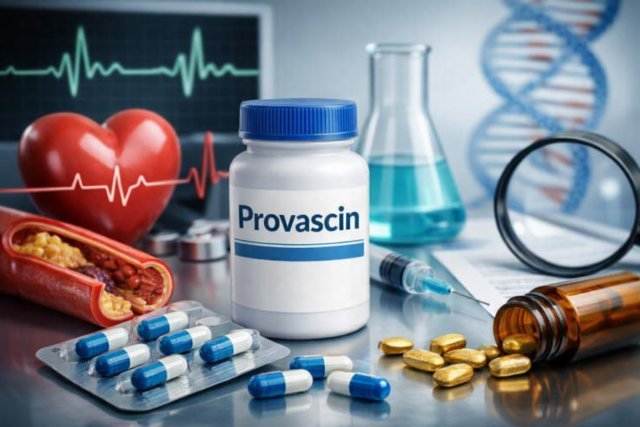
Provascin is a cardiovascular-focused dietary supplement most commonly associated with PURICA and marketed for heart and circulation support. If you’ve seen Provascin mentioned online, you’ve probably also noticed a lot of vague claims — “better blood flow,” “more energy,” “cholesterol support” — with very little context about what’s realistic, what’s not, and what you should watch out for.
- What Is Provascin?
- Provascin Benefits: What People Take It For (and What’s Realistic)
- Provascin Ingredients Explained
- Provascin vs. Pravastatin (Common Confusion You Should Avoid)
- Who Might Consider Provascin?
- Who Should Avoid Provascin (or Get Medical Advice First)
- How to Use Provascin Safely (Actionable Tips)
- Side Effects and Risks of Provascin
- Does Provascin Actually Work? What the Evidence Can (and Can’t) Say
- FAQ: Common Questions About Provascin
- Conclusion: Should You Try Provascin?
What it is, what the main ingredients are believed to do, what the evidence actually says (and doesn’t say), common risks and interactions, and how to think about using it safely alongside lifestyle changes and medical care.
Supplements can interact with medications and health conditions. If you have heart disease, take blood pressure meds, blood thinners, or cholesterol meds, it’s smart to run Provascin past a clinician or pharmacist first.
What Is Provascin?
Provascin is sold as a multi-ingredient supplement designed to support cardiovascular health through several pathways at once — cellular energy production, antioxidant support, and metabolic markers (like lipids and homocysteine) depending on the formula.
Many retailers and third-party descriptions list a core blend that commonly includes:
- Coenzyme Q10 (CoQ10)
- L-carnitine
- Alpha-ketoglutarate (AKG)
- Betaine
- Chaga mushroom, and sometimes additional polyphenols like green tea or grape seed extract depending on the specific label/version.
Because formulas can vary by market and product version, it’s important to check the exact Supplement Facts panel on the bottle you’re using.
Provascin Benefits: What People Take It For (and What’s Realistic)
Let’s separate plausible mechanisms (how ingredients might help in theory) from proven outcomes (what strong human research consistently shows).
1) Cardiovascular energy support (the “mitochondria” angle)
The heart is energy-hungry tissue. Ingredients like CoQ10 and L-carnitine are often included because they’re involved in cellular energy processes.
- CoQ10: Evidence is mixed overall, but some research suggests it may help in certain heart-related contexts (for example, some complications around heart surgery), while broader prevention claims remain inconclusive.
- L-carnitine: It has a clear biological role in fatty-acid transport and energy metabolism. Evidence for supplementation benefits varies by population and health status, and outcomes are not universally established.
Realistic expectation: Some users report improved “energy” or stamina, but that’s subjective. Strong, consistent evidence that Provascin itself boosts everyday energy in healthy adults is limited because Provascin-specific clinical trials are not widely available.
2) Circulation and “blood flow” support
Many supplement claims rely on the idea that antioxidants and metabolic support may improve vascular function indirectly. That’s not impossible, but it’s also not the same as proving it lowers blood pressure or prevents cardiovascular events.
If you’re taking Provascin primarily for circulation, it’s wise to pair it with high-impact basics: walking, resistance training, sleep, and blood pressure monitoring.
3) Cholesterol and cardiometabolic markers
Some ingredients in cardiovascular supplements are positioned as “lipid support.” However, the strength of evidence differs widely by ingredient and dosage.
Key point: If you have diagnosed high cholesterol, guideline-based lifestyle and/or prescription therapy is still the main proven approach for reducing heart attack and stroke risk.
Provascin Ingredients Explained
Provascin and CoQ10
CoQ10 is a naturally occurring compound involved in energy production. Interest in CoQ10 is common among people on statins and people focused on heart health.
- The U.S. NIH’s NCCIH notes that research on CoQ10 for preventing heart disease is inconclusive, and heart failure research is also inconclusive overall, though there is evidence for certain surgical-related outcomes.
- Some reviews suggest potential benefit in chronic heart failure outcomes, but results vary and depend on study quality and context.
Practical tip: If you’re using CoQ10-containing products and you’re on medications (especially blood pressure meds or blood thinners), ask a pharmacist about interaction risk.
Provascin and L-Carnitine
The NIH Office of Dietary Supplements describes carnitine as a family of compounds involved in fat metabolism, naturally found in foods and made in the body.
Recent reviews evaluate L-carnitine’s potential effects on cardiometabolic risk factors, but overall conclusions still emphasize variability and the need to interpret results carefully.
Practical tip: High doses can cause GI upset, and some people notice a “fishy” body odor. If that happens, lowering the dose or discontinuing often resolves it.
Provascin and Alpha-Ketoglutarate (AKG)
AKG is a Krebs cycle intermediate (energy metabolism). Interest in AKG has grown in aging and metabolic research. Human evidence for cardiovascular outcomes is not definitive, and some studies are preclinical (animal or mechanistic).
Practical tip: If you’re using Provascin mainly because it contains AKG, treat it as “experimental support,” not a proven heart-protective therapy.
Provascin and Betaine
Betaine is a methyl donor involved in homocysteine metabolism. Elevated homocysteine is associated with cardiovascular risk, and some studies show betaine can reduce homocysteine levels.
Whether lowering homocysteine through supplements reliably translates into fewer heart attacks/strokes is a more complex question, but the biomarker effect is better established than many supplement claims.
Provascin and Chaga (Important Safety Notes)
Chaga is often marketed for antioxidant properties. However, safety concerns exist — particularly around oxalate content and rare kidney injury reports linked to heavy intake.
There are published case reports describing oxalate nephropathy associated with chaga ingestion.
Practical tip: If you have kidney disease, kidney stones, high oxalate risk, or you’ve been advised to limit oxalates — be especially cautious with chaga-containing supplements and talk to a clinician first.
Provascin vs. Pravastatin (Common Confusion You Should Avoid)
Because the names look similar, Provascin is sometimes confused with pravastatin (a prescription statin medication, brand name Pravachol). They are not the same.
- Pravastatin is an FDA-regulated prescription drug used to lower cholesterol and reduce cardiovascular risk in appropriate patients.
- Statins have known side effects and interactions; authoritative medical references describe common muscle-related effects and rare serious risks (like rhabdomyolysis).
Bottom line: If your goal is lowering LDL cholesterol or reducing heart attack/stroke risk, don’t substitute Provascin for prescribed therapy without medical supervision.
Who Might Consider Provascin?
Provascin is typically considered by adults who:
- Want a multi-ingredient cardiovascular supplement (often for energy/antioxidant support)
- Prefer combining several common heart-support nutrients in one product
- Are already working on basics like diet, activity, and sleep, and want “adjunct” support
A realistic, healthy mindset: Provascin is best viewed as optional support, not a replacement for blood pressure control, diabetes management, lipid management, or medical evaluation of symptoms.
Who Should Avoid Provascin (or Get Medical Advice First)
You should be cautious and get professional input if you:
- Have kidney disease or a history of kidney stones (chaga/oxalate concerns)
- Take blood thinners or medications affecting clotting (ingredient interactions are possible; CoQ10 is commonly discussed in interaction checklists)
- Take multiple blood pressure medications
- Are pregnant or breastfeeding (supplement safety data is often limited)
- Have upcoming surgery (supplement policies vary; clinicians often advise stopping certain supplements beforehand)
If you experience chest pain, fainting, sudden shortness of breath, or neurologic symptoms, treat that as urgent medical territory — not supplement territory.
How to Use Provascin Safely (Actionable Tips)
Most problems with supplements come from inconsistent dosing, stacking too many products, or ignoring medication interactions. Here’s a safer approach:
- Start low and track one change at a time.
If you add Provascin while also changing caffeine, workouts, and other supplements, you won’t know what caused what. - Take it with food unless the label says otherwise.
Many people tolerate CoQ10-containing products better with a meal. - Watch for early warning signs.
Stop and reassess if you notice persistent nausea, diarrhea, unusual fatigue, rash, or new urinary/kidney symptoms. - Re-check your real cardiovascular markers.
If your goal is heart health, measure what matters: blood pressure, lipids, A1c (if relevant), waist circumference, resting fitness, and sleep quality.
Side Effects and Risks of Provascin
Because Provascin is a blend, side effects can come from any ingredient — or the combination.
Commonly reported supplement-type side effects:
- GI upset (nausea, diarrhea)
- Headache
- Sleep disruption (in sensitive users)
Less common but more serious concerns:
- Possible kidney risks in susceptible individuals due to chaga-associated oxalate concerns in case reports
- Possible interactions with medications (especially cardiovascular meds), depending on your personal regimen
If you take prescription cardiovascular drugs, it’s worth doing a quick “supplement interaction check” with a pharmacist. It’s fast and can prevent avoidable issues.
Does Provascin Actually Work? What the Evidence Can (and Can’t) Say
Here’s the honest answer: there’s more evidence on individual ingredients than on Provascin as a finished product.
- CoQ10 has mixed evidence depending on the condition and study design.
- Carnitine’s evidence varies by population and outcome measured.
- Betaine can reduce homocysteine in certain contexts.
- Chaga has safety flags in rare cases and isn’t a universally “safe antioxidant” for everyone.
Best interpretation: Provascin may be reasonable for some adults as an adjunct if they tolerate it and have no contraindications — but it shouldn’t be marketed (or used) as a proven therapy to prevent heart attacks or replace medical treatment.
FAQ: Common Questions About Provascin
Is Provascin safe to take daily?
For many healthy adults, the ingredients commonly associated with Provascin are used in supplements without major issues, but “safe” depends on your medications and kidney status. Chaga has rare but serious kidney-related case reports, so caution is warranted for at-risk people.
Can Provascin lower cholesterol like a statin?
No. Provascin is not a statin and is not a substitute for pravastatin or other prescription cholesterol-lowering therapy. Statins have evidence for reducing cardiovascular events; Provascin does not have that level of product-specific outcomes evidence.
Can I take Provascin with blood pressure medication?
Sometimes, but don’t guess. Because supplements may influence blood pressure, energy metabolism, or interact with other drugs, it’s best to confirm with a clinician/pharmacist — especially if you’re on multiple cardiovascular medications.
How long does Provascin take to notice effects?
If you notice anything, it’s usually within a few weeks (energy, tolerance, GI effects). But subjective changes aren’t the same as proven cardiovascular risk reduction. Track objective markers like blood pressure and lab results.
Conclusion: Should You Try Provascin?
Provascin can make sense as a convenience blend for adults who want a cardiovascular-oriented supplement and who don’t have contraindications like kidney risk factors or complex medication regimens. The most defensible benefits come from what we know about its individual ingredients — especially CoQ10 and carnitine in certain contexts — while product-level claims about preventing heart disease should be treated cautiously.
If you decide to use Provascin, keep it practical: start with the label dose, monitor tolerance, avoid stacking similar products, and measure objective outcomes like blood pressure and labs. And if you’re taking prescription meds (or have kidney issues), a quick check with a clinician or pharmacist is the safest move.