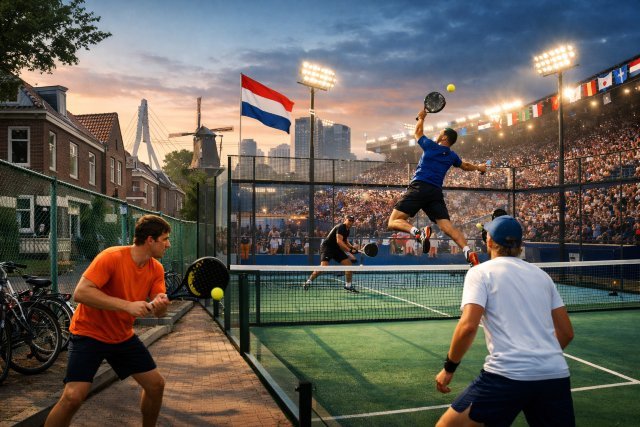
NLPadel isn’t just a keyword — it’s a snapshot of how padel in the Netherlands has gone from “let’s try this new doubles game after work” to a serious sporting movement with real infrastructure, competition, and international attention. In the last few years, NLPadel has become shorthand for the Dutch padel ecosystem: courts popping up in cities and towns, packed social leagues, and a player community that keeps pulling friends into the game.
- What is NLPadel?
- The neighborhood-matches era: why padel spreads faster than most sports
- NLPadel’s growth story in real numbers
- From casual play to competitive culture: the NLPadel “league effect”
- Why NLPadel is catching global attention right now
- The professionalization leap: how the world stage pulls NLPadel upward
- The hidden engine of NLPadel: facilities, scheduling, and “frictionless play”
- NLPadel in 2026: what’s likely next
- Common NLPadel questions
- Conclusion: why NLPadel is more than a trend
That “neighborhood match” feeling is still the secret sauce. Padel’s social format makes it easy to start, and NLPadel has ridden that wave as the Netherlands scaled rapidly — both in participation and facilities — while the global sport professionalized in parallel. The result is a rare moment where grassroots fun and big-stage momentum are growing at the same time.
What is NLPadel?
Depending on where you see it, NLPadel is used in two closely related ways:
First, it often refers to the Dutch padel scene overall — clubs, competitions, rankings, coaches, and the broader community across the Netherlands. Some guides define it explicitly as a shorthand for “Netherlands padel” and everything around it.
Second, “NLPadel” is also used as a brand/platform name by businesses and websites that serve Dutch padel players — like court providers, booking info, and community hubs.
The neighborhood-matches era: why padel spreads faster than most sports
Padel is engineered for word-of-mouth growth. It’s doubles by default, the court is smaller than tennis, and the walls keep rallies alive — so even beginners feel “in the game” quickly. That matters because early success creates early obsession, and early obsession creates group chats like “Padel Thursday 7pm?”
Padel’s origin story also fits that “make it work where you are” spirit. The sport is widely traced to Acapulco, Mexico in 1969, where Enrique Corcuera enclosed a court so the ball wouldn’t fly out — accidentally creating a new sport category.
If you want a simple definition (good for featured snippets):
NLPadel is the Netherlands’ padel ecosystem — players, courts, clubs, competitions, and culture — growing from casual local play into a structured, nationally visible sport.
NLPadel’s growth story in real numbers
At some point, vibes aren’t enough — you need courts, scheduling systems, coaches, and competitions. The Netherlands crossed that threshold quickly.
A major indicator is the KNLTB’s research-based snapshot of padel in the Netherlands with a peildatum (reference date) of 31 December 2024. That report puts the scale at:
- 677 providers (verenigingen + commercial centers)
- 2,828 padel courts
- ~350,000 average monthly players in 2024
- Estimated 480,000–550,000 total unique players in 2024
Those numbers help explain why NLPadel feels “everywhere” in daily life. When hundreds of thousands of people are playing monthly, padel becomes a default social sport — like five-a-side football, but with easier logistics and a much faster learning curve.
This is also why municipalities, investors, and club owners pay attention: padel isn’t only participation growth; it’s facility demand.
From casual play to competitive culture: the NLPadel “league effect”
A sport becomes sticky when it moves from “we play sometimes” to “we have fixtures.” Competitive structures turn casual groups into consistent communities.
The Dutch governing body (KNLTB) has highlighted competitive momentum too, reporting a 28% increase in competitive padel matches in 2024, with preliminary figures suggesting around 15,000 teams participated in KNLTB competitions that year.
That’s the NLPadel pattern in a nutshell:
Neighborhood matches create the habit → habit creates demand for consistent booking → consistent booking creates leagues → leagues create identity (“we’re Division X now”) → identity keeps players coming back.
If you’re building a club, a coaching program, or content around NLPadel, this “league effect” is your flywheel.
Why NLPadel is catching global attention right now
NLPadel’s rise is happening during a broader global padel boom — so the Netherlands isn’t growing in isolation. It’s growing while the entire sport is moving into the mainstream.
International reporting has cited global scale at levels like tens of millions of players and tens of thousands of courts worldwide. For example, mainstream coverage has referenced figures such as 30 million players and over 63,000 courts globally.
And the International Padel Federation (FIP) has continued publishing “world report” style updates emphasizing sustained international growth across countries, clubs, and courts.
So when NLPadel accelerates, it’s plugging into a global ecosystem that already has:
- International federations publishing standardized data and rankings
- International tours and major venues showcasing padel as entertainment, not just participation
In other words: Dutch growth is happening at exactly the moment global padel is professionalizing and getting broadcast-ready.
The professionalization leap: how the world stage pulls NLPadel upward
Even if you never watch pro padel, pro padel still affects you. Why? Because it changes:
- Sponsorship and investment appetite
- Media visibility
- Athlete pathways (youth development → elite training)
- Local demand (“I saw it on TV — let’s try it”)
A key milestone has been the rise of Premier Padel, launched in 2022 and positioned as a leading official professional tour, founded by Qatar Sports Investments together with the FIP and the Professional Padel Association.
This matters for NLPadel because the Dutch scene benefits when the sport has:
- Cleaner international calendars
- Recognizable brand events
- Big-city tournament moments that legitimize padel for sponsors and local authorities
The KNLTB report even lists milestones that reflect this global-to-local feedback loop (for example, the shift from World Padel Tour visibility to Premier Padel’s role as the official tour in that timeline).
The hidden engine of NLPadel: facilities, scheduling, and “frictionless play”
Padel doesn’t scale purely because it’s fun. It scales because it’s easy to organize — especially when the ecosystem removes friction:
- Quick booking flows
- Clear beginner coaching paths
- Social formats (Americano, mix-in sessions, ladders)
- Predictable league structures
That’s why NLPadel platforms and court providers have become influential. Some NLPadel-branded sites emphasize modern courts, project management, and player-facing discovery/booking information — because “find a court fast” is a growth feature, not an accessory.
Practical takeaway for players
If you want to improve fast in NLPadel, your biggest lever isn’t “play harder.” It’s “play more often with slightly better structure.” Two weekly sessions — one social, one skill-focused — beat a single intense session every time, because padel is repetition + decision-making under pressure.
NLPadel in 2026: what’s likely next
The Netherlands has already hit scale. The next phase is about quality:
- Noise management and court placement standards
- Coaching depth (more certified coaches, better progression pathways)
- Youth development so the “padel generation” becomes real
- Competition formats that keep newcomers engaged without intimidating them
The KNLTB’s research framing suggests a market that’s dynamic and still changing fast even between measurement dates — an important point when planning investment or club operations.
Globally, media rights and event expansion are also still evolving, which tends to pull local ecosystems upward.
Common NLPadel questions
Is NLPadel the same as padel?
NLPadel refers to padel in the Netherlands, including the community, clubs, competitions, and infrastructure. Padel is the sport; NLPadel is the Dutch ecosystem around it.
Why is NLPadel growing so fast?
Because padel is beginner-friendly, social, and easy to organize — and the Netherlands now has enough courts, providers, and competitions to make regular play a habit at scale. The KNLTB/EY report estimates 480,000–550,000 unique Dutch players in 2024 and ~350,000 monthly players, showing how large the base already is.
How many padel courts are there in the Netherlands?
A KNLTB research snapshot with reference date 31 December 2024 reports 2,828 courts and 677 providers nationwide.
Is padel bigger than tennis?
It depends on the country and how you measure “bigger.” In some places padel has surged so fast that it’s pressuring tennis court availability, and top players have publicly warned that clubs may replace tennis courts with multiple padel courts due to economics and demand.
Conclusion: why NLPadel is more than a trend
NLPadel is what happens when a sport’s design matches modern life. You can learn it quickly, you can play it socially, and you can build community around it without needing a lifetime of technique. The Netherlands has already proven the model at scale — 2,828 courts and 677 providers by the end of 2024, plus an estimated 480,000–550,000 unique players in that year alone.
Now the opportunity is to shape the next chapter: better coaching pathways, smarter facility planning, stronger youth development, and competition formats that keep the welcoming spirit of those first neighborhood matches. If you’re a player, a club operator, or a brand, NLPadel is no longer “up and coming.” It’s already a movement — and it’s stepping into the global spotlight.