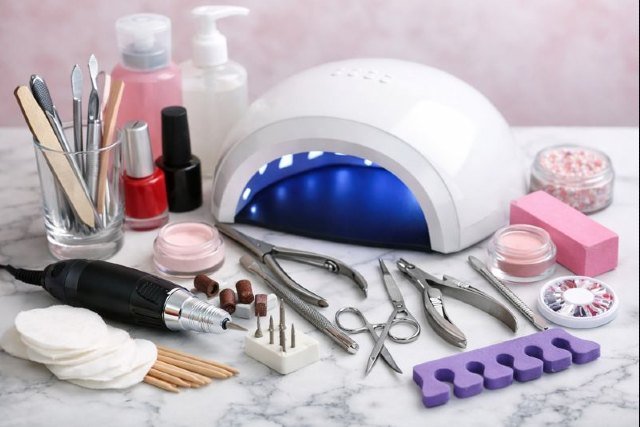
Getting salon-quality nails at home isn’t just about owning a pretty polish collection — it’s about using the right nail tools the right way. If you’ve ever wondered why your manicure chips fast, your cuticles look messy, or your nails peel after removing gel, chances are the issue isn’t your skill. It’s your toolkit.
- Why the Right Nail Tools Matter More Than You Think
- Nail Tools You Must Have for Salon-Quality Nails at Home
- 1. Nail Clippers (Sharp, Stainless Steel)
- 2. Nail Files (Glass File + Emery Board Combo)
- 3. Nail Buffer Block (For Smoothness & Shine)
- 4. Cuticle Pusher (Stainless Steel or Rose Gold Finish)
- 5. Cuticle Nippers (Only for Hangnails & Loose Skin)
- 6. Cuticle Softener or Remover
- 7. Nail Brush (For Hygiene + Prep)
- 8. Nail Dehydrator & Primer (For Long-Lasting Wear)
- 9. Base Coat + Top Coat (Your “Seal & Shield” Nail Tools)
- 10. LED Nail Lamp (For Gel Users)
- 11. Nail Polish Remover (Acetone + Non-Acetone Strategy)
- 12. Foil Wraps + Soak-Off Clips (Gel Removal Tools)
- 13. Orangewood Sticks (For Precise Cleanup)
- 14. Lint-Free Wipes (No Fuzz, No Smudges)
- 15. Tool Sanitizer (Because Hygiene = Salon-Level Professionalism)
- How to Build a Nail Tool Kit (Minimal vs. Full Salon Setup)
- How Professionals Use Nail Tools (Salon Workflow You Can Copy)
- Common Questions
- Conclusion: Nail Tools Are the Shortcut to Salon-Quality Nails at Home
The truth is: professional nail technicians rely on consistent prep, precision tools, and hygiene practices — and you can absolutely replicate that at home with the correct nail tools. In fact, a recent consumer study found that 96% of U.S. females regularly polish their nails at home or in salons, proving that nail care isn’t occasional anymore — it’s routine beauty maintenance.
Why the Right Nail Tools Matter More Than You Think
If you’ve ever had polish slide off, gel lift, or nails break unevenly, it usually comes down to one of three issues:
- Weak prep
- Low-quality tools
- Poor hygiene and damage control
Even dermatologists emphasize that nail health is strongly tied to grooming habits — especially trimming, gentle cuticle care, and avoiding harsh techniques.
That’s why building a proper nail tool kit is your fastest path to salon-looking results at home.
Nail Tools You Must Have for Salon-Quality Nails at Home
Let’s break down the essential nail tools by what they actually do: shaping, cuticle care, finishing, and hygiene.
1. Nail Clippers (Sharp, Stainless Steel)
A quality nail clipper seems basic — but it’s one of the most important nail tools you’ll ever own.
Why it matters
Cheap clippers crush the nail plate instead of slicing it cleanly. That creates micro-tears and splitting, especially for brittle nails.
What to look for
Choose stainless steel clippers with:
- curved edge for fingernails
- straight edge for toenails
- firm leverage (no wobble)
Pro tip
Clip nails after a shower when they’re slightly softer, but don’t cut too deep into corners. Dermatologists warn that improper trimming can worsen breakage or contribute to infections.
2. Nail Files (Glass File + Emery Board Combo)
If you want salon smoothness, you need the right file — not the random one from a drugstore pack.
Best option: Glass nail file
A glass file seals the edge of the nail rather than shredding it, which helps prevent peeling.
When to use emery boards
Use a 180–240 grit emery board for:
- shaping enhancements (press-ons, acrylics)
- smoothing thick nails
- minor edge correction
Featured snippet tip (definition)
A nail file is a nail tool used to shape and smooth the free edge of the nail, preventing snags, breakage, and uneven growth.
3. Nail Buffer Block (For Smoothness & Shine)
A buffer is one of the most underrated nail tools, especially if you want that “polished even without polish” look.
What it does
A multi-sided buffer:
- smooths ridges
- helps polish apply evenly
- boosts shine
- improves adherence for base coat
Important caution
Do not over-buff. Over-buffing thins the nail plate and makes nails flexible, weak, and more prone to splitting.
Try buffing once every 2–3 weeks, not every manicure.
4. Cuticle Pusher (Stainless Steel or Rose Gold Finish)
Cuticles are where a manicure looks either professional or messy.
But here’s the big secret: you don’t want to cut cuticles aggressively.
The CDC even warns against cutting cuticles because they act as a barrier that prevents infections.
Best option
Use a stainless steel cuticle pusher with:
- rounded end (gentle pushback)
- textured grip (control)
How to use it safely
After showering or soaking:
- apply cuticle softener
- gently push back
- wipe residue
- moisturize
Why it matters
Polish sticks better when the cuticle area is clean, and your nail bed looks longer instantly.
5. Cuticle Nippers (Only for Hangnails & Loose Skin)
Cuticle nippers are high-impact nail tools. Used correctly, they create that clean “Russian manicure” look. Used incorrectly, they cause bleeding and infection.
What nippers should be used for
- removing hangnails
- trimming loose, dead skin (NOT live cuticle)
Safety reminder
The CDC recommends cleaning nail grooming tools before use, and sterilization in shared settings. At home, disinfection still matters because open skin + dirty nippers = infection risk.
6. Cuticle Softener or Remover
This isn’t a “tool” technically, but it functions like one because it makes every other step easier and safer.
Why it improves your at-home manicure
When your cuticles are softened:
- pushback is gentle
- nipping is minimal
- polish doesn’t pool around edges
- your manicure looks cleaner and lasts longer
Think of it as the prep shortcut professionals use every time.
7. Nail Brush (For Hygiene + Prep)
A nail brush is one of the most practical nail tools you can own — and one of the most ignored.
What it does
It removes:
- dead skin dust
- filing debris
- oils and residue
- dirt trapped under nails
The CDC explicitly recommends scrubbing nails with soap and water (or a nail brush) to reduce germs and prevent infection.
Why it matters for polish
If you don’t brush off dust and oils, your base coat won’t bond properly —resulting in lifting and premature chipping.
8. Nail Dehydrator & Primer (For Long-Lasting Wear)
If you use gel polish, press-ons, or builder gel, this is essential.
Nail dehydrator
Removes natural oils so polish adheres better.
Primer
Creates a bonding layer between the nail and product, reducing lifting.
Real-world scenario
If your gel always lifts on the sides or near the cuticle, you likely have moisture retention or oil residue — not bad technique.
9. Base Coat + Top Coat (Your “Seal & Shield” Nail Tools)
Think of these as protective nail tools in liquid form.
Base coat benefits
- prevents staining
- improves adhesion
- smooths nail texture
Top coat benefits
- locks in shine
- prevents chipping
- protects color layer
Pro tip
If you want salon-level shine, apply a second thin layer of top coat on day 3 or 4. It refreshes the gloss and doubles your wear time.
10. LED Nail Lamp (For Gel Users)
If you want gel nails at home, your lamp is the difference between success and frustration.
Why it matters
Weak lamps cause:
- under-curing (sticky polish)
- early lifting
- increased allergy risk from uncured gel exposure
Recent reporting highlights growing concerns about gel ingredients and reactions — especially when curing is incomplete.
Best practices
- choose a lamp from a reputable brand
- cure for the full recommended time
- avoid getting gel on skin
- apply sunscreen to hands before curing if you’re concerned about UV exposure (a common dermatologist recommendation)
11. Nail Polish Remover (Acetone + Non-Acetone Strategy)
Removing polish correctly is just as important as applying it.
Non-acetone remover
Best for regular polish because it’s less drying.
Pure acetone
Best for:
- glitter polish
- gel removal
- stubborn base layers
But acetone can dry nails, so moisturize afterward. Dermatologists recommend moisturizing after polish removal since removers can dry out nails and surrounding skin.
12. Foil Wraps + Soak-Off Clips (Gel Removal Tools)
Peeling gel off is one of the fastest ways to destroy your natural nails. If you want salon-quality results at home, you need removal nail tools that protect the nail plate.
What they do
They keep acetone in place so gel softens properly without scraping aggressively.
13. Orangewood Sticks (For Precise Cleanup)
A simple tool that gives you that salon finish.
Use it for
- cleaning polish around cuticles
- gentle detail work
- press-on positioning
- tightening edges without damaging skin
Pro-level tip: wrap the tip in a small piece of cotton for super clean polish removal.
14. Lint-Free Wipes (No Fuzz, No Smudges)
Using tissue or cotton pads leaves fibers behind, ruining your finish.
Lint-free wipes are essential nail tools for:
- wiping nail plate before polish
- removing gel sticky layer
- cleaning nail brushes and tools
- maintaining a smooth top coat
15. Tool Sanitizer (Because Hygiene = Salon-Level Professionalism)
Even at home, nail tool hygiene matters. The CDC recommends cleaning grooming tools before use.
Best methods for home sanitizing
- soap + hot water first
- then disinfect with 70% alcohol (EPA notes 70% alcohol solutions can be used for disinfection)
Important note
If there’s any blood exposure, sanitize thoroughly and avoid sharing tools with others.
How to Build a Nail Tool Kit (Minimal vs. Full Salon Setup)
If you only buy 5 nail tools
Start with:
- clippers
- glass file
- cuticle pusher
- buffer
- top coat
That alone upgrades your manicure quality instantly.
If you want full salon-quality nails at home
Add:
- nippers
- brush
- dehydrator + primer
- LED lamp
- lint-free wipes
- sanitizer
This gives you the full professional workflow: prep → shape → clean → polish → seal → protect.
How Professionals Use Nail Tools (Salon Workflow You Can Copy)
If you want your manicure to look truly professional, follow the same order salons use:
- sanitize hands and nail tools
- clip and shape nails
- file edges and refine shape
- push back cuticles gently
- remove only dead skin
- brush off dust
- dehydrate nail plate
- apply base coat
- apply color in thin layers
- seal with top coat
- moisturize cuticles after drying
This is where most DIY manicures fail: they skip prep. Prep is 60% of a salon-quality manicure.
Common Questions
What nail tools do I need for a basic manicure at home?
For a basic manicure, you need nail clippers, a nail file, a buffer, a cuticle pusher, and a top coat. These essential nail tools improve shape, smoothness, and polish longevity.
What is the best nail file for natural nails?
A glass nail file is best for natural nails because it seals the nail edge instead of shredding it, reducing peeling and breakage.
Should I cut my cuticles?
Dermatologists and hygiene guidance recommend avoiding cutting cuticles because they protect against infection. Instead, soften and gently push them back.
How do I sanitize nail tools at home?
Wash nail tools with soap and warm water, dry them, then disinfect using 70% alcohol. The CDC recommends cleaning grooming tools before use, and EPA guidance supports 70% alcohol for disinfection when needed.
Why does my nail polish chip quickly?
Polish chips quickly when nails are oily, dusty, or improperly prepped. Using nail tools like a nail brush, dehydrator, and buffer improves adhesion and wear time.
Conclusion: Nail Tools Are the Shortcut to Salon-Quality Nails at Home
If you want salon-quality nails at home, the biggest upgrade isn’t a new polish shade — it’s building a smart kit of nail tools that support proper prep, precision, and hygiene.
Start with the essentials: a sharp clipper, glass file, buffer, cuticle pusher, and a strong top coat. Then expand into pro-level nail tools like nippers, dehydrator, lint-free wipes, and an LED lamp if you do gel.
Most importantly, treat hygiene as part of beauty. The CDC recommends cleaning grooming tools before use, and dermatologists emphasize gentle cuticle care to prevent infection and damage.