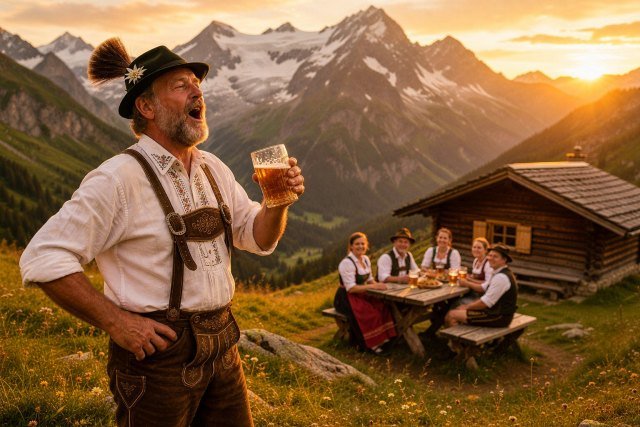
If you’ve ever heard a clear, ringing call bounce from peak to peak and wondered how a human voice can sound both ancient and alive, you’re already close to understanding the Jodelmeister. In Alpine communities — especially across Switzerland’s mountain regions — yodeling isn’t a novelty act. It’s a living tradition shaped by landscape, language, and local pride. And at the center of many choirs, festivals, and training circles is the Jodelmeister: the master yodeler who guards technique, teaches style, and keeps cultural memory in tune.
- What is a Jodelmeister?
- The Alpine roots of yodeling: why mountains shaped the voice
- Why the Jodelmeister matters in Alpine culture
- Jodelmeister training: what actually makes a “master” yodeler?
- Alpine festivals and the living stage of the Jodelmeister
- UNESCO recognition: what it changes (and what it doesn’t)
- How to experience authentic Jodelmeister culture as a traveler
- A real-world scenario: what a Jodelmeister rehearsal looks like
- Actionable tips: how to learn the Jodelmeister way (even as a beginner)
- FAQ: People also ask about the Jodelmeister and Alpine yodeling
- Conclusion: Why the Jodelmeister is the doorway into Alpine culture
In recent years, Alpine yodeling has gained broader international attention as UNESCO recognized yodeling as intangible cultural heritage, emphasizing how it’s taught, shared, and woven into community life. That recognition didn’t “create” the culture — it simply spotlighted what Alpine people have long known: this voice-driven art form is a social glue, a skill, and a story passed from one generation to the next.
What is a Jodelmeister?
A Jodelmeister (literally “yodel master”) is a highly skilled yodeler — often a choir leader, teacher, arranger, or respected tradition-bearer — known for deep command of Alpine vocal style. Depending on region and community, the role can include:
- coaching singers on tone, resonance, and clean register shifts
- preserving local “dialects” of yodeling (yes, yodels can have regional accents)
- preparing groups for competitions and festivals
- mentoring youth to keep the tradition thriving
Think of the Jodelmeister as part vocal coach, part cultural curator, part community leader — someone who treats yodeling as craft, not gimmick.
The Alpine roots of yodeling: why mountains shaped the voice
Yodeling is famously associated with mountainous terrain because it works there. Wide valleys and steep slopes create natural acoustics that carry sound across distance. Encyclopaedia Britannica notes yodeling as a singing style that rapidly alternates between chest voice and falsetto, and it has historically been used for communication in mountainous regions.
Over time, what began as practical calling evolved into musical expression — performed at gatherings, seasonal celebrations, and community events. Switzerland’s official cultural storytelling around tradition still links yodeling and alphorns to festivals and rural seasonal life.
Why the Jodelmeister matters in Alpine culture
Alpine traditions often survive because people organize around them — clubs, choirs, training programs, and big annual events. The Jodelmeister sits at the point where artistry meets structure.
The Jodelmeister as a keeper of “sound identity”
In many Alpine areas, yodeling isn’t “one thing.” It’s a spectrum of styles shaped by valley, canton, and community. A Jodelmeister helps a group maintain a consistent sound — like protecting a musical dialect.
The Jodelmeister as a teacher of technique, not just songs
UNESCO highlights that yodeling is passed down orally, via sheet music, choirs, and lessons — through both informal community settings and formal instruction. The Jodelmeister often bridges these worlds: teaching old patterns while helping singers adapt to modern rehearsal methods.
The Jodelmeister as a cultural connector
Yodeling commonly appears alongside other hallmark Alpine customs, including alphorn performance and festival traditions. When a Jodelmeister trains a group for public performance, they’re not just preparing music — they’re preparing a community moment.
Jodelmeister training: what actually makes a “master” yodeler?
A strong voice helps, but mastery is mostly about control — especially at the “break” between registers.
1) Clean register transitions (the signature yodel flip)
The most recognizable technical skill in yodeling is the rapid alternation between low chest register and high head voice/falsetto. Britannica describes this as a defining feature of yodel technique.
A Jodelmeister trains singers to make the flip:
- clean (no cracking)
- rhythmic (so it locks with the group)
- expressive (so it feels like music, not mechanics)
2) Resonance that carries outdoors
Alpine yodeling was born in open air. Even when performed indoors today, the aesthetic often favors a tone that “travels.” That doesn’t mean shouting. It means focused resonance — placing the sound so it projects.
3) Regional style discipline
National Geographic notes that Swiss yodeling institutions can be tradition-focused, with norms around what’s considered “correct” style. A Jodelmeister typically understands what judges and communities expect — especially in formal festival contexts.
4) Group blend and timing
In choir yodeling, mastery includes shaping ensemble balance: who carries melody, who supports harmony, who leads call-and-response, and how breaths line up so the sound doesn’t collapse.
Alpine festivals and the living stage of the Jodelmeister
To understand Alpine culture, you need to see where yodeling lives: festivals, competitions, and seasonal gatherings.
One of the most important structures supporting the tradition is the Swiss Yodeling Association (Eidgenössischer Jodlerverband), founded in 1910, which organizes activities and competitions in yodeling and related Alpine arts.
Modern reporting around UNESCO recognition notes that Switzerland has about 12,000 yodelers participating across roughly 780 groups under that association’s umbrella — an indicator of how organized and widespread the tradition remains.
In these settings, the Jodelmeister’s role becomes highly visible: selecting repertoire, coaching performance polish, and ensuring the group’s sound reflects its home region.
UNESCO recognition: what it changes (and what it doesn’t)
UNESCO’s intangible cultural heritage listing doesn’t “freeze” a tradition in time — but it can increase awareness and support. UNESCO describes yodeling as a practice learned through choirs, lessons, and shared knowledge, promoting identity and participation.
News coverage of Switzerland’s recognition emphasizes that yodeling today is not only a historic herders’ call; it’s also a contemporary musical expression practiced widely in clubs and festivals.
For a Jodelmeister, this spotlight can be double-edged:
- Positive: more interest, more learners, more cultural pride
- Challenging: more “tourist yodel” stereotypes, more pressure to perform for outsiders
A true Jodelmeister navigates that tension by teaching context alongside technique.
How to experience authentic Jodelmeister culture as a traveler
If you want the real thing (not a stage caricature), aim for community-rooted experiences.
Start with places where tradition is part of daily identity
Swiss cultural overviews point out that alphorns and yodeling remain strongly tied to living traditions and festivals. Look for local events calendars in mountain regions rather than only big-city “folk nights.”
Choose experiences led by clubs, choirs, or festivals
Events connected to official associations or established festivals are more likely to feature trained performers and respected local leaders (often including Jodelmeister-level teachers).
Ask better questions (and you’ll get better stories)
When you meet performers, skip “How do you do that?” and try:
- “Is your style from this valley or another region?”
- “Who taught your group?”
- “Do you sing more traditional pieces or newer compositions?”
Those questions invite cultural depth — and the Jodelmeister in the room will usually light up.
A real-world scenario: what a Jodelmeister rehearsal looks like
Picture a small village hall in the early evening. Snowmelt is loud outside. Inside, a mixed-age group forms a semicircle. The Jodelmeister starts not with singing — but with listening.
They ask the group to sing a simple phrase, then stop them after two bars:
- “The flip is too early.”
- “Hold the vowel longer.”
- “Let the high note bloom — don’t pinch it.”
No one is embarrassed. This is normal. It’s craft.
Then the Jodelmeister demonstrates: a clean, bright register shift that snaps into harmony like a bell. A few singers grin — because they can feel when it’s right. That moment — shared recognition — is how traditions stay alive.
Actionable tips: how to learn the Jodelmeister way (even as a beginner)
You don’t need to be Swiss to learn respectfully. But you do need to treat it like a tradition, not a party trick.
Breath first. If your breath collapses, your register flip will crack.
Practice vowels slowly. Many Alpine yodel styles rely on vowel clarity. Train the “flip” on sustained vowels before adding speed.
Record yourself outdoors. Yodeling’s original acoustic home matters. Even a quiet hillside can teach you how resonance behaves.
Study authentic sources. Start with choirs, clubs, and cultural institutions — UNESCO’s description emphasizes structured transmission through choirs and lessons, not just viral clips.
FAQ: People also ask about the Jodelmeister and Alpine yodeling
Is yodeling really recognized by UNESCO?
Yes. UNESCO lists yodeling as intangible cultural heritage and describes how it is taught through choirs, lessons, and community practice.
How many yodelers are there in Switzerland today?
Reporting around UNESCO recognition cites Switzerland’s estimate of about 12,000 yodelers participating across around 780 groups connected to the Swiss Yodeling Association.
Is a Jodelmeister an official title?
Sometimes it’s formal (in clubs and teaching contexts), sometimes informal (a respected master in a community). Either way, it signals mastery, leadership, and deep knowledge of style.
What’s the difference between “tourist yodeling” and authentic Alpine yodeling?
Authentic Alpine yodeling is usually learned through tradition-bearing contexts — choirs, clubs, lessons, festivals — and reflects regional style rules and community meaning. UNESCO’s description emphasizes transmission through community and instruction, not novelty performance.
Can beginners learn yodeling without damaging their voice?
Yes — if trained gradually. The key is controlled breath support, gentle register exploration, and avoiding forced volume. A skilled teacher (the role a Jodelmeister often fills) prevents strain by focusing on technique before speed and power.
Conclusion: Why the Jodelmeister is the doorway into Alpine culture
If you want to understand Alpine culture from the inside, listen for the people who keep it coherent — who teach, correct, encourage, and carry the sound forward. That’s the Jodelmeister. They’re not just performing notes; they’re protecting a way of hearing the mountains and belonging to the community that lives among them.
And now, with global recognition shining a light on yodeling’s cultural value, the Jodelmeister’s work matters more than ever: keeping the tradition honest, teachable, and alive — one clear call at a time.