When lm7 upgrading to 1 cable alternator, many DIY builders and LS-swap enthusiasts overlook key wiring steps, grounding issues, and system requirements that can lead to charging problems or even electrical failure. Whether you’re converting a GM LM7 engine during a swap or modernizing your charging setup, understanding the common mistakes can help you avoid costly errors and ensure a reliable, correctly functioning alternator upgrade.
In this complete guide, we’ll cover the biggest wiring pitfalls, grounding rules, voltage sensing problems, connector mistakes, fuse sizing, and installation errors, all based on real-world experience from LS builders.
Why Upgrade an LM7 to a 1 Cable Alternator?
Before diving into the mistakes, it’s important to understand why many builders choose a 1-cable (1-wire) alternator upgrade on an LM7 engine.
Benefits include:
- Simplified wiring (only a main charge wire)
- Cleaner engine bay layout
- Fewer failure points
- Automatic voltage regulation
- Better for hot rods or LS swap projects
However, despite its simplicity, the lm7 upgrading to 1 cable alternator process requires attention to detail to avoid charging issues.
Common Mistakes to Avoid When LM7 Upgrading to 1 Cable Alternator
Below are the most frequent errors made by DIY installers and even some experienced mechanics.
1. Using the Wrong Gauge Wire for Main Charging Lead
A 1-wire alternator often produces higher amperage, sometimes 140–220 amps depending on the model.
Mistake:
Using too thin a wire (8-10 gauge).
Why it’s a problem:
- Causes overheating
- Voltage drop
- Reduced charging output
- Potential fire hazard
Recommended wire sizes:
| Alternator Amps | Wire Gauge |
|---|---|
| 100A–150A | 4 AWG |
| 150A–200A | 2 AWG |
| 200A–250A | 1/0 AWG |
Always match your cable size to alternator output.
2. Incorrect Grounding Setup
Grounding is one of the biggest issues people overlook when lm7 upgrading to 1 cable alternator.
Common grounding mistakes:
- Relying only on engine block grounds
- Using painted or dirty surfaces
- Not running a block-to-chassis ground
Correct grounding solution:
- Engine block → chassis ground (4 AWG)
- Chassis → battery ground (4 AWG or larger)
- Clean metal-to-metal contact
Poor grounds are responsible for:
- Low charging voltage
- ECU sensor errors
- Dim headlights
- Alternator overheating
3. Forgetting to Fuse the Main Charge Cable
A major mistake is running the charge cable directly to the battery with no fuse.
Why you must fuse it:
- Protects against alternator failure
- Prevents melted cables
- Prevents fires
Fuse recommendation:
- Use a 150A–200A ANL fuse within 12 inches of the battery or junction block.
This step is critical for safety.
4. Misunderstanding Voltage Sensing on a 1-Wire Alternator
Even though it’s called “1-wire,” many alternators still support remote voltage sensing, which greatly improves output accuracy.
Mistake:
Not connecting a sensing wire when needed.
Result:
The alternator may overcharge or undercharge.
Fix:
If your alternator includes an optional sensing terminal, run it to:
- The battery positive post, or
- A main 12V power distribution point
This helps maintain consistent 13.8–14.5V output.
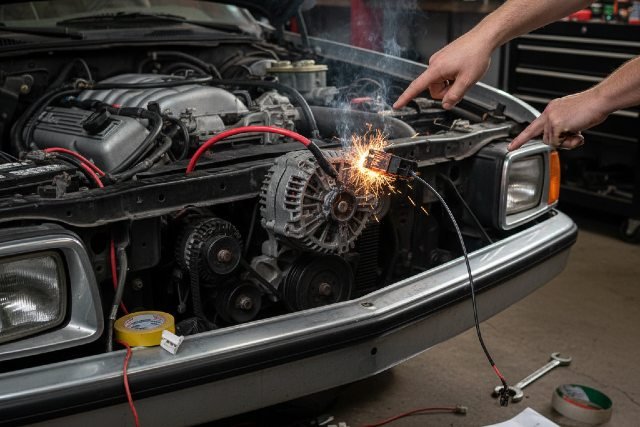
5. Leaving Old LM7 Alternator Wires Exposed or Active
When converting from factory LM7 wiring to a 1-wire alternator, people often:
- Leave old pin connector wires powered
- Fail to tape off unused wires
- Allow them to short on the block or bracket
Solution:
- Identify factory alternator plug
- Cap, tape, and secure unused wires
- Remove unused harness sections (optional)
6. Using Incorrect Pulley Size or Belt Length
Mistakes:
- Installing the alternator with misaligned pulleys
- Wrong belt length
- Belt slip leading to low rpm charging issues
Symptoms:
- Chirping belt
- Battery light flickering
- Undercharging at idle
Fix:
- Ensure pulley diameter matches LM7 speed requirements
- Verify serpentine alignment
- Use a belt tension gauge for accuracy
7. Not Considering Heat Shielding
LM7 engines generate significant heat, especially during LS swaps.
Mistake:
Running the charge cable near:
- Exhaust manifold
- Downpipes
- Headers
Solution:
Use:
- Heat sleeves
- Fiberglass loom
- High-temp routing paths
Cable failure from heat is more common than most expect.
Recommended Tools & Parts for LM7 → 1-Wire Alternator Upgrade
Essential tools:
- Ratchet and metric socket set
- Crimping tool (heavy-duty)
- Heat shrink tubing
- Voltmeter or multimeter
- Belt tension gauge
Recommended parts:
- 4 AWG or 2 AWG battery cable
- ANL fuse + block
- Battery post ring terminals
- Ground strap kit
- High output 1-wire alternator (140A minimum)
Troubleshooting: After the Upgrade
If alternator isn’t charging:
- Check grounds
- Check fusible link or ANL fuse
- Test voltage at alternator post
- Confirm correct pulley speed
If voltage is too high:
- Bad regulator
- Incorrect sensing
- Poor battery connection
If battery drains overnight:
- Check for parasitic draw
- Verify alternator diode pack
Frequently Asked Questions (FAQ)
1. Do I need to tune anything after LM7 upgrading to 1 cable alternator?
No ECU tuning is required — the alternator is self-regulated.
2. Does a 1-wire alternator charge at idle on an LM7?
Yes, but only if pulley size and rpm are correct.
3. Should I keep the factory LM7 alternator connector?
No, it’s unused for a 1-wire setup. Tape off or remove.
4. What voltage should I see after the upgrade?
Typically 13.8–14.5 volts with engine running.
5. Is a 1-wire alternator safe for long-distance driving?
Yes — if wired with correct gauge, fused, and grounded.
Conclusion: Avoid These Mistakes for a Reliable Upgrade
When tackling lm7 upgrading to 1 cable alternator, most issues come from simple errors — poor grounding, wrong cable gauge, missing fuses, incorrect pulley alignment, or failing to secure old wiring. By following the guidelines above and using proper wiring practices, your upgraded alternator will deliver clean, consistent charging and long-term reliability.
If you want a cleaner engine bay, simplified charging system, or a more swap-friendly LM7 setup, this upgrade is absolutely worth doing — just be sure to avoid the common mistakes outlined here.