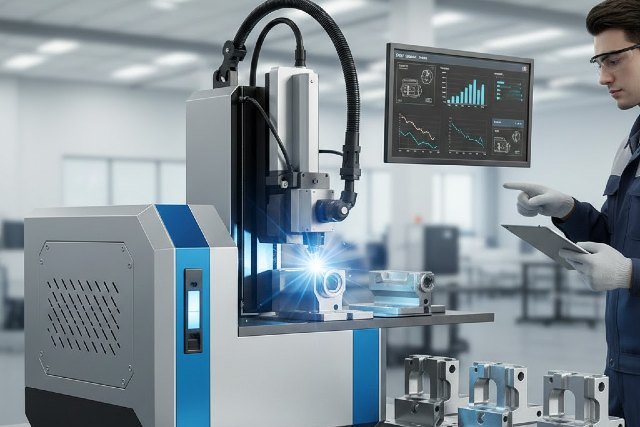
A laser welding machine has become a critical technology for manufacturers seeking cost-effective, precise, and high-speed welding solutions. In the first stages of adopting advanced manufacturing, companies often struggle with inconsistent weld quality, high labor costs, and material waste. Laser welding machines address these challenges by delivering controlled energy input, minimal distortion, and repeatable results across a wide range of materials.
- What Is a Laser Welding Machine and How It Works
- Laser Welding Machine as a Cost-Effective Welding Solution
- Advantages of Using a Laser Welding Machine in Modern Industries
- Types of Laser Welding Machines and Their Applications
- Laser Welding Machine in Automotive Manufacturing
- Precision and Quality Control with Laser Welding Machines
- Common Questions About Laser Welding Machines
- Integration of Laser Welding Machines into Automation and Industry 4.0
- Real-World Case Study: Cost Savings with a Laser Welding Machine
- Environmental and Sustainability Benefits of Laser Welding Machines
- Selecting the Right Laser Welding Machine for Your Needs
- Conclusion: Why a Laser Welding Machine Is a Smart Investment
As global manufacturing shifts toward automation and Industry 4.0, laser welding machine adoption continues to grow. According to MarketsandMarkets, the global laser welding market is projected to exceed $4 billion by the end of the decade, driven by demand from automotive, electronics, and medical device industries. This growth highlights how laser welding technology is no longer niche but a mainstream production solution.
What Is a Laser Welding Machine and How It Works
A laser welding machine is an advanced welding system that uses a highly focused laser beam to join metals or thermoplastics. The laser generates intense heat in a precise area, melting the material and forming a strong weld upon cooling. This process allows for deep penetration, narrow weld seams, and excellent control compared to conventional welding methods.
Unlike traditional arc welding, a laser welding machine can be automated easily and integrated into robotic production lines. This makes it ideal for high-volume manufacturing where consistency and speed are essential. The ability to focus energy precisely also reduces the heat-affected zone, preserving material properties and surface finish.
Laser Welding Machine as a Cost-Effective Welding Solution
At first glance, a laser welding machine may appear more expensive than conventional welding equipment. However, when total cost of ownership is considered, it often proves to be far more cost-effective. Reduced rework, lower scrap rates, and faster cycle times contribute directly to long-term savings.
Studies from the European Photonics Industry Consortium show that laser-based manufacturing processes can reduce production costs by up to 30 percent through efficiency gains. A laser welding machine minimizes consumables such as filler materials and electrodes, while also reducing post-weld finishing requirements. Over time, these efficiencies offset the initial investment and improve overall profitability.
Advantages of Using a Laser Welding Machine in Modern Industries
One of the most significant advantages of a laser welding machine is precision. The ability to weld extremely small or complex components makes it indispensable in industries such as electronics and medical devices. Manufacturers can achieve clean, aesthetically pleasing welds without compromising strength.
Another advantage is speed. Laser welding machines operate at much higher speeds than traditional welding techniques, making them ideal for mass production. Automotive manufacturers, for example, use laser welding to assemble body panels with high accuracy and minimal distortion, improving both safety and appearance.
Energy efficiency is another factor that contributes to cost-effectiveness. According to the U.S. Department of Energy, laser-based manufacturing processes can be significantly more energy-efficient than conventional thermal methods when optimized correctly.
Types of Laser Welding Machines and Their Applications
Laser welding machines come in several configurations, each designed for specific applications. Fiber laser welding machines are widely used due to their high efficiency, long lifespan, and low maintenance requirements. They are commonly found in automotive, aerospace, and heavy equipment manufacturing.
CO₂ laser welding machines are still used in certain applications, particularly for non-metal materials or thicker sections. Meanwhile, handheld laser welding machines are gaining popularity among small and medium-sized workshops because they offer flexibility and lower entry costs.
Choosing the right laser welding machine depends on factors such as material type, thickness, production volume, and required precision. Manufacturers that align machine selection with application needs achieve the highest return on investment.
Laser Welding Machine in Automotive Manufacturing
The automotive industry is one of the largest adopters of laser welding machine technology. From body-in-white assembly to battery welding in electric vehicles, laser welding delivers speed, strength, and repeatability.
Electric vehicle production, in particular, relies heavily on laser welding machines for battery packs and lightweight materials such as aluminum. According to McKinsey, EV manufacturers using advanced welding technologies achieve higher energy density and improved battery safety. This demonstrates how laser welding machines directly support innovation and sustainability goals.
Precision and Quality Control with Laser Welding Machines
Quality control is a major concern in advanced manufacturing, and laser welding machines offer superior consistency. Automated systems ensure that each weld follows the same parameters, reducing human error and variability.
Many modern laser welding machines integrate real-time monitoring and sensor feedback. These features allow manufacturers to detect defects immediately and adjust parameters on the fly. Research published in the Journal of Materials Processing Technology highlights that real-time laser weld monitoring can reduce defect rates by more than 40 percent.
This level of control is particularly important in regulated industries such as aerospace and medical manufacturing, where weld integrity is critical.
Common Questions About Laser Welding Machines
Is a laser welding machine suitable for small businesses?
Yes, many small businesses now adopt compact or handheld laser welding machines. These systems require less training than traditional welding and deliver high-quality results, making them practical for workshops with limited space or labor.
What materials can a laser welding machine weld?
A laser welding machine can weld a wide range of materials, including stainless steel, carbon steel, aluminum, titanium, and certain plastics. The versatility of laser welding makes it suitable for diverse industries.
How safe is operating a laser welding machine?
Modern laser welding machines are designed with multiple safety features such as enclosures, interlocks, and protective eyewear requirements. When operated according to standards set by organizations like OSHA and ISO, laser welding is considered safe and reliable.
These concise answers are structured to support featured snippets while directly addressing common search queries.
Integration of Laser Welding Machines into Automation and Industry 4.0
Automation is a defining trend in modern manufacturing, and laser welding machines integrate seamlessly into smart factories. Robotic laser welding cells enable continuous production with minimal downtime, improving throughput and consistency.
Industry 4.0 emphasizes data-driven manufacturing, and laser welding machines support this by generating detailed process data. This data can be analyzed to optimize parameters, predict maintenance needs, and improve overall equipment effectiveness. For more insights, readers can explore internal resources such as /industrial-automation-solutions and /smart-manufacturing-systems.
According to Siemens, manufacturers that integrate digital monitoring into production equipment can improve productivity by up to 20 percent.
Real-World Case Study: Cost Savings with a Laser Welding Machine
A mid-sized metal fabrication company transitioned from MIG welding to a fiber laser welding machine for stainless steel components. Initially concerned about investment costs, the company focused on long-term efficiency.
Within one year, weld cycle times were reduced by nearly 50 percent, and rework rates dropped significantly. The company also reduced consumable costs and improved product consistency, leading to higher customer satisfaction. This real-world example illustrates how a laser welding machine can deliver measurable cost savings when aligned with production goals.
Environmental and Sustainability Benefits of Laser Welding Machines
Sustainability is becoming a priority across industries, and laser welding machines contribute positively to environmental goals. Reduced material waste, lower energy consumption, and minimal use of consumables make laser welding a cleaner process.
The International Energy Agency emphasizes that improving industrial energy efficiency is critical for reducing global emissions. By adopting laser welding machines, manufacturers can align productivity improvements with sustainability initiatives.
Selecting the Right Laser Welding Machine for Your Needs
Choosing the right laser welding machine requires careful evaluation of application requirements. Factors such as power output, beam quality, automation compatibility, and after-sales support all influence performance and cost-effectiveness.
Manufacturers should also consider future scalability. Investing in a laser welding machine that supports upgrades and integration ensures long-term value as production demands evolve.
Conclusion: Why a Laser Welding Machine Is a Smart Investment
A laser welding machine represents a cost-effective, precise, and future-ready solution for advanced welding applications. By reducing waste, improving quality, and enabling automation, it delivers value far beyond its initial cost.
From automotive and aerospace to electronics and small workshops, laser welding machines are reshaping how products are manufactured. As industries continue to embrace digital transformation and smart manufacturing, adopting a laser welding machine is not just a technical upgrade but a strategic investment in efficiency, quality, and long-term competitiveness.