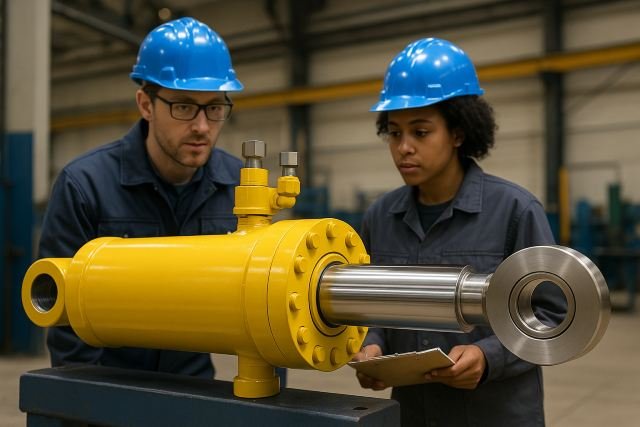
A Hydraulic Cylinder is a powerful mechanical device used to create linear force and motion through hydraulic fluid pressure. Found in nearly every industrial sector — from construction and manufacturing to agriculture and mining — hydraulic cylinders are essential for lifting, pushing, pulling, and holding heavy loads. Understanding the meaning, function, and industrial importance of a hydraulic cylinder can help engineers, machine operators, and buyers make smarter operational decisions.
- 1. Single-Acting Hydraulic Cylinder
- 2. Double-Acting Hydraulic Cylinder
- 3. Telescopic Hydraulic Cylinder
- 4. Tie-Rod Hydraulic Cylinder
- 5. Welded Hydraulic Cylinder
- Extreme Power Output
- Smooth and Precise Movement
- High Efficiency
- Compact Design with High Force
- Durability and Long Lifespan
- 1. Oil Leakage
- 2. Slow Cylinder Speed
- 3. Overheating
- 4. Corrosion on Rod
- Key Factors
- Questions to Ask Your Supplier
In this full guide, we explore how a Hydraulic Cylinder works, its components, applications, benefits, and frequently asked questions in a professional yet easy-to-read format.
What Is a Hydraulic Cylinder?
A Hydraulic Cylinder is a linear actuator that converts hydraulic energy (pressurized fluid) into mechanical force. When hydraulic oil enters the cylinder, it pushes the piston, creating controlled motion. This simple yet powerful mechanism enables machines to lift thousands of kilograms with high precision.
Hydraulic cylinders are a critical component of hydraulic systems, widely used in heavy equipment, industrial automation, and mechanical engineering.
How a Hydraulic Cylinder Works
The basic working principle of a hydraulic cylinder is based on Pascal’s Law, which states that pressure applied to a confined fluid is transmitted equally in all directions.
Step-by-Step Working Process
- Hydraulic pump pressurizes the oil.
- Pressurized oil flows into the cylinder chamber.
- The oil pushes the piston, causing the rod to extend.
- Movement creates force that lifts, pushes, or pulls loads.
- Oil is redirected to retract the piston when needed.
This smooth, controlled motion makes hydraulic cylinders superior to electric and pneumatic systems in heavy-duty applications.
Main Components of a Hydraulic Cylinder
Understanding the parts helps improve system maintenance and performance.
1. Cylinder Barrel
Holds the hydraulic fluid and guides the piston.
2. Piston
Divides the barrel into two chambers; receives hydraulic pressure.
3. Piston Rod
Extends and retracts to move the load.
4. Cylinder Head & Cap
Seal the ends of the cylinder and guide the rod.
5. Seals
Prevent oil leakage and maintain pressure.
6. Ports
Connect hydraulic hoses for fluid entry and exit.
7. Mountings
Help attach the cylinder to a machine or frame.
These components work together to create strong, consistent linear motion.
Types of Hydraulic Cylinders
Different industries require different hydraulic cylinder designs. Below are the most common types.
1. Single-Acting Hydraulic Cylinder
Operates in one direction using hydraulic pressure; returns via gravity or spring.
Best for: lifting applications, jacks, presses.
2. Double-Acting Hydraulic Cylinder
Uses hydraulic pressure in both directions — extend and retract.
Best for: machinery requiring precise bidirectional motion.
3. Telescopic Hydraulic Cylinder
Features multiple stages for long strokes in compact spaces.
Best for: dump trucks, cranes, mobile equipment.
4. Tie-Rod Hydraulic Cylinder
Held together with high-strength tie rods.
Best for: industrial applications and automation.
5. Welded Hydraulic Cylinder
Compact, strong, and ideal for high-pressure tasks.
Best for: construction equipment and heavy-duty machinery.
Hydraulic Cylinder Materials and Construction
High-quality cylinders are made from:
- Hardened steel (barrel and rod)
- Chrome-plated rods (for durability and corrosion resistance)
- Polyurethane seals (for high-temperature performance)
- High-strength alloy pistons
Material selection affects lifespan, pressure capacity, and environmental resistance.
Industrial Uses of Hydraulic Cylinders
Hydraulic cylinders are used across multiple industries due to their strength and precision.
1. Construction Industry
- Excavators
- Bulldozers
- Loaders
- Backhoe machinery
2. Manufacturing
- Press machines
- Injection molding equipment
- Conveyor automation
3. Agriculture
- Tractors
- Harvesting equipment
- Hydraulic arms & implements
4. Mining & Heavy Equipment
- Drilling rigs
- Mining trucks
- Rock crushers
5. Shipping & Material Handling
- Forklifts
- Cranes
- Hydraulic lifts
6. Automotive Industry
- Car lifts
- Braking systems
- Manufacturing robots
Hydraulic cylinders are vital for any process where high force and controlled motion are needed.
Benefits of Hydraulic Cylinders
Extreme Power Output
Hydraulic cylinders generate massive force, making them ideal for heavy lifting and high-load conditions.
Smooth and Precise Movement
Hydraulic fluid enables uniform motion without jerks.
High Efficiency
Up to 90% power efficiency in many systems.
Compact Design with High Force
Small cylinders can produce enormous force compared to mechanical systems.
Durability and Long Lifespan
Designed for rough, high-pressure environments.
Hydraulic Cylinder vs. Pneumatic Cylinder
| Feature | Hydraulic Cylinder | Pneumatic Cylinder |
|---|---|---|
| Power | High | Medium |
| Medium | Oil | Air |
| Precision | High | Moderate |
| Applications | Heavy duty | Light/moderate |
| Cost | Higher | Lower |
| Noise | Low | Higher |
Hydraulic cylinders outperform pneumatic cylinders when heavy loads or precise movement are required.
Common Problems & Maintenance Tips
1. Oil Leakage
Cause: worn seals
Fix: replace seals and inspect rod condition.
2. Slow Cylinder Speed
Cause: low pressure or clogged filters
Fix: clean filters and check pump output.
3. Overheating
Cause: excessive friction
Fix: improve lubrication and reduce load.
4. Corrosion on Rod
Cause: moisture or chemical exposure
Fix: use chrome-plated rods and protective covers.
Routine maintenance increases lifespan and prevents costly breakdowns.
How to Choose the Right Hydraulic Cylinder
Key Factors
- Required force (tonnage)
- Stroke length
- Mounting style
- Working pressure
- Environment conditions
- Cylinder speed
- Material compatibility
Questions to Ask Your Supplier
- Do you offer custom hydraulic cylinders?
- What seal types are included?
- What is the warranty period?
- Are spare parts easily available?
A well-chosen hydraulic cylinder improves system performance and reduces downtime.
Case Study: Increasing Efficiency in Excavators
A construction company replaced old cylinders with new high-pressure welded hydraulic cylinders.
Results:
- 25% faster lifting speed
- 30% reduction in fuel usage
- 40% longer service life
- Improved digging accuracy
This showcases how upgraded cylinders can significantly impact machine performance.
Frequently Asked Questions (FAQ)
1. What is a Hydraulic Cylinder used for?
It creates linear force and motion used in heavy machinery.
2. How long do hydraulic cylinders last?
With proper maintenance, 5–15 years depending on usage and pressure.
3. What fluid is used in hydraulic cylinders?
Hydraulic oil, typically ISO 32, 46, or 68 grades.
4. Can hydraulic cylinders be repaired?
Yes, components like seals, rods, and pistons can be repaired or replaced.
5. How much force can a hydraulic cylinder produce?
Ranging from hundreds to hundreds of thousands of pounds of force.
Conclusion: Why the Hydraulic Cylinder Matters in Modern Industry
A Hydraulic Cylinder is one of the most critical components in today’s machinery, delivering unmatched power, precision, and efficiency. From construction equipment to industrial automation, hydraulic cylinders enable the smooth and controlled movement required for complex tasks. Their durability, high force capacity, and versatility make them indispensable across engineering and manufacturing sectors. Whether you’re designing a hydraulic system, choosing a cylinder for machinery, or simply learning how they work, understanding hydraulic cylinders is essential for maximizing performance and reliability in any industry.