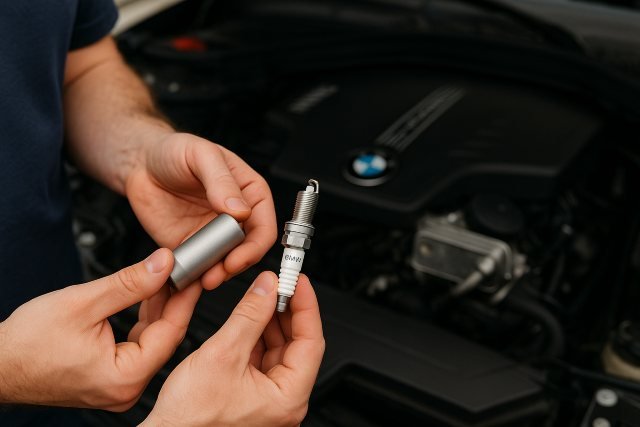
Choosing the right BMW spark plug socket is crucial if you want a smooth, damage-free spark plug replacement. BMW engines are known for their precision engineering, but that also means they use distinct spark plug sizes, deeper plug wells, and sometimes thin-wall sockets that standard auto tools don’t fit.
If you’ve ever wondered “Which spark plug socket does my BMW use?” or “Why do BMW spark plugs need a special socket?”, this guide provides a detailed, expert-level breakdown so you choose the correct tool for your specific model.
Why BMW Requires a Specific Spark Plug Socket
BMW engines often place spark plugs deep within the cylinder head or under coil-on-plug (COP) systems. This means the wrong socket:
- Won’t reach the plug
- May damage the ignition coils
- Can crack the spark plug’s ceramic body
- Might get stuck in the plug well
Because of this design, BMW requires thin-wall, 12-point sockets for many modern models—something generic sockets simply don’t offer.
Most Common BMW Spark Plug Socket Sizes
Below is a quick reference table of the most commonly used socket sizes for BMW models.
BMW Spark Plug Socket Size Chart
| BMW Engine Type / Model | Spark Plug Size | Socket Type | Notes |
|---|---|---|---|
| N20 / N26 (2.0L Turbo) | 14mm | Thin-wall, 12-point | Used in many 3-Series, 4-Series, X3, X4 |
| N55 / B58 (3.0L Turbo) | 14mm | Thin-wall, 12-point | Common in 335i, 340i, M240i, etc. |
| S55 (M3/M4) | 14mm | Thin-wall, 12-point | Deep plug wells; requires magnetic or rubber insert |
| M54 / N52 (Older 6-cyl) | 16mm | Standard or thin-wall | Used in E46, E60, E90 (non-turbo) |
| S65 / S85 (M3/M5 V8/V10) | 14mm | Thin-wall, magnetic | High-precision torque required |
| Mini Cooper (BMW Group) | 14mm | Thin-wall | Shares tool requirements with BMW |
How to Choose the Right BMW Spark Plug Socket for Your Model
Below are the key factors you must consider before buying a socket.
1. Know Your Engine Code
BMW identifies engines by alphanumeric codes such as:
- N20, N26
- N55, B58
- S55, S65
- M54, N52
You’ll usually find the engine code in:
- Your owner’s manual
- A sticker under the hood
- Vehicle registration documents
- Online VIN decoders
Why this matters:
Different engines use different spark plug hex sizes and depths, and selecting the wrong one will lead to stripped plugs or a stuck socket.
2. Check the Spark Plug Hex Size
BMW spark plugs generally come in two sizes:
14mm (most common in modern BMWs)
Requires a thin-wall design to fit the narrow plug tubes.
16mm (in older, non-turbo engines)
Used in classic E46/E90 models.
3. Choose Between Magnetic or Rubber Insert Sockets
Magnetic sockets
- Securely hold the plug
- Excellent for deep wells
- Preferred for precision engines like the S55 or S65
Rubber insert sockets
- Less expensive
- Good grip
- May wear down over repeated use
Recommendation: For BMWs, magnetic sockets are far more reliable, especially on turbocharged models.
4. Get a Thin-Wall Socket for Tight Plug Wells
BMW plug wells are narrower than many other brands. A thin-wall socket prevents:
- Scratching of the aluminum head
- Socket binding
- Broken ceramic insulators
Standard sockets often won’t fit in engines like the N20, N55, or B58.
5. Check the Socket Length (Deep vs. Extra-Deep)
BMW engines require:
- Deep sockets (common)
- Extra-deep sockets (specific M engines)
Short or shallow sockets simply won’t reach the plug.
Recommended BMW Spark Plug Socket Tool Types
1. 14mm Thin-Wall 12-Point Socket (Most Models)
Perfect for N20, N26, N55, B48, B58 engines.
2. 3/8″ Drive Magnetic Deep Socket
Ideal for turbocharged BMWs with tight access.
3. Swivel or Articulating Socket
Helpful in M engines where the access angle is tight.
4. Full BMW Spark Plug Tool Kit
Often includes:
- Extension bars
- Universal joint
- Torque wrench
- Socket sleeves
How to Identify Your BMW Spark Plug Size
- Look up your engine code (VIN decoder or manual).
- Google: “[Engine Code] spark plug socket size”.
- Remove the ignition coil and inspect the plug well.
- Check the spark plug part number on OEM sites (Bosch, NGK).
- Verify the hex size listed (14mm or 16mm).
Signs You Are Using the Wrong Socket
Watch for these red flags:
- Socket won’t fully seat on the plug
- Excessive wiggling or looseness
- Scratching around plug tube
- Spark plug cracks during removal
- Socket gets stuck in the well
If any of these happen, stop immediately — forcing the wrong tool can cause expensive repairs.
Best BMW Spark Plug Socket Brands
Here are reliable options trusted by mechanics:
- Lisle Tools – Known for thin-wall magnetic sockets
- BMW OEM Tools – Directly designed for BMW spark plug wells
- Snap-On – Professional-grade
- Tekton – Affordable, durable
- NGK / Bosch Tooling – Official plug manufacturers
Why Thin-Wall Sockets Are Critical for BMW Engines
BMW engines — especially turbocharged ones — have reduced space around the spark plug to allow for:
- Smaller combustion chambers
- Enhanced airflow
- Compact turbo plumbing
A regular 14mm socket is too thick and can get permanently wedged. A thin-wall BMW spark plug socket prevents this.
How Often Should You Replace BMW Spark Plugs?
BMW recommends replacements based on the engine type:
- Turbo engines: Every 30,000–45,000 miles
- Non-turbo engines: Every 60,000–100,000 miles
- M-Performance engines: Every 20,000–25,000 miles
DIY Spark Plug Replacement Tools Checklist
Before you start the job, make sure you have:
- Correct BMW spark plug socket (14mm or 16mm)
- Ratchet with extension
- Torque wrench
- Anti-seize (only if spark plugs require it — many NGK plugs don’t)
- Dielectric grease
- New spark plugs
- Ignition coil puller (optional)
FAQs
1. What size spark plug socket does a BMW use?
Most modern BMW engines use a 14mm thin-wall spark plug socket, while older models use 16mm.
2. Do I need a special socket for BMW spark plugs?
Yes. BMW engines require thin-wall, deep, magnetic sockets due to narrow plug wells.
3. Can I use a regular spark plug socket?
In most turbo BMW engines, no — a standard socket won’t fit and may get stuck.
4. How do I know which socket fits my model?
Check your engine code (N20, N55, etc.). Most modern engines use 14mm.
5. What happens if I use the wrong spark plug socket?
Damage can include broken plugs, scratched wells, or a stuck socket requiring professional removal.
Conclusion
Choosing the right BMW spark plug socket is essential if you want a hassle-free spark plug replacement. By identifying your engine code, confirming the hex size, and choosing a thin-wall, deep magnetic socket, you can avoid costly mistakes and ensure your BMW runs at peak efficiency.
Whether you’re maintaining a classic E46 or upgrading your modern G-Series turbo engine, the correct socket ensures precision, safety, and long-term reliability.
If you’re preparing for a DIY service, start by checking your required BMW spark plug socket size — it’s the most important tool for the job.