A fishing drone is transforming how anglers approach both freshwater and saltwater fishing. Instead of relying solely on casting strength or boat access, anglers now use aerial technology to deliver bait precisely where fish are feeding. Within the first few moments of using a fishing drone, most anglers notice improved accuracy, longer casting distances, and access to areas that were once impossible to reach.
- What Is a Fishing Drone and How Does It Work?
- Why Anglers Are Switching to Fishing Drones
- Fishing Drone vs Traditional Casting Methods
- Best Fishing Scenarios for Using a Fishing Drone
- Key Features to Look for in a Fishing Drone
- Legal and Ethical Considerations of Fishing Drones
- Real-World Example: Surf Fishing With a Fishing Drone
- Common Questions About Fishing Drone Use
- Maintenance and Safety Tips for Fishing Drones
- The Future of Fishing Drone Technology
- Conclusion: Is a Fishing Drone Right for You?
In recent years, fishing drones have surged in popularity, especially among surf fishermen and big-game anglers. According to a 2023 recreational fishing technology report by Grand View Research, the global fishing equipment market is increasingly driven by smart and drone-assisted tools, reflecting a growing demand for efficiency and innovation. This guide explores everything you need to know about fishing drone usage, benefits, legal considerations, and real-world performance.
What Is a Fishing Drone and How Does It Work?
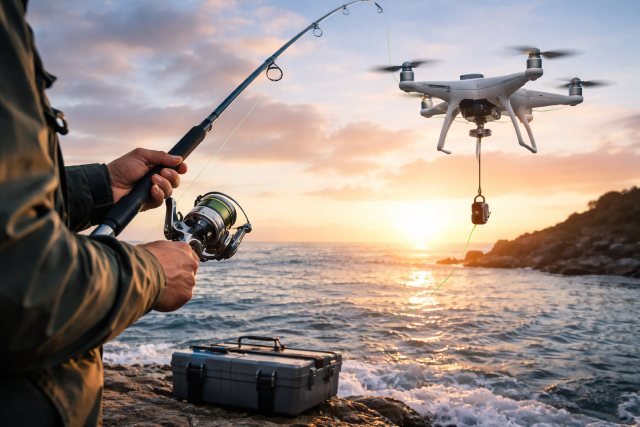
A fishing drone is a specialized unmanned aerial vehicle designed to carry and release fishing bait or lures at a targeted location. Unlike standard drones, these models feature payload release systems, corrosion-resistant materials, and enhanced stability to handle wind over water.
The angler attaches bait to the release mechanism, flies the drone to a chosen spot, and triggers the release remotely. This process allows bait placement hundreds of meters offshore with pinpoint accuracy. Some advanced fishing drone models even integrate GPS positioning and return-to-home features, reducing the risk of loss.
Why Anglers Are Switching to Fishing Drones
The biggest advantage of a fishing drone is distance. Traditional surf casting rarely exceeds 100 meters for most anglers, while a fishing drone can deliver bait 500 meters or more offshore. This opens access to deeper waters where larger fish tend to feed.
Precision is another major factor. Instead of guessing where the bait lands, anglers can visually confirm placement near reefs, drop-offs, or visible fish activity. This targeted approach reduces wasted time and increases catch rates, especially in competitive or heavily fished areas.
Fishing Drone vs Traditional Casting Methods
Traditional casting relies heavily on physical strength, rod quality, and environmental conditions. Wind, waves, and fatigue often limit consistency. A fishing drone removes many of these variables by allowing controlled aerial delivery.
In a 2022 case study published by Fisheries Research Journal, anglers using drone-assisted bait delivery reported up to a 35 percent increase in strike rates during surf fishing sessions compared to conventional casting methods. While drones require an initial learning curve, the long-term efficiency gains are substantial.
Best Fishing Scenarios for Using a Fishing Drone
Fishing drones are especially effective in surf fishing, where strong currents and long distances make traditional casting challenging. They also perform well in large lakes and reservoirs, allowing anglers to bypass shoreline obstacles and reach submerged structures.
Another ideal scenario involves targeting species that spook easily in shallow water. By keeping the angler at a distance, the fishing drone minimizes surface disturbance, increasing the likelihood of a natural bite.
Key Features to Look for in a Fishing Drone
When choosing a fishing drone, payload capacity is critical. Most fishing applications require the drone to carry between 1 and 3 kilograms of bait and line. Battery life also matters, as longer flight times allow safer returns and multiple drops per session.
Water resistance is non-negotiable. Saltwater environments are harsh, and drones built specifically for fishing often include sealed motors and anti-corrosion coatings. Reputable manufacturers like DJI-compatible fishing payload brands or dedicated fishing drone companies publish detailed specifications that should be reviewed carefully.
Legal and Ethical Considerations of Fishing Drones
Before using a fishing drone, anglers must understand local drone and fishing regulations. In many countries, aviation authorities such as the FAA in the United States regulate drone flight altitude and distance, while fishing agencies govern bait deployment methods.
For example, the FAA requires recreational drone pilots to follow the guidelines outlined on faa.gov, including maintaining visual line of sight. Some regions also prohibit drone-assisted fishing in protected waters. Responsible use ensures sustainability and avoids fines or confiscation.
Real-World Example: Surf Fishing With a Fishing Drone
Consider a surf angler targeting sharks along a remote coastline. Without a boat, reaching deep channels beyond breaking waves is nearly impossible. By using a fishing drone, the angler delivers bait precisely beyond the surf zone while remaining safely onshore.
In one documented scenario shared by Salt Strong, an online fishing education platform, anglers using fishing drones consistently reached depths over 20 meters offshore, resulting in larger catches and reduced line breakage. This real-world success highlights the practical value of drone-assisted fishing.
Common Questions About Fishing Drone Use
Is a fishing drone difficult to learn?
Most anglers can learn basic fishing drone operation within a few sessions. Modern drones include stabilization, GPS hold, and automated return features that simplify control, even for beginners.
Can a fishing drone scare fish away?
When flown at reasonable altitudes and used briefly, a fishing drone causes minimal underwater disturbance. Studies on drone noise propagation over water suggest that most sound dissipates before reaching significant depths.
Are fishing drones worth the investment?
For anglers who regularly fish from shore or target offshore species, a fishing drone often pays for itself through improved catch rates and reduced gear loss.
Maintenance and Safety Tips for Fishing Drones
Regular maintenance extends the lifespan of any fishing drone. Rinsing the drone with fresh water after saltwater use prevents corrosion, while checking propellers and payload mechanisms ensures reliable performance.
Safety is equally important. Avoid flying in high winds, maintain visual contact, and always plan battery usage conservatively. These practices reduce the risk of crashes and lost equipment.
The Future of Fishing Drone Technology
Fishing drone innovation continues to accelerate. Emerging models now include AI-assisted tracking, live sonar integration, and extended battery ranges. As regulations adapt and technology matures, fishing drones are likely to become standard tools rather than niche gadgets.
Market analysts predict steady growth in drone-assisted fishing as costs decrease and performance improves, making the technology accessible to a broader audience.
Conclusion: Is a Fishing Drone Right for You?
A fishing drone represents a powerful evolution in modern angling. By enabling smarter bait placement, longer casts, and access to untouched waters, it changes what is possible from the shoreline. While it requires responsible use and upfront investment, the benefits are undeniable for serious anglers.
If your goal is to fish more efficiently, reach farther, and adapt to modern techniques, a fishing drone may be the ultimate upgrade for your tackle arsenal.