Ergothioneine is one of those nutrition “hidden gems” that quietly shows up in serious research, yet barely makes it into everyday wellness conversations. It’s not a trendy berry extract or a short-lived supplement fad. It’s a naturally occurring, sulfur-containing antioxidant made by certain fungi and microbes — and humans get it almost entirely from food.
- What is Ergothioneine?
- Why Ergothioneine is called “underrated”
- Ergothioneine benefits: what science suggests so far
- Where Ergothioneine comes from (and why mushrooms dominate)
- Ergothioneine foods: the practical options
- Ergothioneine supplement: do you need it?
- Actionable ways to get more Ergothioneine without overthinking it
- Common questions about Ergothioneine (FAQ)
- Conclusion: Why Ergothioneine deserves a spot on your radar
What makes Ergothioneine especially interesting is that your body seems to treat it like it matters. We have a dedicated transport system that efficiently absorbs it from the gut and moves it into tissues. Researchers often refer to that transporter as OCTN1/ETT and note it’s expressed in areas like the intestine, kidneys, immune cells, and more.
If you rarely eat mushrooms (or only eat them occasionally), there’s a decent chance you’re missing out on meaningful Ergothioneine intake — especially compared with populations that consume more mushrooms or a greater variety of them.
What is Ergothioneine?
Ergothioneine (often shortened to EGT in research) is a stable antioxidant compound derived from the amino acid histidine. Unlike many antioxidants that are rapidly used up or broken down, Ergothioneine is notable for its chemical stability and for the way the body accumulates it in certain tissues.
Here’s a simple way to think about it: many antioxidants “float around” briefly, but Ergothioneine has VIP access. Your body actively pulls it in using a specific transporter and stores it where oxidative stress protection may be valuable.
Why Ergothioneine is called “underrated”
Most people have heard of vitamin C, vitamin E, polyphenols, and glutathione. Ergothioneine is rarely mentioned — yet researchers have been studying its potential role in long-term health and aging for years.
One reason it’s under-discussed is that it doesn’t fit neatly into the classic “vitamin” box. You don’t get an obvious short-term deficiency disease if you consume little of it. That said, some scientists have argued it may behave like a “longevity vitamin,” meaning it could matter for long-term resilience and healthy aging even without dramatic early symptoms.
Ergothioneine benefits: what science suggests so far
It’s important to be honest about where the evidence is strongest. Ergothioneine has compelling mechanistic and observational data, plus early interventional work in humans — but it’s not a “miracle molecule,” and it’s not a replacement for the fundamentals (sleep, movement, dietary quality).
Ergothioneine and antioxidant defense
Oxidative stress happens when reactive oxygen species outpace the body’s protective systems. Over time, this imbalance is linked (in broad, non-deterministic ways) to aging biology and many chronic diseases.
Ergothioneine has shown antioxidant and cytoprotective properties in lab and animal research, and reviews frequently highlight its potential role in redox balance and cellular protection.
What’s distinctive is not just that it can act as an antioxidant, but that the body appears to selectively accumulate it — suggesting it may have specialized physiological value.
Ergothioneine and inflammation
Oxidative stress and inflammation are tightly linked; they often amplify each other. Scientific reviews commonly describe Ergothioneine as having anti-inflammatory activity alongside antioxidant effects.
That doesn’t mean it’s an anti-inflammatory drug. But it does help explain why Ergothioneine keeps showing up in “healthy aging” discussions.
Ergothioneine and cognitive aging
Cognitive health is where Ergothioneine research has become especially visible recently.
Observational work has linked lower Ergothioneine levels with age-related cognitive concerns (association, not proof). The “longevity vitamin” discussion paper notes evidence that blood Ergothioneine may decline with age and may be lower in individuals with cognitive impairment, while emphasizing that causality isn’t established.
More importantly, human supplementation research is emerging. A randomized, double-blind, placebo-controlled trial investigated Ergothioneine intake in older adults with subjective memory complaints and measured cognition and related outcomes.
A Proceedings of the Nutrition Society review summarizing interventional trials notes that supplementation in older adults may improve domains like cognition, memory and sleep quality and may stabilize certain neurodegeneration biomarkers, with no safety concerns reported at doses up to 25 mg/day (within the studies discussed).
If you’re someone who wants a “real-world” interpretation: the science is early but serious. Ergothioneine is moving from “interesting correlation” toward “testable intervention,” and that’s a meaningful shift.
Where Ergothioneine comes from (and why mushrooms dominate)
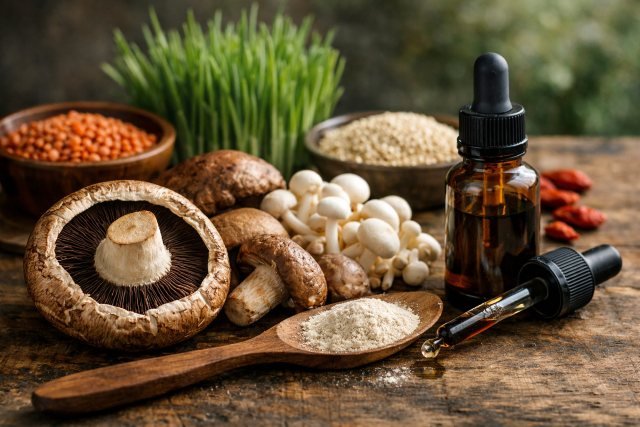
Only certain fungi and some microbes are known to produce Ergothioneine. Since mushrooms are fungi, they’re naturally the richest dietary source.
A key point from the Journal of Nutritional Science paper: commercially grown mushrooms like white button and oyster mushrooms can contain dramatically higher Ergothioneine levels than many other foods measured on a dry-weight basis.
This helps explain a pattern researchers keep finding: countries with higher mushroom intake may have substantially higher estimated Ergothioneine intake than countries where mushrooms are eaten less often or in less variety.
How much Ergothioneine do people get from food?
One of the most-cited estimates (with all the usual caveats about dietary modeling) is that Americans consume about 1.1 mg/day of Ergothioneine, while estimates in certain European countries reach up to 4.6 mg/day (Italy was highlighted in that analysis).
That’s a large gap — and it’s one reason Ergothioneine is often framed as “the antioxidant you’re probably missing” in mushroom-light diets.
Ergothioneine foods: the practical options
If you want more Ergothioneine through diet, the simplest lever is mushrooms. Variety matters because Ergothioneine levels can differ by species, and the research paper notes that oyster mushrooms, for example, can have notably higher content than the most commonly consumed U.S. mushroom (Agaricus bisporus/white button).
If mushrooms aren’t currently part of your routine, a realistic approach is to treat them like a “weekly staple” rather than an occasional garnish. From a cooking standpoint, mushrooms are one of the easiest ways to add depth to meals without needing a major recipe overhaul.
If you’re plant-based or just want more options, fermented foods made with fungi have been discussed as additional Ergothioneine sources, though mushrooms are still the heavy hitters in most diets.
Ergothioneine supplement: do you need it?
This is where a lot of people want a clear yes/no. The most accurate answer is: it depends on your diet, your goals, and your tolerance for “early-stage” evidence.
Here’s a grounded way to decide.
If you already eat mushrooms several times per week, you may already be getting meaningful Ergothioneine from food (though exact intake varies by species and portion).
If you rarely eat mushrooms, a supplement becomes a more reasonable consideration — especially if you’re interested in supporting antioxidant defenses or healthy aging strategies.
What about safety? Human studies discussed in the nutrition literature report no safety concerns at doses up to 25 mg/day within the trials reviewed, and at least one randomized controlled trial in older adults has investigated supplemental Ergothioneine with biomarker and cognitive outcomes.
Still, there isn’t an official “daily requirement” and Ergothioneine isn’t classified as a vitamin in the traditional sense. Treat supplements as optional — not mandatory — and prioritize diet first.
Actionable ways to get more Ergothioneine without overthinking it
Start with the highest-impact move: increase mushroom frequency. A simple habit is adding mushrooms to two or three meals per week in a way you actually enjoy — sautéed with eggs, tossed into pasta, stirred into rice dishes, or layered into sandwiches.
If you’re the “I want the simplest possible plan” type, think in terms of consistency over intensity. Ergothioneine is interesting partly because it can accumulate in tissues; long-term dietary patterns are likely more relevant than a short burst of perfect eating.
If you’re considering a supplement, choose products that clearly state the form (typically L-ergothioneine), provide third-party testing, and avoid stacking too many overlapping antioxidant supplements at once. More antioxidants isn’t automatically better; biology is about balance.
For more antioxidant-focused nutrition strategies, you could internally link to related guides like /antioxidants-guide or /mushroom-nutrition-benefits (replace with your site’s actual URLs).
Common questions about Ergothioneine (FAQ)
What does Ergothioneine do in the body?
Ergothioneine is absorbed using a dedicated transporter (often called OCTN1/ETT) and accumulates in various tissues. Research reviews describe it as an antioxidant and cytoprotective compound that may help protect cells from oxidative stress and related damage.
Is Ergothioneine a vitamin?
Not officially. Some researchers have proposed it as a “longevity vitamin” concept because it’s diet-derived and may matter for long-term health, even though it doesn’t cause a classic, rapid-onset deficiency disease.
What foods are highest in Ergothioneine?
Mushrooms are consistently identified as the leading dietary source, with certain species (such as oyster mushrooms) reported to have higher levels than the most commonly consumed white button mushrooms.
How much Ergothioneine should I take?
There’s no official recommended daily intake. Research-based discussion papers estimate typical intake varies by country (for example, ~1.1 mg/day in the U.S. vs. higher estimates in parts of Europe). Human trials discussed in nutrition literature have reported no safety concerns at doses up to 25 mg/day within the studies reviewed, but that doesn’t equal a universal recommendation.
Does Ergothioneine help with memory or brain health?
Evidence is emerging. Observational studies suggest associations between Ergothioneine levels and cognitive outcomes, and randomized controlled supplementation research in older adults with subjective memory complaints has been conducted. A nutrition society review of interventional trials suggests potential benefits in cognition and related outcomes, but larger studies are still needed.
Conclusion: Why Ergothioneine deserves a spot on your radar
Ergothioneine sits at a rare intersection: it’s diet-derived, heavily concentrated in mushrooms, actively transported and stored in the body, and increasingly supported by serious scientific discussion about healthy aging.
If you want a low-effort, high-upside nutrition upgrade, eating mushrooms more consistently is the most practical way to raise Ergothioneine intake. If mushrooms don’t fit your diet, a well-made Ergothioneine supplement may be worth considering — keeping expectations realistic and evidence-based.
Either way, Ergothioneine is a strong candidate for “the underrated antioxidant you’re probably missing,” and it’s likely we’ll hear a lot more about it as human research expands.