When your furnace or heat pump quits on a cold night, it’s more than an inconvenience — it can become a safety issue fast. Emergency Heating Repair is designed for exactly these moments: rapid diagnosis, safe stabilization, and getting reliable heat back as quickly as possible without cutting corners.
- What counts as an emergency heating repair?
- First 10 minutes: what to do when your heat stops
- Emergency heating repair: common causes when there’s “no heat”
- What an emergency HVAC technician does on arrival
- How fast can emergency heating repair restore heat?
- Emergency heating repair costs: what drives the bill?
- Staying safe while you wait for emergency heat repair
- Preventing the next “no heat” emergency
- Real-world scenarios: what emergency heating repair looks like
- FAQ: Emergency Heating Repair
- Conclusion: when to call for emergency heating repair
You’ll learn what counts as a heating emergency, what to do in the first 10 minutes, the most common “no heat” causes, how pros troubleshoot, typical repair timelines, and how to avoid the next breakdown. Along the way, you’ll also see safety steps backed by trusted sources and practical tips that can save time, money, and stress.
What counts as an emergency heating repair?
A true heating emergency usually means one of three things: you’ve lost heat entirely, you’re experiencing a potential safety hazard, or conditions in the home could quickly become unsafe (especially for infants, seniors, or anyone with medical vulnerabilities).
Here are the situations where calling for Emergency Heating Repair is the right move:
- No heat when outdoor temperatures are dangerously low (or the house is dropping quickly).
- Gas smell, suspected carbon monoxide risk, or symptoms like headaches and nausea (leave immediately and call emergency services).
- Burning smells, smoke, tripped breakers repeatedly, or visible electrical damage.
- Furnace short-cycling, loud banging, or the system shutting off and restarting frequently.
- A boiler leak or pressure issue that could cause water damage or system failure.
Heating equipment is also a serious fire safety topic — U.S. home fires involving heating equipment remain common and costly, which is why safety-first decisions matter when something seems “off.”
First 10 minutes: what to do when your heat stops
If you’re staring at a thermostat and wondering “Why is my house cold?”, do these steps in order. They often solve simple issues — and if they don’t, they help your technician diagnose faster.
1) Confirm the thermostat is calling for heat
Set the mode to “Heat,” raise the setpoint 3–5°F above room temperature, and wait two minutes. If it’s a smart thermostat, confirm it’s connected and not in a schedule setback you forgot.
2) Check power and safety switches
Look for a tripped breaker labeled “furnace,” “air handler,” “boiler,” or “HVAC.” Also check the furnace power switch (often a normal-looking light switch near the unit). If it keeps tripping, stop resetting it and call — repeated trips can signal electrical problems.
3) Replace a clogged filter (if you have one)
A heavily clogged filter can cause overheating and shutdowns. If your filter is visibly packed with dust, replace it with the correct size and airflow rating.
4) For gas furnaces: note any blinking LED code
Many furnaces have a small viewing window with a flashing diagnostic code. Write it down — this can save time and reduce the “trial and error” phase.
5) Do a quick safety scan
If you smell gas, see smoke, or suspect carbon monoxide exposure, do not troubleshoot — leave and get help. Cold exposure can also become dangerous quickly for at-risk people; hypothermia is a real risk in harsh conditions.
Emergency heating repair: common causes when there’s “no heat”
Most “heat stopped working” calls fall into a few repeat categories. Knowing them helps you understand what a technician is likely to check first.
Dirty filter and airflow problems
Restricted airflow can cause furnaces to overheat and shut down as a protective measure. In heat pumps, poor airflow can trigger icing and poor performance.
Ignition or flame-sensing issues (gas furnaces)
Modern furnaces use electronic ignition and safety sensors. A dirty flame sensor is a common culprit — small part, big consequence: the furnace may ignite briefly and then shut down.
Thermostat, control board, or low-voltage wiring faults
Loose thermostat wires, failing control boards, or condensate safety switches (common on high-efficiency systems) can interrupt the call for heat.
Blower motor or capacitor failure
If the blower can’t move air, the furnace may shut down. Capacitors fail more often during temperature extremes.
Heat pump defrost problems
Heat pumps can struggle in freezing weather if defrost cycles aren’t working correctly. You may see ice buildup on the outdoor unit or feel lukewarm air indoors.
Fuel supply issues
For gas: a shutoff valve closed, utility interruption, or regulator problems. For oil/propane: low tank levels or delivery timing.
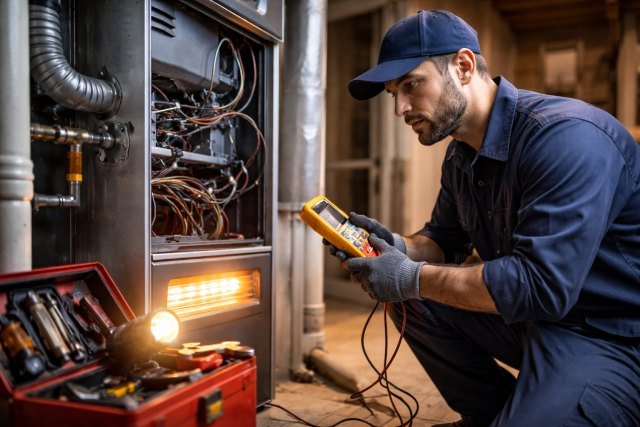
What an emergency HVAC technician does on arrival
A quality emergency visit isn’t just “swap a part and leave.” It’s a structured process that prioritizes safety, confirms root cause, and verifies stable operation.
Safety checks first
Technicians typically start by checking combustion safety (for gas systems), electrical integrity, and obvious hazards. This safety-first approach is not optional — heating-related fire risk is well-documented, and equipment that’s failing can behave unpredictably.
Rapid diagnosis
Pros use:
- Voltage and continuity tests (to confirm power and control signals)
- Temperature rise tests (to spot airflow issues)
- Combustion analysis (where appropriate)
- Error codes and pressure switch checks
Repair and verification
After the repair, a good tech verifies:
- Stable ignition and flame signal (gas furnaces)
- Proper venting and safe operation
- Correct temperature rise and airflow
- No recurring fault codes over multiple cycles
How fast can emergency heating repair restore heat?
Many emergency repairs are completed the same visit — especially if the issue is a sensor, igniter, capacitor, clogged drain, dirty flame sensor, or thermostat problem. More complex cases (heat exchanger concerns, control board failure, proprietary parts) may require ordering parts and providing temporary solutions.
A practical expectation:
- Simple fixes: 30–90 minutes
- Moderate repairs: 1–3 hours
- Parts-dependent repairs: same day to several days (depending on availability)
Emergency heating repair costs: what drives the bill?
Emergency service typically includes two categories: the service call (diagnosis/dispatch) and the repair (parts + labor). Pricing varies by market, time of day, and system type. The biggest cost drivers are:
- After-hours, weekend, or holiday dispatch
- Proprietary control boards or specialty parts
- Complex access (tight attics, rooftop units, etc.)
- Whether the repair requires multiple visits
Tip: Ask the technician to show the failed component (when feasible) and explain the test result that confirmed it. A professional will be comfortable walking you through the “why.”
Staying safe while you wait for emergency heat repair
If your home is cooling down and you’re waiting on service, focus on safe heat retention and safe supplemental heating.
Keep warmth in
Close unused rooms, block drafts with towels, and concentrate people and pets into one area. Layer clothing and use blankets.
Be careful with space heaters
Space heaters can help, but they’re a major cause of winter fire risk if used incorrectly. Follow clearance rules, keep them away from bedding and curtains, and never leave them unattended. Heating equipment fires remain a major issue across U.S. homes, with space heaters often involved — so safety practices matter.
Know when cold becomes a health risk
People can get into trouble faster than they expect — especially seniors, infants, and those with certain medical conditions. If anyone shows confusion, excessive shivering, or unusual fatigue, treat it seriously and seek help.
Preventing the next “no heat” emergency
The best time to avoid emergency heating repair is before the first cold snap.
Schedule preseason maintenance
A basic tune-up can catch:
- Dirty flame sensors or igniters
- Weak capacitors
- Venting problems
- Cracked hoses, clogged drains, and loose electrical connections
Replace filters on schedule
If you have pets or construction dust, replace more often than the “every 3 months” rule.
Use smart setbacks (without freezing your home)
Thermostat setbacks can reduce heating costs when done correctly. The U.S. Department of Energy notes you can save up to about 10% per year by setting your thermostat back 7°–10°F for 8 hours a day.
Understand efficiency ratings when upgrading
If your system is older and frequently needs repairs, it may be time to evaluate replacement. Furnace efficiency is measured in AFUE, which reflects how much fuel becomes usable heat over a typical year.
Real-world scenarios: what emergency heating repair looks like
Scenario 1: “It runs for 30 seconds, then shuts off”
Common outcome: dirty flame sensor or a pressure switch/venting issue. Many times, the tech cleans the sensor, confirms flame signal stability, and restores normal operation the same visit.
Scenario 2: “Thermostat is on, but nothing happens”
Common outcome: tripped safety switch, blown low-voltage fuse, or thermostat wiring issue. A fast electrical diagnostic often resolves this quickly — unless the underlying cause is a short that must be corrected.
Scenario 3: “Heat pump is blowing cool air”
Common outcome: defrost problem, low refrigerant charge, or outdoor unit icing due to airflow. Technicians check defrost controls, sensors, and coil condition, then verify proper operation across multiple cycles.
FAQ: Emergency Heating Repair
How do I know if my heating issue is an emergency?
If you have no heat during cold weather, suspect gas/CO risk, see smoke or burning smells, or your system keeps tripping breakers, treat it as an emergency and call immediately. Heating equipment is a leading contributor to home fire risk, so don’t ignore warning signs.
What should I do first when my furnace stops working?
Check the thermostat settings, confirm power (breaker and furnace switch), replace an extremely dirty filter, and note any furnace error code. If you smell gas or suspect CO, leave and call emergency services.
Can turning the thermostat up fix “no heat”?
Only if the issue is a schedule setback or a thermostat mode problem. If the system isn’t responding at all, it’s likely a power, safety, ignition, or control issue that needs diagnosis.
How can I stay warm safely until help arrives?
Concentrate into one room, block drafts, layer clothing, and use safe supplemental heat. Follow fire safety guidance closely if using space heaters.
Will I save money by lowering the thermostat at night?
Often, yes. DOE notes you can save up to about 10% annually by setting back 7°–10°F for 8 hours a day (when appropriate for your home and comfort).
Conclusion: when to call for emergency heating repair
When your system fails at the worst possible time, Emergency Heating Repair is about fast, safe restoration — without guessing, without risky DIY, and without ignoring warning signs. Start with quick checks like thermostat settings and power, prioritize safety if anything smells, sounds, or looks wrong, and bring in a qualified technician for proper diagnosis and verification.
If you want fewer late-night breakdowns, schedule preseason maintenance, change filters consistently, and use smart thermostat strategies that reduce strain while keeping your home safe and comfortable.