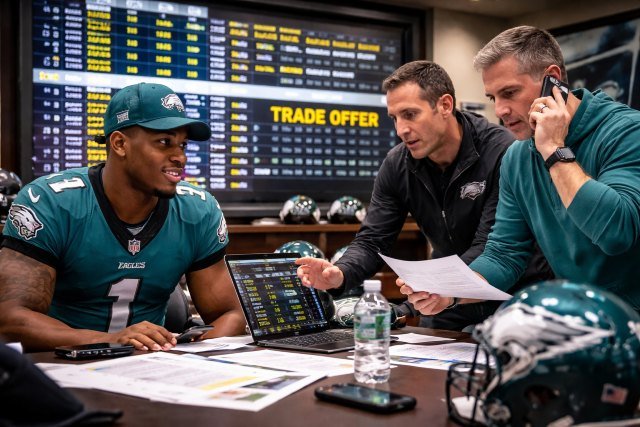
The Eagles Rookie Trade Attempt has recently become one of the most intriguing behind-the-scenes stories surrounding the Philadelphia Eagles. While draft-day headlines often focus on the final picks, the real drama usually unfolds in the hours and minutes before those selections are made.
- What Sparked the Eagles Rookie Trade Attempt?
- Why the Eagles Targeted Jihaad Campbell
- Why the Trade Up Didn’t Happen
- How the Eagles’ Draft Strategy Works
- Draft-Day Negotiations: What Really Happens
- The Value of Rookie Contracts in the NFL
- The Psychological Impact of Draft-Day Trade Attempts
- Additional Moves That Followed the Draft
- What This Means for the Eagles’ Defense
- Lessons From the Eagles Rookie Trade Attempt
- Frequently Asked Questions (FAQs)
- Final Thoughts on the Eagles Rookie Trade Attempt
In this case, the Eagles’ front office reportedly explored a bold plan to move up the draft board to secure a specific defensive prospect. However, as more information emerges, the story reveals something deeper than a simple failed trade — it highlights the Eagles’ strategic thinking, their disciplined front office approach, and the long-term roster vision guiding the franchise.
The hidden details behind the Eagles Rookie Trade Attempt, the motivations behind the move, why it ultimately didn’t happen, and what it tells us about the organization’s future strategy.
What Sparked the Eagles Rookie Trade Attempt?
The Eagles Rookie Trade Attempt reportedly began during the 2025 NFL Draft when Philadelphia identified Alabama linebacker Jihaad Campbell as a top defensive target.
At the time, the Eagles were evaluating ways to strengthen their linebacker corps — an area that had shown vulnerabilities against modern offensive schemes built around motion and spacing. Campbell stood out as a versatile defender capable of covering ground quickly and playing in both run and pass situations.
Philadelphia’s front office began exploring trade possibilities to move up the board, potentially as high as pick No. 18.
Their goal was simple:
- Secure a high-impact defensive playmaker
- Strengthen a key defensive position
- Do so while maintaining long-term roster flexibility
However, the story didn’t unfold exactly as fans expected.
Why the Eagles Targeted Jihaad Campbell
Understanding the Eagles Rookie Trade Attempt requires looking closely at what made Jihaad Campbell such an attractive prospect.
Campbell entered the draft as one of the most intriguing defensive players available. Scouts praised him for a rare combination of athleticism, intelligence, and positional versatility.
Key traits that made him appealing included:
- Sideline-to-sideline speed
- Strong pass-coverage skills for a linebacker
- High football IQ
- Leadership experience in a major college program
In today’s NFL, where offenses constantly stretch defenses with spread formations and mobile quarterbacks, players like Campbell are highly valuable. Teams need defenders who can operate in space and match up with tight ends or running backs.
For the Eagles, Campbell represented more than a rookie addition — he was seen as a potential long-term defensive anchor.
Why the Trade Up Didn’t Happen
Despite the Eagles’ interest in moving up the draft board, the trade never materialized.
The reason was surprisingly simple: price.
Draft-day trade negotiations involve complex calculations around player value, draft capital, and future flexibility. As the Eagles contacted teams ahead of them, the asking price for moving into the mid-first round reportedly increased significantly.
Rather than overpaying, the Eagles made a calculated decision:
They waited.
This patience paid off.
Instead of executing a major trade, Philadelphia made a smaller move later in the draft and ultimately selected Campbell at pick No. 31 — still securing their target without sacrificing additional high-value draft assets.
This moment perfectly illustrates the philosophy behind the Eagles Rookie Trade Attempt.
How the Eagles’ Draft Strategy Works
To understand why the Eagles handled this situation the way they did, you have to look at the franchise’s broader draft philosophy.
General manager Howie Roseman has built a reputation as one of the most aggressive yet disciplined executives in the NFL.
His approach centers on three core principles:
1. Draft Picks Are Assets
Instead of treating draft picks as fixed selections, the Eagles view them as flexible currency. They can be used to:
- Move up the board
- Move down and accumulate assets
- Acquire veteran players
This mindset allows the team to adapt quickly when unexpected opportunities arise.
2. Target Specific Players
An Eagles Rookie Trade Attempt usually occurs when the scouting department identifies a prospect with a significantly higher grade than others remaining on the board.
When that happens, the front office may attempt to reposition themselves in the draft.
3. Never Overpay
Even when pursuing a player aggressively, the Eagles rarely abandon financial discipline. If the cost becomes too high, they are comfortable walking away.
That exact situation played out during the Campbell pursuit.
Draft-Day Negotiations: What Really Happens
For fans watching the NFL Draft on television, trades may seem sudden.
In reality, they are the result of months of preparation.
During a typical Eagles Rookie Trade Attempt, several departments collaborate simultaneously:
Scouting teams evaluate player performance and character.
Analytics departments project draft outcomes.
Front-office executives communicate with other teams about trade compensation.
These negotiations happen extremely quickly once the draft begins.
A single trade window may last only a few minutes, meaning the front office must make major decisions almost instantly.
The Value of Rookie Contracts in the NFL
Another reason teams like the Eagles pursue aggressive draft moves is the financial value of rookie contracts.
Under the NFL’s collective bargaining agreement, first-round picks are placed on fixed salary structures. This means teams can secure elite talent at below-market prices for several seasons.
For example, a top defensive player selected in the first round may cost significantly less than a veteran free-agent equivalent.
This creates a major competitive advantage.
By successfully executing an Eagles Rookie Trade Attempt, the team could secure elite production while maintaining salary-cap flexibility.
That flexibility allows the franchise to retain stars such as:
- Jalen Hurts
- A.J. Brown
- Other core veterans
The Psychological Impact of Draft-Day Trade Attempts
Interestingly, the Eagles Rookie Trade Attempt may have influenced the draft even without being completed.
When teams know a franchise like Philadelphia is actively exploring trade options, it can disrupt the strategies of other organizations.
For example:
A team planning to select a certain player might worry that the Eagles will jump ahead in the draft order.
This uncertainty can trigger a chain reaction of trades across the board.
In some cases, simply signaling interest in a trade can alter the entire draft landscape.
Additional Moves That Followed the Draft
The Eagles’ strategy did not end with the draft.
In the weeks following the Eagles Rookie Trade Attempt, Philadelphia continued adjusting its roster through smaller trades and depth moves.
One notable transaction involved trading defensive tackle Thomas Booker to the Raiders in exchange for cornerback Jakorian Bennett, improving depth in the secondary.
Later, the team also acquired quarterback Sam Howell to strengthen their backup quarterback situation behind Jalen Hurts.
These moves show that the Eagles’ roster strategy is continuous, not limited to draft day.
What This Means for the Eagles’ Defense
If Campbell develops as projected, the benefits for the Eagles’ defense could be significant.
A versatile linebacker can dramatically change how a defensive unit operates.
Campbell’s potential contributions may include:
Improved coverage against tight ends and running backs
Greater flexibility in blitz packages
Faster defensive response against spread offenses
In modern NFL defenses, hybrid linebackers capable of covering space are increasingly essential.
Philadelphia appears to be building its defensive identity around that concept.
Lessons From the Eagles Rookie Trade Attempt
The Eagles Rookie Trade Attempt provides several important insights about how successful NFL franchises operate.
Strategic Aggression
Great teams are willing to pursue opportunities aggressively.
The Eagles explored a trade because they believed Campbell was worth targeting.
Discipline Matters
However, successful organizations also know when to walk away.
By refusing to overpay for the trade, the Eagles preserved valuable draft assets.
Process Over Headlines
While fans often judge decisions based on immediate results, NFL front offices focus on long-term process.
Philadelphia’s strategy reflects that mindset.
Frequently Asked Questions (FAQs)
What was the Eagles Rookie Trade Attempt?
The Eagles Rookie Trade Attempt refers to Philadelphia’s effort during the 2025 NFL Draft to trade up the board in order to select linebacker Jihaad Campbell.
Did the Eagles complete the trade?
No. The team explored multiple trade scenarios but ultimately declined to overpay for the move.
Did the Eagles still get their target player?
Yes. The Eagles eventually selected Campbell later in the draft after a smaller trade adjustment.
Why are rookie trades important in the NFL?
Rookie trades allow teams to secure high-value players on affordable contracts, giving them salary-cap flexibility and long-term roster stability.
Final Thoughts on the Eagles Rookie Trade Attempt
The Eagles Rookie Trade Attempt was never just about a single draft move. It was a revealing glimpse into the mindset of one of the NFL’s most strategic front offices.
Philadelphia demonstrated a balance that many teams struggle to achieve: aggression combined with discipline.
They pursued the player they believed in, explored every available trade path, and ultimately secured him without sacrificing valuable future assets.
In an NFL landscape where impulsive decisions can derail franchises, the Eagles’ approach offers a clear lesson:
Success isn’t about winning every trade.
It’s about making the right decisions over time.
And in the case of the Eagles Rookie Trade Attempt, the hidden details show exactly why Philadelphia continues to be one of the league’s smartest organizations.