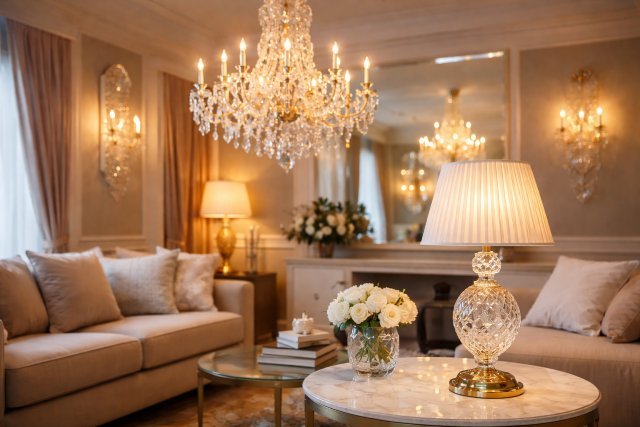
Crystal Lights can instantly change how your home feels — brighter, cleaner, and more “finished,” even if you don’t renovate anything else. In the first few seconds of walking into a room, lighting shapes the mood, highlights your décor, and affects how big (or cramped) a space appears.
- What Are Crystal Lights?
- Why Crystal Lights Make Rooms Look Brighter
- Types of Crystal Lights for Different Spaces
- How to Choose Crystal Lights That Actually Fit Your Room
- Crystal Lights and Bulbs: What Works Best?
- Quick Comparison: Crystal Lights + Bulb Choices
- Where Crystal Lights Work Best (Room-by-Room)
- Energy and Cost: Are Crystal Lights Expensive to Run?
- Installation Tips That Prevent Common Mistakes
- Maintenance: How to Keep Crystal Lights Sparkling
- FAQs
- Conclusion: Making Crystal Lights Work Beautifully in Your Home
But crystal lighting isn’t just about sparkle. The right fixture, paired with the right bulb and placement, can improve task lighting in a kitchen, make a hallway feel wider, and create that soft “hotel lobby glow” in a living room — without harsh glare.
This guide breaks down everything you need to know: types of crystal fixtures, how to choose the right size, where they work best, what bulbs to use, how much they cost to run, and how to keep them shining for years.
What Are Crystal Lights?
Crystal Lights are lighting fixtures that use crystal elements — drops, prisms, beads, or panels — to refract and scatter light. That refraction is the magic: it turns a single light source into many small highlights, which makes rooms feel brighter and more dynamic.
The “crystal” may be lead crystal, K9 crystal (common in modern fixtures), or acrylic (budget-friendly and lighter). The look can range from classic chandeliers to minimalist modern pendants with subtle crystal accents.
A helpful way to think about it: crystal doesn’t always create more light, but it can create more perceived brightness by distributing light in multiple directions and adding reflective sparkle.
Why Crystal Lights Make Rooms Look Brighter
Brightness isn’t just lumens — it’s also contrast, reflection, and where the light lands. Crystal elements help by:
- Refracting light into many directions, reducing dead zones.
- Adding highlights that increase perceived brightness.
- Bouncing light off walls/ceilings when the fixture is designed for upward spread.
If you want real efficiency too, the biggest win usually comes from pairing Crystal Lights with LEDs. Residential LED lighting can use at least 75% less energy and last up to 25 times longer than incandescent bulbs (especially ENERGY STAR-rated products).
Types of Crystal Lights for Different Spaces
Crystal Chandeliers
The statement-maker. Best for foyers, dining rooms, and stairwells where the fixture can “breathe” visually.
A chandelier works when you have either ceiling height, open space, or a focal area (like a dining table). It can still work in smaller rooms — just scale down and choose a tighter silhouette.
Crystal Pendant Lights
A favorite in modern kitchens and apartments. Pendants give you sparkle without the formality of a chandelier.
They’re ideal over:
- kitchen islands
- breakfast nooks
- bedside tables (as hanging pendants)
- vanity areas (as a pair)
Crystal Flush Mount and Semi-Flush Fixtures
If your ceilings are low, flush and semi-flush Crystal Lights give you the shimmer without crowding the room.
These are great for:
- bedrooms
- hallways
- kids’ rooms (choose closed shades for easier cleaning)
- smaller living rooms
Crystal Wall Sconces
Sconces are the secret weapon for “designer lighting.” They add layers and reduce the need for harsh overhead brightness.
Use them in:
- hallways
- living room side walls
- beside mirrors
- beside beds (hotel-style)
How to Choose Crystal Lights That Actually Fit Your Room
Size: the “too big vs too small” problem
Most people undersize. A fixture that’s slightly larger than you think often looks more intentional.
A practical guideline:
- Dining rooms: choose a fixture that visually fits the table (not the room).
- Living rooms/bedrooms: choose based on ceiling height and furniture scale.
If your fixture looks lost from the doorway, it’s probably too small.
Ceiling height: avoid “head-bump lighting”
- Standard ceilings: aim for semi-flush, compact chandeliers, or pendants that hang higher.
- High ceilings: chandeliers with vertical drop look best; they fill the space and feel luxurious.
Style match: modern crystal isn’t always “traditional”
If your home is modern, look for:
- clean lines
- fewer but larger crystal elements
- matte black, brushed brass, or chrome frames
If your home is classic, you can go fuller with layered drops and candle-style arms.
Crystal Lights and Bulbs: What Works Best?
A crystal fixture can look stunning — or painfully glarey — depending on the bulb.
Lumens matter more than watts
With LEDs, watts don’t tell you brightness. Lumens do.
LEDs can be extremely efficient; DOE notes LEDs can reach up to 150 lumens per watt or more in some cases.
Color temperature (Kelvin): the mood dial
- 2700K–3000K (warm white): cozy, flattering, best for living rooms/bedrooms
- 3500K–4000K (neutral): cleaner, crisp, best for kitchens/bathrooms
- 5000K+ (cool/daylight): very bright and clinical; usually best for garages/workspaces
Professional standards are what manufacturers use to communicate “white color” consistently; ANSI C78.377-2024 is a key U.S. standard used for defining and communicating white color ranges for solid-state lighting.
CRI: the “do colors look good?” score
CRI (Color Rendering Index) affects how paint, skin tones, wood, and food look under your lights. ENERGY STAR documents CRI as a 0–100 scale defined using CIE recommendations.
In real homes, aiming for CRI 90+ in primary living areas is a noticeable upgrade — especially near mirrors, artwork, and warm-toned interiors.
Quick Comparison: Crystal Lights + Bulb Choices
| Goal | Best bulb choice | Why it works |
|---|---|---|
| Cozy sparkle in living room | LED, 2700K–3000K, CRI 90+ | Warm glow + flattering color |
| Clean kitchen brightness | LED, 3500K–4000K, CRI 90+ | Better task clarity |
| Glam dining room impact | Dimmable LED + compatible dimmer | Mood control without flicker |
| Budget refresh | LED, CRI 80+ | Still efficient, lower cost |
Where Crystal Lights Work Best (Room-by-Room)
Living Room
Use Crystal Lights as a centerpiece, but don’t rely on one overhead fixture alone. The most expensive-looking rooms use layers: overhead + lamps + accent lighting.
A real-world setup that works: a semi-flush crystal fixture for ambient light, plus a floor lamp near seating, plus a table lamp near a wall for depth. This prevents “spotlight living room.”
Internal link suggestion: “Layered Lighting for Living Rooms” (related page)
Dining Room
Crystal chandeliers excel here because the dining table anchors the fixture. If you want a modern look, choose a linear crystal chandelier or a geometric pendant cluster.
Tip: dimming is everything in dining rooms. A dimmable LED system can shift from bright family meals to soft evening ambience.
Kitchen
Crystal pendants over an island are one of the easiest upgrades that looks expensive. The trick is to keep the silhouette clean so the space doesn’t feel “busy.”
Also: choose bulbs that don’t create harsh glare in crystal. Frosted LED bulbs or fixtures with internal diffusers can help.
Bedroom
Bedrooms look best with subtle crystal — semi-flush fixtures, small chandeliers, or bedside pendants. Keep it warm (2700K–3000K) and dimmable.
Bathroom
Crystal vanity lights can look amazing, but prioritize CRI. Bad color rendering in a bathroom mirror is a daily annoyance.
Also confirm fixture rating (damp/wet location) if it’s near shower zones.
Internal link suggestion: “Bathroom Lighting: CRI, Kelvin, and Vanity Placement” (related page)
Hallways and Entryways
This is where Crystal Lights create instant “wow.” A compact chandelier or semi-flush fixture makes a hallway feel like part of the design — not just a passage.
Energy and Cost: Are Crystal Lights Expensive to Run?
The fixture style doesn’t usually determine energy cost — the bulb does.
With LED bulbs, you can get strong brightness with low power. DOE states residential LEDs (especially ENERGY STAR rated) can use at least 75% less energy and last up to 25 times longer than incandescent lighting.
And LEDs are mainstream now: the U.S. EIA reported 47% of households used LEDs for most or all indoor lighting in 2020, up from 4% in 2015.
If you’re upgrading a crystal chandelier that previously used many incandescent bulbs, switching to LEDs is one of the fastest ways to cut lighting costs without changing your style.
Installation Tips That Prevent Common Mistakes
Use the right ceiling box and support
Crystal fixtures can be heavy. Make sure the ceiling box and mounting bracket are rated for the load. If you’re unsure, this is one of those moments where a qualified electrician is worth it.
Plan the hanging height
A dining chandelier hung too high looks disconnected. Too low becomes a visual obstacle.
A useful approach: sit at the table, look across — your chandelier shouldn’t block faces. In entryways, make sure there’s comfortable clearance for tall guests.
Choose dimmers carefully
Not all LEDs dim well on every dimmer. If you want smooth dimming without flicker, match:
- dimmable LED bulbs
- LED-compatible dimmer
- fixture design (some drivers behave differently)
Maintenance: How to Keep Crystal Lights Sparkling
Crystal looks best when it’s clean — but many people avoid crystal because they fear maintenance. The reality: if you do small upkeep, it stays easy.
A simple routine:
- Dust lightly every few weeks with a microfiber duster.
- Deep clean 1–2 times a year (or more if your kitchen produces grease).
Avoid harsh chemicals that can cloud finishes. If the fixture is near cooking areas, consider a design with fewer intricate drops.
FAQs
What are Crystal Lights?
Crystal Lights are fixtures that use crystal elements to refract and scatter light, creating sparkle and a brighter-looking space while adding a premium decorative focal point.
Are Crystal Lights old-fashioned?
Not necessarily. Modern Crystal Lights often use clean frames, minimal crystal accents, and contemporary finishes like matte black or brushed brass — so they fit minimalist and modern interiors too.
Which bulbs are best for Crystal Lights?
Dimmable LED bulbs are usually best because they’re efficient and long-lasting. For living spaces, 2700K–3000K is a popular warm range, and CRI 90+ helps colors look natural and rich.
Do Crystal Lights waste electricity?
The fixture itself doesn’t waste electricity; the bulb choice matters most. LEDs can reduce energy use dramatically compared to incandescent bulbs and last much longer.
How do I stop Crystal Lights from looking too harsh or glarey?
Use the right brightness (lumens), choose warmer color temperatures for relaxing rooms, and consider frosted bulbs or fixtures with diffusers. Also ensure your dimmer and LED bulbs are compatible to avoid flicker.
Conclusion: Making Crystal Lights Work Beautifully in Your Home
Crystal Lights aren’t just “decorative lighting.” When you choose the right size, placement, and LED bulb pairing, they can make rooms feel brighter, more polished, and more welcoming — without relying on harsh overhead glare. Focus on fit (scale + ceiling height), light quality (Kelvin + CRI), and control (dimming), and your Crystal Lights will look intentional in daylight and stunning at night.
If you want the fastest upgrade: start with an entryway or dining fixture, switch to quality dimmable LEDs, and build layered lighting around it for a designer-level result.