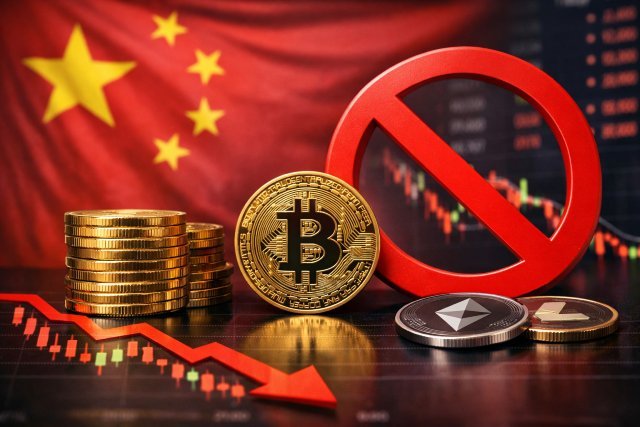
China’s stance on digital assets has once again shaken the global crypto ecosystem. With the announcement covered in https://finanzasdomesticas.com/china-prohibe-las-criptomonedas, investors, traders, and policymakers are asking the same question: what does China’s cryptocurrency ban really mean for Bitcoin and the broader crypto market?
- Understanding China’s Cryptocurrency Ban
- How the Bitcoin Market Reacted to the Ban
- Impact on Crypto Miners and Hash Rate
- What It Means for Altcoins and the Broader Crypto Market
- China’s Digital Yuan vs Cryptocurrencies
- Global Regulatory Implications
- Investor Sentiment and Market Psychology
- Real-World Example: The 2021 Mining Exodus
- Common Questions About China Banning Cryptocurrencies
- Conclusion: What China’s Crypto Ban Really Means
In the first few days following the news, volatility surged, Bitcoin prices dipped, and fear briefly returned to the market. Yet, history suggests that China’s crypto bans often have more nuance — and less long-term damage — than the headlines imply.
Understanding China’s Cryptocurrency Ban
China has not issued a single, isolated ban on cryptocurrencies. Instead, it has implemented a series of escalating restrictions over several years, culminating in a comprehensive prohibition on crypto trading, mining, and related services.
According to https://finanzasdomesticas.com/china-prohibe-las-criptomonedas, Chinese authorities reinforced their position by declaring all cryptocurrency transactions illegal, including services provided by overseas exchanges to Chinese citizens.
This move aligns with the government’s broader goals of financial control, capital flow regulation, and promotion of its own digital currency, the digital yuan (e-CNY).
Why China Keeps Banning Crypto
China’s repeated crackdowns stem from several core concerns. Cryptocurrency threatens capital controls by allowing money to leave the country without state oversight. Decentralized finance also challenges centralized monetary authority, which contradicts China’s economic governance model.
Energy consumption has been another major factor. Before the ban, China accounted for over 65% of global Bitcoin mining, according to data from the Cambridge Centre for Alternative Finance. Authorities cited environmental goals when shutting down mining operations.
How the Bitcoin Market Reacted to the Ban
Whenever China announces a crypto ban, Bitcoin reacts almost immediately. Prices tend to fall sharply in the short term as traders panic and liquidations increase.
Following the developments discussed in https://finanzasdomesticas.com/china-prohibe-las-criptomonedas, Bitcoin experienced heightened volatility, though the decline was far less severe than during earlier bans in 2017 and 2021.
This muted reaction highlights a crucial shift: Bitcoin has matured beyond dependence on China.
Short-Term Fear vs Long-Term Reality
In the short term, bans create uncertainty. Retail investors often sell, fearing stricter global regulation. However, long-term data tells a different story.
After China banned ICOs in 2017, Bitcoin reached an all-time high months later. After the 2021 mining ban, Bitcoin recovered within a year and surpassed previous price levels.
Market resilience suggests that while China’s influence was once dominant, Bitcoin has become a globally distributed asset.
Impact on Crypto Miners and Hash Rate
One of the most immediate consequences of China’s ban was the forced shutdown of mining farms. Entire mining regions such as Sichuan and Xinjiang went offline almost overnight.
Initially, Bitcoin’s hash rate dropped by nearly 50%, according to Blockchain.com data. This raised concerns about network security and transaction delays.
However, the Bitcoin protocol adjusted as designed. Difficulty levels recalibrated, and miners relocated to crypto-friendly jurisdictions like the United States, Kazakhstan, and Canada.
Decentralization Increased After the Ban
Ironically, China’s ban strengthened Bitcoin’s decentralization. Mining power became more geographically distributed, reducing systemic risk.
Today, the United States leads global Bitcoin mining, contributing over 35% of total hash rate, according to the Cambridge Bitcoin Electricity Consumption Index.
This shift made the network more resilient and politically neutral.
What It Means for Altcoins and the Broader Crypto Market
Bitcoin may dominate headlines, but China’s crypto ban affects the entire digital asset ecosystem.
Altcoins, especially those with higher speculative activity, often experience sharper price drops during regulatory shocks. Ethereum, Solana, and Binance Coin all faced temporary declines following the announcement highlighted in https://finanzasdomesticas.com/china-prohibe-las-criptomonedas.
DeFi, NFTs, and Stablecoins
Decentralized finance platforms are largely inaccessible within China due to internet restrictions and enforcement measures. NFT marketplaces and crypto-based gaming projects also face limitations, cutting off a massive potential user base.
Stablecoins like USDT have drawn particular scrutiny, as they are frequently used to bypass traditional banking systems. Chinese regulators have warned against their use, citing financial stability risks.
China’s Digital Yuan vs Cryptocurrencies
One of the most overlooked aspects of the ban is its strategic purpose. China is not anti-digital currency — it is anti-decentralized digital currency.
The digital yuan (e-CNY) is fully controlled by the People’s Bank of China. It allows real-time monitoring of transactions, programmable monetary policy, and stronger enforcement of capital controls.
By banning cryptocurrencies, China eliminates competition for its central bank digital currency while maintaining technological leadership.
According to the Bank for International Settlements, over 260 million people have already used the digital yuan in pilot programs.
Global Regulatory Implications
China’s actions often influence other governments, especially in emerging markets. Some countries see the ban as justification for tighter regulation, while others interpret it as a warning sign of overreach.
In contrast, nations like El Salvador, the UAE, and Singapore continue to adopt crypto-friendly policies. The European Union’s MiCA framework and U.S. ETF approvals suggest a more balanced regulatory approach.
This divergence shows that crypto regulation is becoming fragmented, not unified.
Investor Sentiment and Market Psychology
Fear, uncertainty, and doubt (FUD) spread quickly in crypto markets. China’s bans have historically been one of the strongest FUD catalysts.
However, seasoned investors increasingly view such events as buying opportunities rather than existential threats.
Data from Glassnode shows that long-term Bitcoin holders continued accumulating during recent China-related sell-offs, signaling confidence in Bitcoin’s future.
Real-World Example: The 2021 Mining Exodus
The 2021 mining ban offers a valuable case study. After miners left China, North America experienced a boom in mining infrastructure investment.
Companies like Marathon Digital and Riot Platforms expanded operations, creating jobs and contributing to energy grid innovation through renewable integration.
This demonstrates how regulatory pressure in one country can accelerate innovation elsewhere.
Common Questions About China Banning Cryptocurrencies
Is cryptocurrency completely illegal in China?
Yes, cryptocurrency trading, mining, and exchange services are illegal for Chinese residents, as explained in https://finanzasdomesticas.com/china-prohibe-las-criptomonedas. However, owning crypto is not explicitly criminalized, existing in a legal gray area.
Can China shut down Bitcoin completely?
No. Bitcoin is decentralized and operates across thousands of nodes worldwide. While China can restrict local participation, it cannot stop the network globally.
Does China’s ban hurt Bitcoin long term?
Historical data suggests the opposite. While short-term volatility increases, Bitcoin often emerges stronger and more decentralized after such bans.
Conclusion: What China’s Crypto Ban Really Means
The developments outlined in https://finanzasdomesticas.com/china-prohibe-las-criptomonedas confirm a familiar pattern. China bans cryptocurrencies to maintain financial control and promote its digital yuan, not because crypto is failing.
For Bitcoin and the global crypto market, the ban represents short-term volatility but long-term validation. Each crackdown reinforces Bitcoin’s decentralization, resilience, and independence from any single nation.
Rather than signaling the end of crypto, China’s ban underscores why decentralized assets exist in the first place. For informed investors and observers, that message may be more bullish than bearish.