Caring for apple trees starts with one essential skill: proper pruning. Whether you’re managing a backyard tree or a full orchard, selecting the right apple tree pruning tools dramatically affects tree health, growth patterns, and fruit production. In this expert guide, we’ll explore the essential tools, how to use them, safety tips, common mistakes, and best pruning practices trusted by horticulturists.
This article covers everything you need to know about apple tree pruning tools, ensuring you prune confidently and effectively — no matter your experience level.
Why Pruning Apple Trees Matters
Apple trees require consistent pruning to stay healthy, productive, and well-shaped. Research from Washington State University shows that properly pruned fruit trees produce larger fruits, have better disease resistance, and maintain long-term productivity.
Core benefits include:
- Improved air circulation
- Increased sunlight penetration
- Better fruit size and quality
- Reduced disease and pest risks
- Stronger branch structure
Essential Apple Tree Pruning Tools
Below is an expert breakdown of the top apple tree pruning tools every grower should use, along with tips for selecting the right one.
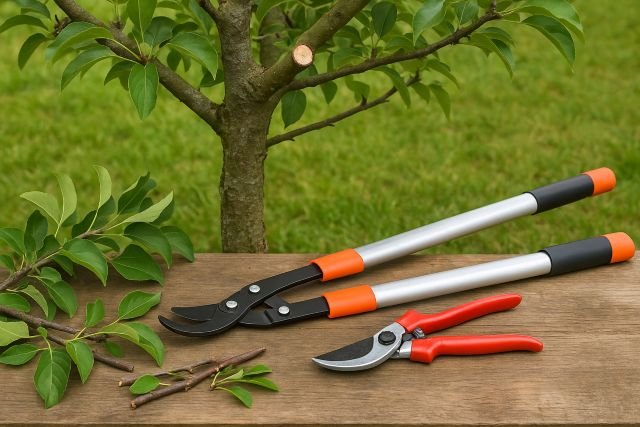
1. Hand Pruners (Secateurs)
Best for: Small twigs and branches up to 1 inch thick
Hand pruners are the most used tool for standard maintenance pruning.
Types:
- Bypass Pruners: For green, living branches (clean cut)
- Anvil Pruners: Better for dead or woody branches
Tips:
- Choose ergonomic designs to reduce hand strain
- Keep blades sharp to avoid crushing bark
2. Loppers
Best for: Medium branches 1–2 inches thick
Loppers extend your reach and provide extra leverage for thicker cuts.
Features to look for:
- Telescopic handles for added reach
- High-carbon steel blades
- Shock-absorbing grips
3. Pruning Saw
Best for: Branches 2–5 inches thick
A pruning saw is essential for mature apple trees. Curved blades make overhead cuts easier, while straight blades suit precise lower-branch cuts.
Recommended options:
- Folding pruning saw (portable)
- Fixed blade orchard saw (heavy-duty)
4. Pole Pruner
Best for: Hard-to-reach branches without climbing
Pole pruners, often extending up to 12–16 feet, help prune tall apple trees safely.
Advantages:
- Eliminates ladder risks
- Allows you to maintain tree height and shape
5. Chainsaw (With Caution)
Best for: Large, old, or neglected trees
For severely overgrown apple trees, a chainsaw may be required. Always wear safety gear and avoid chainsaws if you’re a beginner.
Safety essentials:
- Gloves
- Helmet with face shield
- Ear protection
- Chainsaw chaps
6. Pruning Shears for Fine Detailing
Used for thinning fruit clusters or shaping younger apple trees.
7. Protective Gear
Never prune without:
- Cut-resistant gloves
- Safety glasses
- Long sleeves
- Sturdy boots
Comparison Table of Apple Tree Pruning Tools
| Tool | Branch Size | Best For | Skill Level |
|---|---|---|---|
| Hand Pruners | Up to 1″ | Light pruning | Beginner |
| Loppers | 1–2″ | Medium cuts | Beginner |
| Pruning Saw | 2–5″ | Mature tree cuts | Intermediate |
| Pole Pruner | Tall branches | Hard-to-reach areas | Beginner |
| Chainsaw | 5″+ | Severe pruning | Advanced |
How to Choose the Best Apple Tree Pruning Tools
When selecting apple tree pruning tools, consider:
1. Your Tree’s Age
Young trees → lighter tools
Mature trees → saws and loppers
2. Your Pruning Style
Frequent maintenance → hand tools
Occasional pruning → heavy-duty saws
3. Blade Quality
Look for:
- High-carbon steel
- Non-stick coating
- Rust resistance
4. Comfort & Safety
Ergonomic handles prevent fatigue.
Pole tools reduce ladder risks.
How to Use Apple Tree Pruning Tools Correctly
1. Make Clean Cuts
A smooth cut heals faster and reduces disease risk.
2. Cut at an Angle
Aim for a 45-degree angle to promote proper healing.
3. Remove Competing Leaders
Apple trees should have one strong central leader.
4. Follow the 3 Ds Rule
Always start by pruning:
- Dead wood
- Diseased branches
- Damaged limbs
Best Time to Prune Apple Trees
According to the University of Minnesota Extension:
- Late winter to early spring is ideal
- Avoid freezing days to prevent bark damage
- Summer pruning helps reduce overly vigorous growth
Step-by-Step Apple Tree Pruning Method
1. Inspect the Tree
Check for dead or crossing branches.
2. Start With Major Cuts
Use a saw or loppers to remove:
- Branches growing inward
- Low-hanging limbs
- Water sprouts and suckers
3. Improve Sunlight Exposure
Prune to create an open canopy (vase shape or central leader style).
4. Thin Out Dense Areas
Allow airflow to reduce fungal diseases.
5. Shape the Tree
Maintain balance on all sides.
Common Mistakes to Avoid
- Over-pruning in one season
- Cutting too close to the trunk
- Leaving long stubs
- Using dull or dirty tools
- Pruning during extreme cold
How to Maintain Your Apple Tree Pruning Tools
- Clean blades after every session
- Oil moving parts to prevent rust
- Sharpen cutters regularly
- Store tools in a dry location
- Disinfect with a bleach solution to prevent disease spread
FAQs
What tools do I need to prune an apple tree?
You need basic apple tree pruning tools such as hand pruners, loppers, a pruning saw, and a pole pruner. Large trees may require a chainsaw.
When is the best time to prune apple trees?
Late winter to early spring, before new growth begins.
What is the easiest tool to prune small apple branches?
Bypass hand pruners work best for small, living branches.
Can I prune an apple tree in the summer?
Yes — light summer pruning helps control overly vigorous growth.
Do I need to sterilize my pruning tools?
Absolutely. Disinfect tools before and after pruning to avoid spreading diseases.
Conclusion
Selecting and using the right apple tree pruning tools is the foundation of healthy, productive apple trees. Whether you’re trimming a young sapling or shaping a mature orchard tree, the tools you choose greatly impact your results. By following the expert tips shared in this guide — and maintaining your tools properly — you’ll ensure your apple trees stay strong, disease-free, and high-yielding year after year.