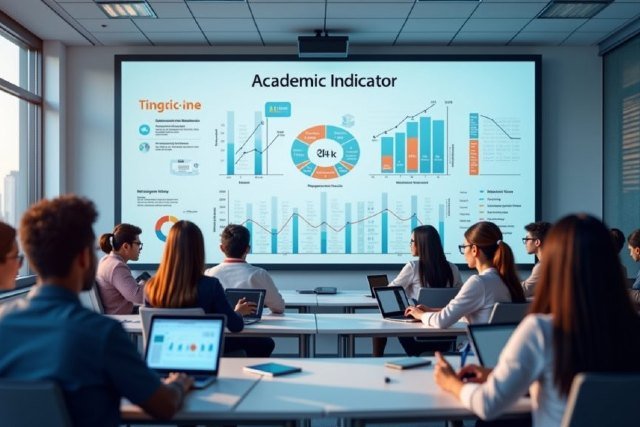
What Is Academic Performance Indicator? It is a measurable standard used to evaluate a student’s academic achievements, learning outcomes, and educational progress over a specific period. Academic Performance Indicators (APIs) help schools, colleges, universities, educators, and policymakers assess whether students are meeting established learning goals.
- Understanding Academic Performance Indicators
- Why Academic Performance Indicators Matter
- Common Academic Performance Indicators
- Key Components of Academic Performance Measurement
- Types of Academic Performance Indicators
- How Schools and Universities Use Academic Performance Indicators
- Academic Performance Indicators in Higher Education
- Factors That Influence Academic Performance Indicators
- Challenges of Using Academic Performance Indicators
- How Students Can Improve Academic Performance Indicators
- How Educators Can Use Academic Performance Indicators Effectively
- Real-World Example of Academic Performance Indicators
- Future Trends in Academic Performance Measurement
- Frequently Asked Questions
- Conclusion
In modern education systems, measuring performance is essential for ensuring quality learning. Academic Performance Indicators provide objective data that can be used to identify strengths, weaknesses, and opportunities for improvement.
Whether you’re a student trying to improve your grades or an educator seeking better assessment methods, understanding academic performance indicators can help you make informed decisions that lead to educational success.
Understanding Academic Performance Indicators
An Academic Performance Indicator is a quantifiable measure used to evaluate educational achievement. These indicators help determine how effectively students are learning and whether educational institutions are achieving their goals.
Performance indicators can be applied at multiple levels, including:
- Individual students
- Classrooms
- Departments
- Schools
- Colleges and universities
- National education systems
The primary purpose is to provide measurable evidence of academic progress and learning effectiveness.
Why Academic Performance Indicators Matter
Academic success is about more than simply earning high grades. Schools and universities need reliable ways to assess learning outcomes, educational quality, and student development.
Academic Performance Indicators help by:
- Measuring learning achievements
- Tracking student progress over time
- Identifying students who need support
- Improving teaching methods
- Supporting educational planning
- Enhancing accountability
According to research from the OECD (Organisation for Economic Co-operation and Development), educational assessment systems that utilize performance indicators contribute significantly to improving learning outcomes and institutional effectiveness.
Common Academic Performance Indicators
Several indicators are commonly used across educational institutions.
Grade Point Average (GPA)
GPA is one of the most recognized Academic Performance Indicators. It provides an overall measure of a student’s academic achievement by averaging grades across courses.
Higher GPAs generally indicate stronger academic performance.
Examination Scores
Test and examination results provide direct evidence of subject knowledge and learning outcomes.
Examples include:
- Midterm exams
- Final exams
- Standardized tests
- Entrance examinations
Attendance Rate
Research consistently shows a positive relationship between attendance and academic success.
Students who regularly attend classes often perform better academically because they receive more instructional time.
Assignment Completion
The timely completion of assignments reflects engagement, discipline, and understanding of course material.
Educators frequently use assignment performance as a key indicator of academic progress.
Course Completion Rate
This measures the percentage of students who successfully complete courses within a designated period.
Educational institutions often use course completion rates to evaluate program effectiveness.
Graduation Rate
Graduation rates serve as an institutional-level Academic Performance Indicator.
A higher graduation rate often suggests successful academic support systems and effective educational programs.
Key Components of Academic Performance Measurement
Academic Performance Indicators typically assess multiple dimensions of learning.
Cognitive Achievement
This refers to knowledge acquisition, understanding, analysis, and critical thinking abilities.
Examples include:
- Test scores
- Research projects
- Written assessments
Skill Development
Educational success involves practical skills as well as theoretical knowledge.
Indicators may measure:
- Problem-solving skills
- Communication abilities
- Technical competencies
- Research capabilities
Learning Engagement
Student participation often predicts academic achievement.
Indicators include:
- Classroom participation
- Online learning engagement
- Assignment submission rates
Academic Growth
Rather than focusing solely on final results, modern education increasingly measures improvement over time.
Growth-based indicators assess how much students progress throughout a semester or academic year.
Types of Academic Performance Indicators
Quantitative Indicators
Quantitative indicators use numerical data.
Examples include:
- GPA
- Exam scores
- Attendance percentages
- Graduation rates
These indicators are easy to measure and compare.
Qualitative Indicators
Qualitative indicators evaluate educational experiences and learning quality.
Examples include:
- Teacher evaluations
- Student portfolios
- Research quality
- Class participation
Qualitative measures provide context that numbers alone cannot capture.
How Schools and Universities Use Academic Performance Indicators
Educational institutions rely on Academic Performance Indicators for numerous purposes.
Student Assessment
Teachers use indicators to determine whether learning objectives have been achieved.
Assessment results help identify students who may require additional support.
Curriculum Evaluation
If students consistently perform poorly in specific subjects, curriculum improvements may be necessary.
Performance data enables evidence-based decision-making.
Institutional Accreditation
Many accrediting agencies require institutions to demonstrate educational effectiveness through measurable indicators.
Performance metrics often play a critical role in accreditation reviews.
Resource Allocation
Schools can use performance data to determine where additional funding, support services, or instructional resources are needed.
Academic Performance Indicators in Higher Education
Universities often use more advanced indicators than primary or secondary schools.
Common higher education indicators include:
- Research output
- Publication records
- Academic credits earned
- Degree completion rates
- Student retention rates
- Graduate employability
Many institutions combine multiple indicators to create a comprehensive evaluation system.
Factors That Influence Academic Performance Indicators
Numerous factors affect academic outcomes.
Study Habits
Students with effective study routines often achieve stronger performance results.
Good study habits include:
- Time management
- Active learning
- Regular review sessions
- Goal setting
Teaching Quality
Highly effective teachers can significantly improve student performance.
Teaching quality influences engagement, understanding, and retention.
Learning Environment
A supportive learning environment encourages academic success.
Important factors include:
- Access to educational resources
- Classroom climate
- Technology availability
- Family support
Student Motivation
Motivated students are more likely to participate actively and achieve better outcomes.
Intrinsic motivation is particularly associated with long-term academic success.
Challenges of Using Academic Performance Indicators
Although valuable, Academic Performance Indicators are not without limitations.
Overreliance on Test Scores
Focusing exclusively on examinations may overlook important skills such as creativity, collaboration, and critical thinking.
Data Interpretation Issues
Performance data can sometimes be misinterpreted if contextual factors are ignored.
For example, socioeconomic circumstances may affect academic outcomes.
Measuring Soft Skills
Indicators often struggle to capture qualities like leadership, resilience, emotional intelligence, and creativity.
As a result, many institutions now use a combination of quantitative and qualitative measures.
How Students Can Improve Academic Performance Indicators
Students can take several practical steps to improve their academic outcomes.
Set Clear Goals
Specific academic goals provide direction and motivation.
Examples include:
- Increasing GPA
- Improving attendance
- Completing assignments on time
Develop Effective Study Techniques
Evidence-based strategies include:
- Active recall
- Spaced repetition
- Practice testing
- Note summarization
Research from the American Psychological Association suggests that active learning techniques often produce stronger learning outcomes than passive reading alone.
Monitor Progress Regularly
Students should track grades, attendance, and assignment performance throughout the academic year.
Regular monitoring allows early identification of problems.
Seek Academic Support
Tutoring, mentoring, study groups, and teacher consultations can significantly improve performance indicators.
How Educators Can Use Academic Performance Indicators Effectively
Teachers and administrators can maximize the value of performance indicators by:
- Using multiple measures instead of relying on one metric
- Analyzing trends over time
- Providing timely feedback
- Supporting struggling students early
- Aligning assessments with learning objectives
A balanced approach creates a more accurate picture of student achievement.
Real-World Example of Academic Performance Indicators
Consider a university that notices declining student retention rates.
Administrators analyze several Academic Performance Indicators, including:
- GPA trends
- Attendance records
- Course completion rates
- Student satisfaction surveys
The data reveals that first-year students struggle with foundational courses.
In response, the university introduces tutoring programs and academic advising services.
Within two years, retention rates improve significantly, demonstrating how performance indicators can drive meaningful educational improvements.
Future Trends in Academic Performance Measurement
Education is evolving rapidly, and performance measurement is changing as well.
Emerging trends include:
Learning Analytics
Educational technology platforms now collect detailed data on student engagement and learning behaviors.
Personalized Assessment
Performance indicators are becoming more individualized, allowing educators to measure student growth rather than comparing students against a single standard.
Competency-Based Education
Many institutions are shifting from traditional grading systems toward competency-based models that focus on mastery of skills and knowledge.
Artificial Intelligence in Education
AI-powered tools increasingly help educators identify learning gaps and predict academic outcomes more accurately.
Frequently Asked Questions
What is an Academic Performance Indicator?
An Academic Performance Indicator is a measurable metric used to evaluate student achievement, learning outcomes, and educational effectiveness.
Why are Academic Performance Indicators important?
They help educators monitor progress, improve teaching strategies, support students, and ensure educational quality.
What are examples of Academic Performance Indicators?
Common examples include GPA, exam scores, attendance rates, assignment completion rates, graduation rates, and course completion rates.
Are grades the only Academic Performance Indicator?
No. Modern education uses multiple indicators, including attendance, participation, skill development, and learning growth.
How can students improve their academic performance indicators?
Students can improve by developing effective study habits, attending classes regularly, setting academic goals, and seeking support when needed.
Conclusion
Understanding What Is Academic Performance Indicator is essential for students, educators, and educational institutions. These indicators provide valuable insights into learning outcomes, academic achievement, and overall educational effectiveness. While grades remain important, modern performance evaluation increasingly includes attendance, engagement, skill development, and academic growth.
By using Academic Performance Indicators thoughtfully and combining quantitative and qualitative measures, educators can create more effective learning environments while students can identify opportunities for improvement and long-term success. As education continues to evolve, Academic Performance Indicators will remain a cornerstone of evidence-based learning and educational excellence.