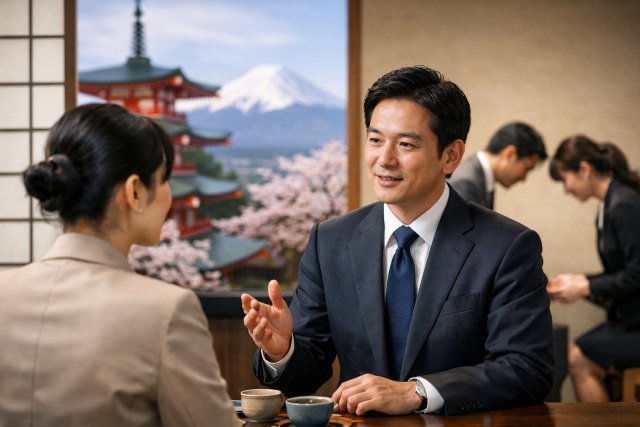
Communication in Japan often relies on subtlety, shared understanding, and situational awareness. One concept that captures this cultural communication style is Jyokyo — a term that reflects the importance of context when interpreting words, actions, and social cues.
- What Is Jyokyo?
- Why Jyokyo Matters in Japanese Culture
- Jyokyo vs Direct Communication Styles
- Real-Life Examples of Jyokyo in Communication
- How Jyokyo Shapes Japanese Business Communication
- Common Misunderstandings About Jyokyo
- Practical Tips for Understanding Jyokyo
- Jyokyo in Modern Global Communication
- FAQ: Understanding Jyokyo
- Conclusion: Why Understanding Jyokyo Improves Communication
Unlike many Western communication styles that emphasize directness, Jyokyo highlights how meaning is shaped by environment, relationships, and unspoken signals. Understanding Jyokyo can dramatically improve cross-cultural communication, business relationships, and social interactions with Japanese speakers.
What Is Jyokyo?
Jyokyo (状況) is a Japanese word that translates roughly to “situation,” “circumstance,” or “context.” In communication, it refers to understanding the full environment surrounding a conversation rather than relying solely on spoken words.
In Japanese culture, meaning often emerges from:
- social hierarchy
- shared experiences
- body language
- tone and timing
- situational awareness
Because of this, communication frequently becomes implicit rather than explicit.
For example, instead of saying “no” directly, a Japanese speaker may say:
“That might be difficult.”
In a Jyokyo-aware context, listeners understand this phrase as a polite refusal.
This communication style reflects what anthropologist Edward T. Hall called a high-context culture, where messages depend heavily on context rather than explicit statements.
Why Jyokyo Matters in Japanese Culture
Understanding Jyokyo is essential because Japanese society places strong value on harmony, respect, and social awareness.
Direct confrontation or blunt statements can disrupt group harmony. As a result, communication often becomes nuanced and indirect.
Several cultural values support this approach.
1. Maintaining Social Harmony (Wa)
Japan strongly emphasizes Wa (和) — the concept of harmony within groups.
To preserve harmony, people consider how their words will affect others. Instead of expressing strong personal opinions, individuals adapt their speech according to the Jyokyo of the moment.
2. Reading the Air (Kuuki wo Yomu)
A closely related idea is “Kuuki wo Yomu”, which means “reading the air.”
This means understanding:
- mood of the room
- emotional atmosphere
- unspoken expectations
People who fail to read the situation may be labeled KY (Kuuki Yomenai) — someone who cannot interpret social context.
3. Respecting Hierarchy and Roles
Japanese communication also depends on social roles.
For example, language changes depending on:
- age differences
- professional rank
- formality of the setting
This is reflected in Keigo (honorific language), which adjusts speech based on the relationship between speakers.
Jyokyo vs Direct Communication Styles
Understanding the contrast between high-context communication (like Japan) and low-context communication (like the United States or Germany) helps clarify why Jyokyo is so important.
In low-context cultures:
- messages are explicit
- clarity is prioritized
- direct feedback is common
In high-context cultures:
- meaning is implied
- listeners interpret context
- relationships shape communication
According to cross-cultural research from The Cultural Atlas, Japan ranks among the world’s most high-context societies.
This difference explains why misunderstandings often occur in international business.
For instance:
A Western manager might say:
“Tell me exactly what you think.”
A Japanese employee, considering Jyokyo, might respond cautiously to avoid embarrassment or conflict.
Real-Life Examples of Jyokyo in Communication
To fully understand Jyokyo, it helps to see how it appears in everyday interactions.
Business Meetings
In Japanese companies, silence often carries meaning.
Instead of interrupting or disagreeing openly, employees may remain quiet. Their silence reflects respect for hierarchy or uncertainty about the group consensus.
Foreign professionals sometimes misinterpret this as agreement.
However, within the Jyokyo, silence may signal hesitation.
Invitations and Social Situations
Imagine someone says:
“You should visit sometime.”
In Western contexts, this could be a genuine invitation.
In Japanese communication, depending on the Jyokyo, it might simply be a polite expression rather than a literal invitation.
Workplace Feedback
Criticism is often indirect.
Instead of saying:
“This report is wrong.”
A manager may say:
“Maybe we could review this section again.”
Understanding the context behind the statement is essential.
How Jyokyo Shapes Japanese Business Communication
For international professionals, understanding Jyokyo can significantly improve business relationships with Japanese partners.
Several communication patterns commonly appear in Japanese workplaces.
Indirect Decision-Making
Japanese companies often use nemawashi, a process where consensus is built informally before meetings.
By the time a formal meeting occurs, decisions have usually been shaped behind the scenes.
The Jyokyo of the meeting therefore reflects previous discussions.
Nonverbal Signals
Communication often relies heavily on nonverbal cues.
These may include:
- pauses in speech
- facial expressions
- subtle gestures
- tone of voice
Misinterpreting these signals can lead to misunderstandings.
Emphasis on Relationship Building
In Japan, trust is often developed before business transactions occur.
Understanding social context, etiquette, and hierarchy demonstrates cultural awareness and respect.
Common Misunderstandings About Jyokyo
People unfamiliar with Japanese communication sometimes misinterpret Jyokyo-based communication styles.
Several misconceptions appear frequently.
“Japanese People Avoid Saying What They Mean”
In reality, meaning is present — but expressed through context rather than direct wording.
Listeners are expected to interpret cues.
“Indirect Communication Is Inefficient”
While it may appear slower, context-driven communication often prevents conflict and preserves long-term relationships.
In cultures emphasizing group harmony, this approach can be highly effective.
“Silence Means Agreement”
Silence can represent many things:
- respect
- disagreement
- uncertainty
- contemplation
Understanding the situational context (Jyokyo) is necessary before interpreting silence.
Practical Tips for Understanding Jyokyo
Learning to recognize Jyokyo in communication requires awareness and patience.
Several strategies can help.
Observe Before Speaking
Watch how people interact in meetings or social settings.
Notice:
- who speaks first
- who remains silent
- how opinions are expressed
Pay Attention to Indirect Language
Japanese communication frequently uses soft phrases such as:
- “It might be difficult”
- “We will consider it”
- “Let’s think about it”
These may indicate polite disagreement.
Learn Cultural Context
Understanding Japanese cultural norms helps interpret context more accurately.
Resources such as The Japan Foundation offer valuable insights into Japanese communication and culture.
Build Relationships
When trust grows, communication becomes clearer.
Many messages become easier to interpret once you understand the social context surrounding a conversation.
Jyokyo in Modern Global Communication
In an increasingly globalized world, understanding Jyokyo has value beyond Japan.
Modern workplaces involve teams from diverse cultural backgrounds. Awareness of context improves collaboration and reduces misunderstandings.
Companies that train employees in cross-cultural communication often experience:
- stronger international partnerships
- fewer negotiation conflicts
- improved teamwork
According to research by Harvard Business Review, cultural misunderstandings are a major cause of global business failures.
Learning context-driven communication principles like Jyokyo helps professionals navigate these challenges.
FAQ: Understanding Jyokyo
What does Jyokyo mean in Japanese?
Jyokyo (状況) means situation, condition, or context. In communication, it refers to understanding meaning through surrounding circumstances rather than just words.
Why is context important in Japanese communication?
Japan is considered a high-context culture, where meaning often depends on social relationships, environment, and nonverbal cues.
How can foreigners improve communication with Japanese colleagues?
Foreign professionals can improve communication by observing context, listening carefully, and understanding indirect language patterns.
Is Jyokyo used only in Japan?
While the term is Japanese, many cultures rely on contextual communication. However, Japan is particularly known for its strong emphasis on situational awareness.
Conclusion: Why Understanding Jyokyo Improves Communication
Jyokyo represents a fundamental aspect of Japanese communication — the idea that meaning exists within context, relationships, and shared understanding.
By recognizing the importance of situational awareness, indirect language, and social harmony, individuals can better interpret conversations and avoid cultural misunderstandings.
Whether you are working with Japanese colleagues, traveling to Japan, or studying intercultural communication, learning about Jyokyo provides valuable insight into how context shapes human interaction.
Ultimately, mastering the art of Jyokyo is not just about language — it is about understanding people, culture, and the subtle signals that make communication truly meaningful.