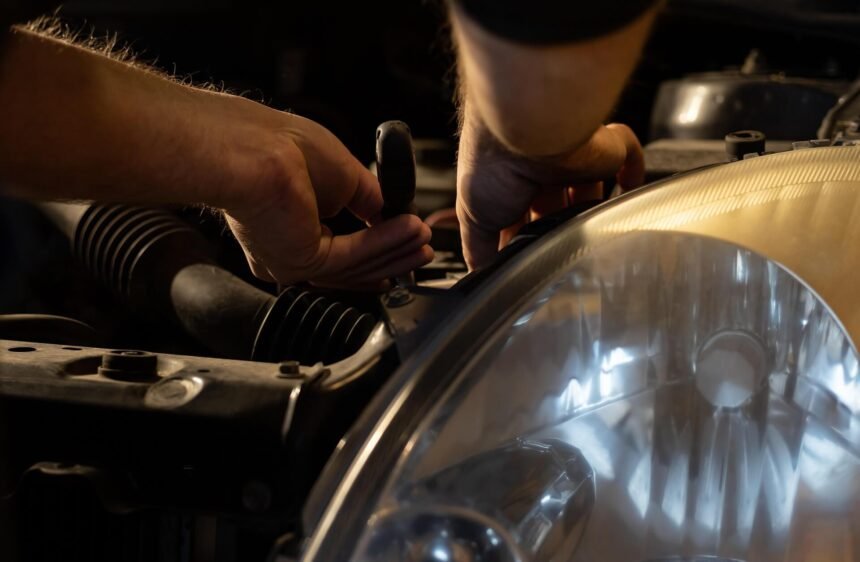
Rising costs of professional car servicing have led many drivers to explore DIY solutions for basic vehicle maintenance. The growing availability of quality automotive products designed for home use has made this trend more accessible than ever. But where should you draw the line between what you can safely handle in your driveway and what requires professional expertise?
This comprehensive guide will help you make informed decisions about car maintenance, potentially saving you hundreds of pounds annually while ensuring your vehicle remains safe and reliable. We’ll explore which tasks are perfectly suited for DIY enthusiasts, which require intermediate skills, and which should always be left to qualified mechanics.
Simple Tasks You Can Confidently Handle Yourself
#1 Exterior Care and Protection
Maintaining your car’s appearance doesn’t require professional help. Regular washing not only keeps your vehicle looking good but also protects the paintwork from corrosive elements like road salt and bird droppings. Beyond basic washing, you can easily apply protective coatings that shield your paint from UV damage and environmental contaminants.
Tyre maintenance is another area where DIY approaches shine. Applying tyre dressing products not only enhances your car’s appearance but can also protect the rubber from cracking and premature aging. Quality tyre blackeners are straightforward to apply and deliver professional-looking results in minutes.
Paint protection products have become increasingly user-friendly, with many formulations designed specifically for home application. These protective layers can last several months and significantly reduce the need for frequent washing while adding depth and shine to your paintwork. Consider using ceramic spray coatings or polymer sealants, which provide longer-lasting protection than traditional waxes and are remarkably easy to apply with just a microfiber cloth.
#2 Basic Fluid Maintenance
Checking and topping up essential fluids is one of the most fundamental car maintenance tasks. Your owner’s manual provides clear guidance on locating and checking levels for windscreen washer fluid, coolant, brake fluid, and engine oil. While checking these levels is simple, always ensure you’re using the correct specification for your vehicle.
Windscreen washer fluid is perhaps the easiest to manage. During winter months, using proper antifreeze washer fluid prevents freezing and ensures clear visibility. Some drivers make the mistake of using plain water, which can freeze in the reservoir and damage the system, potentially causing cracks in the reservoir or damage to the pump.
Pro tip: Check your engine oil when the engine is cold and the car is on level ground for the most accurate reading. Always wipe the dipstick clean first, reinsert it fully, then remove it again to check the level.
#3 Seasonal Preparations
Winter and summer bring different challenges that you can easily address yourself. Winter preparation includes keeping effective de-icing products in your vehicle. Modern glass defrosters work in seconds, eliminating the need for scraping and reducing the risk of scratching your windscreen.
Anti-fog treatments solve the persistent problem of condensation on interior glass surfaces. These products create an invisible barrier that prevents moisture from forming droplets, maintaining clear visibility even in humid conditions. Application takes just minutes and can last for weeks.
Summer preparations focus on protecting your interior from UV damage and maintaining cooling system efficiency. Dashboard protectants prevent cracking and fading, while ensuring your air conditioning system is properly maintained keeps you comfortable during hot weather. Additionally, checking your coolant levels before summer is crucial, as overheating becomes more likely during extended periods of hot weather and heavy traffic.
#4 Simple Component Replacements
Wiper blade replacement requires no special tools and takes just minutes. Fresh blades dramatically improve visibility during rain, and recognizing when they need changing is straightforward – if they streak, chatter, or leave gaps, it’s time for new ones. Most modern wiper blades feature simple clip-on mechanisms that make replacement a genuinely effortless task.
Replacing cabin air filters is another simple task that many drivers overlook. A clogged cabin filter reduces air conditioning efficiency and can cause unpleasant odours. Most filters are located behind the glove box or under the dashboard, accessible without tools. Replacing this filter every 12-15 months or 15,000 miles ensures optimal air quality inside your vehicle and can even improve fuel efficiency by reducing the load on your climate control system.
Intermediate Tasks (With Proper Equipment and Knowledge)
#1 Air Conditioning Maintenance
Topping up your car’s air conditioning system falls into an interesting middle ground. Modern DIY recharge kits have made this task accessible to home mechanics, but it requires understanding when it’s appropriate and when professional help is needed.
If your air conditioning has gradually become less effective over 2-3 years, this typically indicates normal refrigerant loss through microscopic permeation. In such cases, a DIY recharge kit can restore full cooling performance at a fraction of workshop costs.
However, if your air conditioning has stopped working suddenly or completely, this suggests a leak or component failure requiring professional diagnosis. DIY kits work best for maintenance top-ups, not repairs. Quality recharge kits include not just refrigerant but also compressor oil, leak sealant, and sometimes UV dye for leak detection. Brands like Chemical Tiger offer complete solutions with detailed instructions, making the process straightforward for those comfortable with basic mechanical tasks.
Important considerations before DIY AC recharge:
- Ensure you purchase the correct refrigerant type for your vehicle (R134a or R1234yf)
- Work in a well-ventilated area and wear safety glasses
- Never overcharge the system, as this can damage the compressor
- Check for obvious leaks before adding refrigerant
- Be aware that some newer vehicles require specialized equipment beyond basic DIY kits
#2 Interior Deep Cleaning
While regular vacuuming is simple, deep cleaning your car’s interior requires more time and car interior cleaners. Fabric seats, carpets, and headliners benefit from specialized automotive upholstery cleaners that lift embedded dirt without over-wetting the material.
Dashboard and trim cleaning requires products that clean effectively without leaving greasy residues or causing long-term damage. pH-neutral multi-purpose cleaners work across various interior surfaces, from plastic trim to leather seats, making them versatile additions to your car care arsenal.
Removing stubborn stains from upholstery might require several applications and patience. Always test cleaning products on inconspicuous areas first, and avoid over-saturating fabrics which can lead to mould growth or water damage to underlying padding. For leather interiors, follow cleaning with a quality leather conditioner to prevent cracking and maintain suppleness.
#3 Minor Electrical Work
Replacing bulbs is generally straightforward, though some modern vehicles make this unnecessarily complicated. Headlight, tail light, and interior bulb replacement typically requires no tools, just careful handling to avoid touching the glass with bare fingers (oils from skin can cause premature failure, particularly with halogen bulbs).
Fuse replacement is simple once you locate your fuse box and identify the correct fuse. Your owner’s manual provides a diagram showing which fuse protects which circuit. Always replace fuses with the correct amperage rating – using higher rated fuses can cause electrical fires.
Before replacing any fuse: Identify why it blew in the first place. If a new fuse blows immediately, there’s an underlying electrical fault that requires professional diagnosis.
#4 Battery Maintenance
Modern batteries are largely maintenance-free, but keeping terminals clean and connections tight prevents starting problems. Corrosion around battery terminals can be cleaned with a wire brush and a solution of bicarbonate of soda and water, which neutralizes the acidic corrosion.
Jump-starting a flat battery is a skill every driver should have, but understanding when a battery needs replacement requires some knowledge. If your battery is more than 4-5 years old and struggling to start the car, replacement is likely more cost-effective than repeated jump-starts. Many automotive retailers offer free battery testing, which can help you determine whether your battery needs replacement or if the issue lies elsewhere in the charging system.
What You Should ALWAYS Leave to Professionals
#1 Safety-Critical Systems
Your braking system is not an area for experimentation. While cleaning brake components with appropriate brake cleaner is acceptable, any work involving brake fluid, pads, discs, or callipers should be performed by qualified technicians. The consequences of brake failure are simply too severe to risk.
Suspension and steering components directly affect your car’s handling and safety. Worn suspension can cause loss of control, while steering problems can make the vehicle unpredictable. Professional diagnosis and repair ensure these systems meet safety standards and legal requirements.
Airbag systems contain explosive charges and require specialized knowledge to service safely. Even disconnecting an airbag incorrectly can cause deployment, resulting in injury and expensive replacement costs. Any work involving airbags, seatbelt pretensioners, or related sensors must be left to professionals who have the proper training and equipment.
#2 Complex Diagnostics
Modern vehicles are essentially computers on wheels, with dozens of electronic control units managing everything from engine performance to climate control. When warning lights illuminate on your dashboard, proper diagnostic equipment is essential to identify the root cause.
Engine management problems can stem from dozens of potential causes. What seems like a simple issue might indicate a serious underlying problem. Professional diagnostics save money in the long run by identifying problems accurately rather than replacing parts based on guesswork. A check engine light, for example, could indicate anything from a loose fuel cap to a failing catalytic converter worth thousands of pounds.
Transmission problems require specialized knowledge and equipment. Automatic gearboxes in particular are complex systems where incorrect diagnosis or repair can lead to complete failure costing thousands of pounds. Modern dual-clutch and continuously variable transmissions (CVTs) are especially complex and sensitive to improper maintenance.
#3 Tasks Requiring Specialized Equipment
Timing belt replacement is critical maintenance that prevents catastrophic engine damage if the belt fails. However, it requires removing numerous components and precisely aligning timing marks. The specialized tools and knowledge required make this a job for professionals. On interference engines, incorrect timing belt installation can cause valves and pistons to collide, resulting in engine destruction.
Wheel alignment affects tyre wear, fuel economy, and handling. While you might notice your car pulling to one side, correcting alignment requires computerized equipment that measures angles to fractions of a degree. Poor alignment can cause a new set of tyres to wear unevenly in just a few thousand miles.
Air conditioning system repairs (as opposed to simple recharging) require recovery equipment to safely remove refrigerant, vacuum pumps to evacuate the system, and specialized tools for component replacement. Venting refrigerant to atmosphere is illegal and environmentally damaging, with significant fines for violations.
How to Assess Whether You Can Handle It Yourself
Before attempting any car maintenance task yourself, honestly evaluate your capabilities and resources by considering these essential factors:
- Do I have the right tools? Many DIY attempts fail because people try to improvise with inadequate tools. Investing in proper equipment often pays for itself quickly, but some specialized tools are only needed once and don’t justify the purchase. Consider whether you can borrow or rent specialized tools for one-off jobs.
- Does this affect safety? If the task involves brakes, steering, suspension, or structural components, err on the side of caution. The money saved isn’t worth the risk to yourself or others on the road. Safety-critical systems should always be handled by qualified professionals with proper liability insurance.
- Will this void my warranty? New cars often come with comprehensive warranties that require servicing at approved facilities. Check your warranty terms before attempting DIY work that might invalidate coverage. Some manufacturers are more flexible than others, but documentation is crucial.
- Is the time investment worth the savings? Some tasks take professionals 30 minutes but might take you half a day. Consider whether your time is better spent elsewhere, especially if the cost difference is minimal. Factor in the learning curve and potential for mistakes that might require starting over.
- Do I have a backup plan? If you start a job on Saturday and can’t complete it, will you be stranded without transport? Having a backup vehicle or alternative transport arrangements prevents stressful situations. Never begin a major job the night before you need your car for an important commitment.
- Have I consulted reliable resources? Quality repair manuals, manufacturer service bulletins, and reputable online forums can provide invaluable guidance. Video tutorials can be particularly helpful for visual learners, but ensure they’re specific to your vehicle’s make and model.
- Am I working in appropriate conditions? Adequate lighting, a level surface, proper ventilation, and comfortable working temperature all contribute to successful DIY maintenance. Poor working conditions increase the likelihood of mistakes and injuries.
The Golden Rule
If you have any doubts about your ability to complete a task safely and correctly, consult a professional. The cost of fixing a botched DIY job almost always exceeds what you would have paid for professional service initially.
Start with simple tasks and gradually build your skills and confidence. Every experienced home mechanic started by changing wiper blades and checking tyre pressures. There’s no shame in knowing your limits – in fact, recognizing them is a sign of wisdom and maturity.