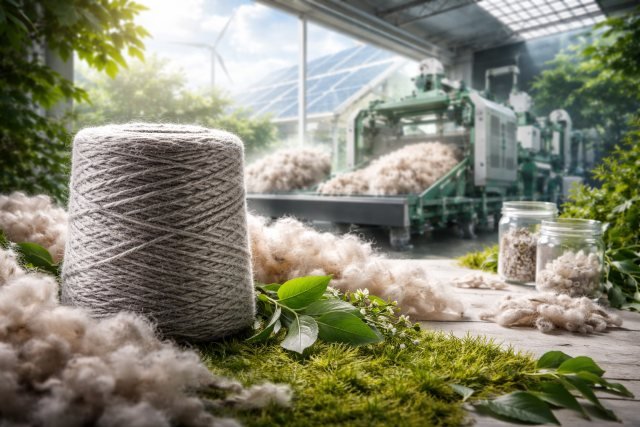
Woolrec is quickly becoming a name people associate with a more practical, cleaner kind of recycling — especially for wool and wool-blend textiles that usually get overlooked. In a world where clothing waste keeps climbing, Woolrec stands out because it treats wool “waste” like a valuable raw material, not an inevitable landfill problem.
- What is Woolrec?
- Why textile waste is forcing innovation like Woolrec
- The “smarter, cleaner” idea behind Woolrec
- How Woolrec-style wool recycling works in practice
- Why Woolrec is gaining attention: market signals and momentum
- Real-world scenarios: where Woolrec can make the biggest difference
- Actionable tips: how brands can make Woolrec-style recycling actually work
- Actionable tips: how consumers can support Woolrec without guesswork
- Common questions about Woolrec
- Conclusion: Woolrec makes wool recycling more real, not just aspirational
And the timing is real. Global fiber production continues to rise (for example, Textile Exchange reports global fiber production increased from 125 million tonnes in 2023 to 132 million tonnes in 2024) , while industry and governments face growing pressure to shift from a linear take–make–waste model to circular textiles. If you’ve ever wondered whether recycling clothing can be more than a feel-good gesture, Woolrec is a useful lens: it’s about redesigning the entire loop so materials actually cycle back into meaningful use.
What Woolrec is, why wool recycling is uniquely important, how “smarter, cleaner” recycling can work in the real world, and what it means for brands, businesses, and everyday consumers.
What is Woolrec?
At its core, Woolrec focuses on recovering wool fibers and turning them into high-quality reusable materials instead of discarding them. It’s positioned as an eco-focused wool recycling approach/platform aimed at circularity — keeping wool in use longer and reducing the need for virgin inputs.
If you want the simplest definition:
Woolrec is a circular wool recycling approach that collects, processes, and reuses wool fibers to create new materials and products, reducing landfill waste and reliance on virgin resources.
Why wool (specifically) is worth saving
Wool is renewable and durable, but it’s still resource-intensive across land use, animal husbandry, processing, transport, and manufacturing. Extending wool’s life through reuse and recycling can reduce overall environmental impact while preserving a premium fiber that people already value for warmth, comfort, and resilience.
Why textile waste is forcing innovation like Woolrec
Textile waste is no longer a niche sustainability topic; it’s a volume problem.
- A BCG analysis (press release) described global textile waste reaching 120 million metric tons in 2024, with 80% going to landfills or incineration — and less than 1% becoming new fiber again.
- Research literature commonly reports that only a minority of clothing waste is collected for reuse/recycling, with over 80% often landfilled or incinerated.
- Policy is tightening: the EU Waste Framework Directive requires separate collection for used textiles by 2025 across Member States — signaling that “dump it” is being regulated out of the system.
Even when people donate, a lot of low-quality textiles still become waste. One recent example (Australia-focused) reported a majority of unwanted clothing still ends in landfill while recycling remains limited.
So where does Woolrec fit? It represents a shift away from vague “recycling initiatives” toward more concrete systems: better collection inputs, cleaner processing, and clearer end markets.
The “smarter, cleaner” idea behind Woolrec
When people say recycling is broken, they usually mean one of three things:
- The material mix is messy (blends, trims, dyes, coatings).
- The recovered output is low quality (downcycling).
- The economics don’t work (collection + sorting cost > material value).
Woolrec’s positioning — smarter and cleaner — implies solving those pain points with more thoughtful inputs and processing.
Smarter: designing a recycling pathway that actually works
“Smarter” recycling usually involves:
- Better sorting (separating wool, wool blends, and contaminants)
- Feedstock clarity (knowing what you’re recycling so output is predictable)
- Traceability (so brands can trust recycled content claims)
- Right technology choice (mechanical vs. chemical vs. hybrid approaches depending on fiber mix)
Mechanical recycling is often the practical backbone for wool. Research on established industrial approaches shows closed-loop mechanical wool recycling can be feasible, but fiber-length retention and quality management are critical.
Cleaner: removing “recycling friction”
“Cleaner” can mean both literally and operationally:
- Cleaner inputs (less contamination from food, oils, mixed materials)
- Cleaner processing (less waste, better dust control, more efficient water/energy use)
- Cleaner outputs (more consistent fiber suitable for higher-value applications)
A key reality: mechanical recycling is cost-effective and mature, but it can degrade fiber quality if parameters aren’t controlled.
So a cleaner system isn’t just about washing; it’s about process control that protects fiber performance.
How Woolrec-style wool recycling works in practice
Different initiatives use different equipment and partners, but a high-functioning Woolrec-style workflow usually looks like this:
1) Collection: post-consumer and pre-consumer wool streams
You typically get wool waste from two major sources:
- Pre-consumer: factory cutting scraps, off-spec yarn, deadstock fabric rolls
- Post-consumer: old sweaters, coats, blankets, uniforms
Pre-consumer is often easier because it’s cleaner and more uniform. Research on wool knitwear waste highlights how valuable pre-consumer waste can be — if fiber retention is preserved during mechanical processing.
2) Sorting & grading: the step most people underestimate
Sorting determines quality.
- Pure wool vs. wool blends
- Color sorting (to reduce re-dyeing needs)
- Removing hard-to-recycle elements (zippers, buttons, heavy linings)
This is where “smarter” systems win: better sorting means better output, which means better economics.
3) Cleaning & prep: making feedstock consistent
Wool can carry oils, dirt, or finishes. Cleaning and preparation stabilizes the feedstock so the next steps behave predictably.
4) Recycling process: mechanical (often) + strategic blending
For wool, mechanical recycling is common: textiles are pulled back toward fiber form, then re-spun or re-formed. A closed-loop mechanical model exists industrially (one example described in academic literature) and demonstrates how quality wool yarn production can be maintained with the right controls.
Because recycling shortens fibers over time, many systems use blending to hit performance specs — mixing recycled wool with longer fibers (virgin wool or other compatible fibers) to maintain strength and hand-feel.
5) Remanufacturing: turning recycled wool into products people actually want
The goal isn’t just “something” made from recycled wool; it’s products with real demand and durability:
- Apparel yarns and fabrics (where quality allows)
- Home textiles (blankets, upholstery)
- Insulation and padding (common but often lower value)
The big unlock is pushing more recycled wool into higher-value uses instead of defaulting to downcycling.
Why Woolrec is gaining attention: market signals and momentum
Wool recycling is becoming its own measurable market category. One market statistic source estimates the global wool textile recycling market was valued at US$ 106.1 million in 2024, with projected growth (CAGR) through 2033.
At the same time, circular fashion is being pulled forward by:
- Regulation (like EU textile collection requirements)
- Waste cost pressures (landfill/incineration and compliance)
- Brand commitments (recycled content targets, climate goals)
- Consumer demand for credible sustainability (not vague claims)
Woolrec fits into that convergence: it’s a focused answer to “what do we do with wool textiles at end-of-life?”
Real-world scenarios: where Woolrec can make the biggest difference
Here are a few realistic, practical scenarios where Woolrec-style systems create immediate value:
Scenario A: A fashion brand with deadstock wool
A brand sitting on unsold wool inventory can partner with a recycler to convert deadstock into recycled feedstock for next season’s capsule collection. This avoids destruction, recovers value, and creates a circular story consumers understand.
Scenario B: Hotels and institutions replacing wool textiles
Hotels, airlines, and institutions discard large textile volumes. If their textiles are standardized (same fabric composition, fewer trims), they become ideal recycling feedstock with predictable output. That’s “smarter” recycling because the system is designed for scale.
Scenario C: Community collection → local circular products
A Woolrec-driven local program can collect worn wool sweaters and blankets, sort by color, recycle mechanically, and produce insulation or felted goods for regional demand — reducing transport emissions and building local circular jobs.
Actionable tips: how brands can make Woolrec-style recycling actually work
If you’re a brand or manufacturer, the success of recycling is decided upstream — before a product is ever sold.
Here are high-impact moves:
- Design for disassembly: reduce mixed materials, simplify trims, avoid hard-to-remove bonded layers.
- Standardize materials: fewer fabric compositions makes sorting and recycling cheaper and more reliable.
- Build take-back channels: collections improve when returns are convenient and well-incentivized.
- Specify recycled wool intentionally: commit to recycled wool in product briefs so there’s stable demand.
- Audit claims carefully: use traceability, supplier documentation, and third-party verification when possible to avoid greenwashing risk.
This is how “innovation” becomes operational, not just marketing.
Actionable tips: how consumers can support Woolrec without guesswork
Consumers matter because feedstock matters. Cleaner, better-sorted wool waste leads to better recycling outcomes.
- Buy fewer, better wool items and wear them longer (the easiest carbon reduction is avoided production).
- Repair before you replace; wool often repairs well.
- Donate only when items are wearable; otherwise look for textile-specific recycling routes.
- When shopping, look for recycled wool content and ask brands what happens at end-of-life.
Even small behavior shifts matter at scale, especially as textile volumes keep rising.
Common questions about Woolrec
Is Woolrec a company or a recycling method?
Woolrec is presented as a wool recycling-focused sustainability platform/approach centered on circular use of wool fibers. In practice, it represents the system: collecting wool waste, processing it, and turning it into usable recycled materials.
Can wool really be recycled into new wool products?
Yes — especially through mechanical recycling, which is already used industrially. Quality depends heavily on fiber length retention, sorting, and processing controls.
Why is textile-to-textile recycling still rare?
Because sorting is hard, blends are common, contamination is frequent, and economics are challenging. Major analyses highlight that less than 1% of textiles become new fiber again, even when some material is collected.
What’s changing in 2025 and beyond?
Policy is becoming a major driver. In the EU, separate collection systems for used textiles become mandatory starting in 2025, increasing supply for reuse and recycling systems — and raising pressure to build processing capacity.
Conclusion: Woolrec makes wool recycling more real, not just aspirational
Woolrec is compelling because it frames recycling the way it has to work in the real world: smarter systems that sort and prepare wool properly, and cleaner processes that protect fiber quality so recycled output has genuine value. That matters in a moment when textile waste is measured in the tens of millions of tons and most of it still ends up buried or burned.
The next era of sustainability won’t be won by slogans — it’ll be won by supply chains that can prove circularity at scale. With policy shifts like the EU’s separate textile collection requirement and growing pressure on brands to take responsibility for end-of-life, Woolrec-style approaches are moving from “nice idea” to “necessary infrastructure.”
If you’re a brand, the best next step is to design products that are easier to sort and recycle, then commit to using recycled wool so demand matches supply. If you’re a consumer, the simplest move is to keep wool in use longer, recycle it responsibly, and reward companies that do circularity with evidence — not vague promises.