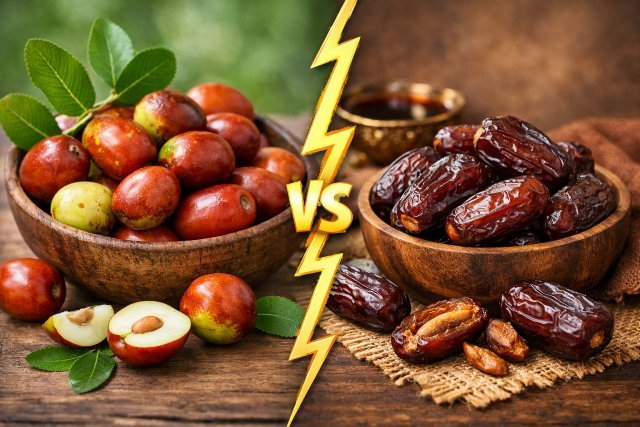
If you’ve ever seen Žižole at a market and thought, “Wait… aren’t these just dates?”, you’re not alone. The confusion is common because jujubes are often nicknamed “Chinese dates,” and when they’re dried they even look a bit like dates.
- Quick definition
- Žižole vs dates: The real difference
- Žižole nutrition vs dates nutrition (what the numbers really mean)
- Žižole vs dates for blood sugar: which spikes glucose more?
- Taste and texture: how to choose based on how you actually snack
- Cooking with Žižole vs dates (best uses)
- Which is better: Žižole or dates?
- Common mistakes people make (and how to avoid them)
- FAQ
- Conclusion: so, should you choose Žižole or dates?
But Žižole (jujube) and dates are different fruits with different nutrition profiles, taste, and best uses. The “better” option depends on what you want: a vitamin C boost, a workout-friendly sweet, better portion control, or a pantry staple that lasts forever.
You’ll get a clear, practical breakdown — plus nutrition numbers, research on blood sugar response, and real-world tips so you can choose confidently.
Quick definition
Žižole are the fruits of the jujube tree (Ziziphus jujuba) — crisp like an apple when fresh, chewy and sweet when dried.
Dates come from the date palm (Phoenix dactylifera) and are typically eaten dried/soft-dried, with a caramel-like sweetness.
Žižole vs dates: The real difference
The simplest way to remember it: fresh Žižole behave like a fresh fruit, while dates behave like a naturally candy-sweet dried fruit (even when “soft,” they’re still very calorie-dense).
Different plants, different “sweetness style”
Žižole (jujube) are from the buckthorn family (Rhamnaceae) and have a long tradition of culinary and herbal use across Asia and the Mediterranean.
Dates come from a palm species and are a classic staple across the Middle East and North Africa, prized for energy density and shelf stability.
Fresh vs dried changes everything
Here’s the twist: jujube can be eaten fresh or dried, and those experiences are wildly different.
- Fresh Žižole: crisp bite, mild sweetness, a “green-apple-meets-pear” vibe.
- Dried Žižole: chewy, more concentrated sweetness, wrinkled surface — this is where people say it resembles dates.
- Dates: usually eaten soft-dried; naturally very sweet with a caramel/honey flavor.
If you only tried dried jujube once, you might assume it’s “just a date.” If you try it fresh, it’s clearly its own thing.
Žižole nutrition vs dates nutrition (what the numbers really mean)
Nutrition is where the difference becomes obvious — especially if you’re thinking about calories, sugar, and vitamin C.
Žižole nutrition highlights (fresh)
A 100g serving of jujube has 79 calories and is especially notable for vitamin C (69 mg per 100g).
That vitamin C number is the big story: fresh Žižole can meaningfully contribute to daily vitamin C intake — something dates basically don’t do.
Dates nutrition highlights (Medjool example)
A single pitted Medjool date (24g) has 66 calories, 16g sugar, and 1.6g fiber.
That’s why dates feel like “nature’s candy”: they’re convenient, delicious, and calorie-dense in a small package.
What this means in real life
If your goal is a lighter snack you can eat in a bigger volume, fresh Žižole usually win.
If your goal is quick energy in a small portion, dates are often more practical.
Žižole vs dates for blood sugar: which spikes glucose more?
This is one of the most searched questions, and the honest answer is: it depends on portion size, form (fresh vs dried), and what you eat them with. But we can still make this practical.
Dates and glycemic index (what research suggests)
A peer-reviewed study measuring glycemic indices of several date varieties found GI values generally in the ~46–55 range and reported no significant difference between healthy participants and those with type 2 diabetes in post-meal glucose response under study conditions.
Another review summarizes that date GI varies by variety and ripeness stage, with reported ranges across studies.
Key takeaway: dates can fit into blood-sugar-aware eating — but portion control matters because they’re easy to overeat.
Where Žižole fit in
Fresh Žižole are lower-calorie per 100g and come with substantial vitamin C.
But once you dry any fruit (jujube included), sugar becomes more concentrated per bite. So dried Žižole behave closer to dried fruit (like dates) than fresh fruit does.
Practical tip: If blood sugar is a concern, pair either fruit with protein/fat — think yogurt, nuts, or cheese — to slow digestion.
Taste and texture: how to choose based on how you actually snack
Choose Žižole if you want…
You want a fruit you can munch like grapes or apple slices, with a refreshing bite. Fresh jujube has that “snackable” crispness that makes it easier to stop naturally.
Fresh Žižole also work beautifully when you want sweetness without “dessert-level” intensity.
Choose dates if you want…
You want that deep caramel sweetness that instantly upgrades smoothies, oatmeal, and baking. Dates are especially useful when you’re trying to reduce added sugar — because they bring sweetness plus texture.
A lot of people also love dates pre-workout because they’re compact fuel.
Cooking with Žižole vs dates (best uses)
Best ways to use Žižole (jujube)
Fresh:
- Slice into salads for crunch.
- Eat out of hand as a simple snack.
- Add to yogurt bowls for a fresh-sweet contrast.
Dried:
- Simmer in teas or infusions (common in traditional use).
- Chop into trail mix (treat them like you would dried apricots or raisins).
Best ways to use dates
- Blend into smoothies for natural sweetness.
- Make date paste as a baking sweetener substitute.
- Stuff with nut butter for an easy snack (great portion control: 1–2 dates feels like a “treat”).
Which is better: Žižole or dates?
Here’s the cleanest way to decide — based on your goal.
If you want fewer calories for a bigger snack
Fresh Žižole are usually the better pick because they’re 79 calories per 100g, which lets you eat a satisfying portion.
If you want quick energy (sports, hiking, fasting windows)
Dates are hard to beat for compact fuel: 66 calories in a single Medjool date adds up fast, in a convenient format.
If you care about vitamin C
Žižole win clearly: 69 mg vitamin C per 100g, while Medjool dates show 0 mg vitamin C on the referenced entry.
If you’re managing blood sugar
Both can work — but dates have more published GI research and are often described as usable in moderation, including in diabetes-focused contexts, depending on the person and overall diet pattern.
Fresh Žižole may be easier to portion generously without stacking calories.
Common mistakes people make (and how to avoid them)
Mistake 1: Treating dates like a “free snack”
Dates are natural, yes — but also concentrated. If you’re grazing, it’s easy to eat 6–10 without noticing. For many people, it helps to pre-portion (for example: 2 dates) and put the bag away.
Mistake 2: Assuming dried Žižole are “low sugar”
Drying concentrates sweetness. If you’re buying dried jujube, treat it like any dried fruit: tasty, but easy to overdo.
Mistake 3: Comparing fresh Žižole to dried dates
That’s not an apples-to-apples comparison. A fairer comparison is:
- fresh Žižole vs fresh fruit snacks, or
- dried Žižole vs other dried fruit (including dates).
FAQ
Are Žižole the same as dates?
No. Žižole are jujubes (Ziziphus jujuba), while dates are from the date palm (Phoenix dactylifera). Jujubes are sometimes called “Chinese dates,” which creates confusion.
Do Žižole taste like dates?
Fresh Žižole don’t — they’re more crisp and mild. Dried Žižole can resemble dates in texture and sweetness, but the flavor is still different and usually lighter.
Which has more sugar: Žižole or dates?
Dates generally have much more sugar per bite because they’re dense and typically eaten dried/soft-dried. A single Medjool date has 16g sugar.
Fresh Žižole are lower-calorie per 100g, but some sugar data can be missing on certain entries — so focus on the practical reality: fresh fruit is less concentrated than dried fruit.
Are dates bad for diabetes?
Not automatically. Research measuring glycemic indices of several date varieties found GIs around the low-to-mid range and did not show major post-meal glucose spikes in the studied diabetic group under the test conditions.
Still, people respond differently — portion size and food pairing matter.
Are Žižole healthy?
Fresh Žižole provide vitamin C and other nutrients and are discussed in nutrition/health overviews as a nutrient-rich fruit.
Conclusion: so, should you choose Žižole or dates?
If you want a snack that feels light, fresh, and surprisingly rich in vitamin C, Žižole are an easy win — especially in their fresh form, where you get 79 calories per 100g and 69 mg vitamin C.
If you want compact, reliable energy and a natural sweetener that makes recipes taste like dessert with minimal effort, dates are unmatched — just remember a single Medjool date already brings 66 calories and 16g sugar, so portioning is your best friend.
For most people, the “better” choice isn’t either/or: keep fresh Žižole for everyday snacking, and keep dates for targeted energy and cooking. That way you get the best of both — without accidentally turning “healthy fruit” into a sneaky sugar pile.