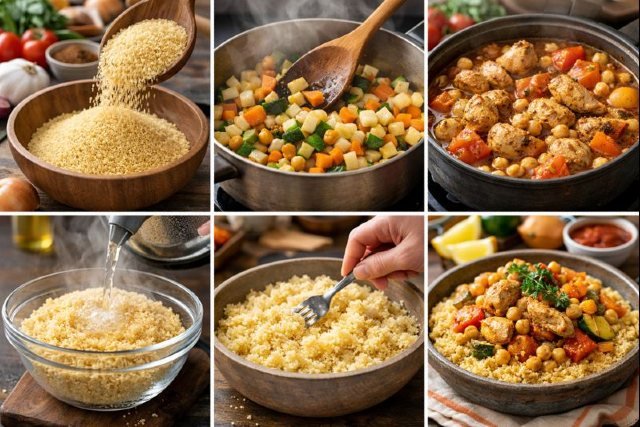
If you’ve ever ended up with couscous that’s clumpy, bland, or oddly soggy, you’re not alone. The good news is that Kouskousi (a common spelling people use when searching for couscous-style dishes) is one of the easiest “wow” sides or mains you can master once you learn the few make-or-break details: the right liquid ratio, proper steaming time, and how to fluff like you mean it. In this guide, you’ll get a reliable method for fluffy, flavorful Kouskousi every time, plus variations, storage tips, and quick answers to the most common questions.
- What Is Kouskousi?
- Why This Kouskousi Method Works Every Time
- Ingredients for a Classic Kouskousi (Fluffy + Flavorful)
- Step-by-Step Kouskousi Recipe (The “Never Clumpy” Method)
- Kouskousi Variations People Love
- Common Kouskousi Mistakes (and How to Fix Them)
- Serving Ideas for Kouskousi
- Storage, Reheating, and Meal Prep Tips
- FAQs
- Pro Tips to Make Your Kouskousi Taste “Restaurant-Level”
- Conclusion: Your Go-To Kouskousi, Every Single Time
What Is Kouskousi?
Kouskousi is commonly used online to refer to couscous — a North African staple made from tiny granules of rolled semolina that are traditionally steamed and served with stew, vegetables, and/or meat. Although it looks like a grain, couscous is essentially a pasta.
The reason Kouskousi sometimes “fails” at home is that many people treat it like rice (boil it hard, drain it, stir it nonstop). The texture improves dramatically when you treat it more gently: hydrate, cover, steam-rest, then fluff.
Why This Kouskousi Method Works Every Time
Most “instant” couscous is partially pre-cooked, which means the goal is hydration + steam, not aggressive boiling. A simple technique — hot liquid poured over couscous, tightly covered for about five minutes, then fluffed — consistently produces light, separate grains.
This method also scales well, making it perfect for meal prep, family dinners, or quick weeknight sides.
Ingredients for a Classic Kouskousi (Fluffy + Flavorful)
Base ingredients
- Couscous (instant/quick-cooking is easiest for consistency)
- Broth or stock (chicken or vegetable)
- Olive oil or butter
- Salt
Flavor boosters (high-impact, optional)
- Lemon zest + lemon juice
- Garlic (fresh or granulated)
- Ground cumin, coriander, paprika, or ras el hanout-style spice blends
- Fresh herbs (parsley, cilantro, mint)
- Toasted nuts (almonds, pine nuts)
- Raisins or chopped dates for a sweet-savory twist
Couscous is relatively light calorie-wise compared to many starch sides — about 176 calories per cooked cup is a commonly cited estimate (varies by brand and preparation).
Step-by-Step Kouskousi Recipe (The “Never Clumpy” Method)
Step 1: Measure the couscous
A practical rule: 1 cup dry couscous usually yields several cups cooked (enough for multiple servings). For a dinner side, many households find 1 cup dry is a comfortable starting point.
Step 2: Toast for extra flavor (optional but worth it)
Warm a saucepan over medium heat. Add a teaspoon of olive oil or a small knob of butter, then stir in the dry couscous for 1–2 minutes until it smells nutty.
This tiny step adds depth, and it also helps the granules stay separate.
Step 3: Heat the liquid until very hot
Bring broth/stock to a boil (or near-boil). Using broth instead of water is the fastest way to make Kouskousi taste “restaurant-level” with almost no extra effort.
Step 4: Pour, cover, and don’t peek
Turn off the heat. Pour the hot broth over the couscous, stir once to wet everything evenly, then cover tightly.
Let it sit for about 5 minutes (instant couscous commonly hydrates in minutes using this approach).
Step 5: Fluff correctly (this is the texture secret)
Remove the lid and fluff with a fork. Don’t mash — lift and rake gently.
If you want extra separation, add a small drizzle of olive oil and fluff again.
Step 6: Finish with bright flavors
Add lemon juice, herbs, and a pinch of salt to taste. If you’re serving it with a rich stew or roasted vegetables, that acidity keeps the dish from tasting heavy.
Kouskousi Variations People Love
Vegetable Kouskousi (weeknight-friendly)
Toss fluffy couscous with roasted zucchini, carrots, bell peppers, and chickpeas. Add cumin + paprika and finish with lemon and herbs for a vibrant, filling bowl.
Moroccan-inspired Kouskousi
Think warm spices, chickpeas, and a balance of sweet and savory (raisins, orange notes, mint). Moroccan-style couscous pairings commonly emphasize aromatic spices and vegetables.
Protein-packed Kouskousi (chicken or fish)
Fold in shredded chicken, grilled shrimp, or flaky fish. If you’re cooking poultry, use a thermometer: 165°F / 74°C is the recommended safe internal temperature for chicken.
Common Kouskousi Mistakes (and How to Fix Them)
“My couscous is clumpy.”
This usually happens when:
- the liquid wasn’t hot enough,
- it wasn’t covered tightly,
- or it was stirred too much.
Fix: sprinkle a tablespoon or two of hot broth over it, cover for 2–3 minutes, then fluff again.
“It’s mushy.”
Most often: too much liquid or too long resting time.
Fix: spread it on a tray to release steam. Fluff repeatedly and let it air-dry for a few minutes. Next time, reduce liquid slightly or shorten the covered rest.
“It tastes bland.”
Couscous is mild by nature — season the liquid and finish with acid (lemon) + herbs. Using broth instead of water is the biggest flavor jump with the least effort.
Serving Ideas for Kouskousi
Kouskousi is a brilliant “bridge” side — it soaks up sauces and complements strong flavors. Try it with:
- roasted vegetables and tahini drizzle
- tomato-based stews
- grilled meats and a chopped herb salad
- spiced chickpeas and yogurt sauce
If you’re building a complete plate, think in contrasts: fluffy couscous + saucy stew, or fluffy couscous + crisp roasted veg.
Storage, Reheating, and Meal Prep Tips
Cooked Kouskousi stores well and is meal-prep friendly because it rehydrates quickly.
- Refrigerate: Let it cool, then store in an airtight container.
- Reheat: Sprinkle a little water or broth over it, cover, and warm gently (microwave or stovetop) until steamy; then fluff.
- Refresh texture: A quick fork fluff + squeeze of lemon brings it back to life.
FAQs
How do you make Kouskousi fluffy and not sticky?
Use very hot liquid, cover tightly, let it steam-rest, then fluff with a fork. Avoid over-stirring and add a little oil after fluffing if needed.
What is the best liquid for Kouskousi?
Broth (chicken or vegetable) gives the best flavor fast. Water works, but you’ll need stronger finishing flavors like lemon, herbs, and spices.
Can you make Kouskousi ahead of time?
Yes. Cook it, cool it, refrigerate, and reheat with a small splash of water or broth. Fluff again before serving.
Is Kouskousi healthy?
It can be part of a balanced meal — especially when paired with vegetables, legumes, and lean protein. Cooked couscous is often cited at around 176 calories per cup, though exact nutrition depends on brand and ingredients.
What’s the difference between couscous and quinoa?
Couscous is a pasta made from semolina, while quinoa is a seed and is naturally gluten-free; quinoa is often described as more nutrient-dense overall, though couscous can still fit well in a varied diet.
Pro Tips to Make Your Kouskousi Taste “Restaurant-Level”
Bloom your spices in a little oil before adding the couscous. That quick heat unlocks aroma and makes the final dish taste deeper, not dusty.
Finish with “top notes.” Lemon zest, fresh herbs, or even a tiny splash of vinegar makes the flavor pop and keeps Kouskousi from tasting flat.
Add texture on purpose. Crunchy toasted nuts, crisp roasted veg, or pomegranate seeds can turn a simple side into something you’d proudly serve guests.
Conclusion: Your Go-To Kouskousi, Every Single Time
Once you learn the rhythm — hot liquid, tight cover, steam-rest, gentle fluff — Kouskousi becomes one of the most dependable dishes in your kitchen. It’s fast enough for a weeknight, flexible enough for endless variations, and elegant enough to serve with stews, roasted vegetables, or grilled proteins. Keep broth, lemon, and herbs in your “finishing kit,” and you’ll get a fluffy, flavorful Kouskousi you can count on every time.