Warping Machines are the quiet workhorses behind high-quality woven and technical fabrics. If you’ve ever wondered how thousands of yarn ends become perfectly aligned, tension-balanced, and ready for weaving, the answer is warping. In modern textile production, Warping Machines are essential for speed, precision, fabric consistency, and reduced weaving defects.
- What Are Warping Machines?
- How Warping Machines Work (Step-by-Step Overview)
- Types of Warping Machines (With Uses & Best Applications)
- Key Components of Warping Machines (What Makes Them Efficient)
- Top Uses of Warping Machines Across Industries
- Benefits of Warping Machines (Why They Matter to Production & Profitability)
- How to Choose the Right Warping Machine (Practical Buyer’s Guide)
- Common Problems in Warping (And How to Fix Them)
- Automation & Smart Warping Machines (The Modern Trend)
- Market Insight: Why Warping Machines Are Growing in Demand
- FAQs
- Conclusion: Why Warping Machines Are Essential in Modern Textile Production
In this detailed guide, you’ll learn what warping machines are, how they work, the main types (beam, sectional, draw-warping, and more), where each type is used, and the real-world benefits they bring to textile operations — from apparel weaving to advanced technical textiles.
What Are Warping Machines?
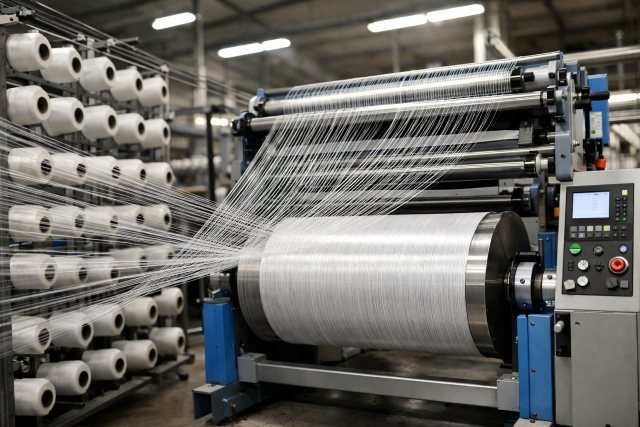
Warping Machines are textile preparation machines that wind yarn from multiple packages (cones, cheeses, tubes) onto a warp beam in a parallel, uniform, and tension-controlled format. This warp beam is then sent to the next stage — often sizing (for weaving) or directly to weaving and technical fabric machines.
Warping is widely described as the process of transferring yarn from a predetermined number of packages placed on a creel onto a beam for weaving preparation.
Why warping matters so much
Warp yarns face high tension, friction, and stress during weaving. Even small inconsistencies in alignment or tension can lead to:
- Frequent end breaks
- Uneven fabric appearance
- Loom downtime and productivity loss
- Waste and rework
That’s why the quality of warping directly impacts weaving efficiency and final fabric quality.
How Warping Machines Work (Step-by-Step Overview)
Although each type has unique mechanics, most warping machines follow a similar workflow:
- Yarn feeding from creel: Yarn packages are placed on a creel and guided into the machine.
- Tension control: Tension devices ensure each end has consistent tension across the warp width.
- Stop-motion & defect detection: Sensors detect yarn breaks, missing ends, or abnormal tension.
- Sheet formation: Yarn ends form a warp sheet using guide reeds.
- Winding onto beam (or drum first): The warp is wound uniformly onto a beam (direct) or drum/reel (sectional).
- Beam doffing: The warp beam is removed and transferred to sizing/weaving.
A key quality target in modern warping is achieving equal thread length, uniform tension, and correct arrangement, since every end must behave consistently at weaving speed.
Types of Warping Machines (With Uses & Best Applications)
Different fabrics, yarn types, and production strategies demand different warping methods. Below are the most widely used types of Warping Machines in modern textile manufacturing.
1) Direct Warping Machines (Beam Warping / High-Volume Warping)
Direct warping winds a large, predetermined number of ends directly from the creel onto a warp beam. This is generally used for high-volume and standard fabrics, where long production runs justify faster setup and speed.
Direct warping is often described as pulling a large number of ends from a creel and winding them directly onto a beam.
Best used for:
- Large runs of grey fabric
- Standard cotton and blended fabrics
- Yarns that will later go into sizing
- Mass production weaving
Why mills choose direct warping
Beam warping is valued for its speed and simplicity, especially for grey yarns or yarns intended for sizing.
2) Sectional Warping Machines (Precision Warping for Complex Fabrics)
Sectional warping is ideal for short runs, fancy fabrics, multi-color designs, and high-value textiles. It winds the warp in sections onto a drum/reel, then transfers the full warp onto a weaver’s beam.
ScienceDirect describes sectional warping as a two-stage method where the warp is wound in sections onto a reel and then transferred to the final weaving beam, often used for shorter runs and high-class goods.
Best used for:
- Multi-color warp patterns
- Complex designs and high-quality fabrics
- Smaller batch production
- Technical textiles requiring uniformity
Why sectional warping is powerful
Modern sectional warping machines can run at high speed and deliver improved efficiency and reduced costs. For example, Karl Mayer’s automatic sectional warping machines highlight speeds up to 1,000 m/min, designed for productivity and efficiency.
Karl Mayer also notes that sectional warpers are particularly useful for sophisticated applications due to uniform yarn tension and high remaining elongation, which is crucial for warp quality.
3) Draw-Warping Machines (Synthetic Filament & POY Processing)
Draw warping is widely used in synthetic yarn processing. It combines stretching/orientation with warping, especially for POY (Partially Oriented Yarn). It produces uniform physical properties across thousands of ends.
In draw warping, yarn lines can range from hundreds to thousands, oriented under equal mechanical/thermal conditions before being wound onto the beam.
Best used for:
- Polyester filament yarns
- Industrial yarns and high-strength applications
- Uniform yarn property production
- Technical textile filament prep
4) Ball Warping (Rope Form Warping for Traditional Processes)
Ball warping forms yarn into rope format and winds it into a ball, typically for traditional or specialized applications.
Although less common in modern large-scale weaving, it still appears in certain niche systems and traditional setups.
5) Beam-to-Beam Warping (Secondary Beam Copying)
Beam-to-beam systems transfer warp from an existing beam to another beam — often used to:
- Merge beams
- Correct tension issues
- Create standardized beams for weaving
- Support specialty operations
(Beam-to-beam warping is commonly grouped among modern warping types in industry references.)
Key Components of Warping Machines (What Makes Them Efficient)
Warping efficiency depends on a few critical systems:
Creel System
The creel holds yarn packages and feeds them smoothly. The right creel improves:
- Yarn handling stability
- Reduced snarls and breaks
- Cleaner yarn paths
Creels and their arrangement are essential in weaving preparation and warping setups.
Tension Control Devices
Uniform tension is the heart of warp quality. Incorrect tension can cause:
- Dense and hard beams
- Warp streaks
- Frequent loom stops
Stop Motions & Sensors
Sensors detect broken ends, missing yarns, or abnormal tension and stop the machine automatically, preventing large-scale defects.
Reed & Leasing Devices
These ensure yarn separation and organization, preventing tangles in weaving and simplifying drawing-in.
Top Uses of Warping Machines Across Industries
Warping isn’t only about apparel fabric. Warping Machines support a wide range of textile applications:
Apparel & Home Textiles
- Cotton fabrics, denim, blends
- Bed sheets, curtains
- Long-run production with beam warping
Technical Textiles
Warping is crucial for high-performance textiles used in:
- Geotextiles
- Composite reinforcements
- Industrial filtration fabrics
- Protective textiles
Karl Mayer notes sectional warping is ideal for demanding technical textile processing needs without compromising flexibility or efficiency.
Electronic & Specialty Fiberglass/Filament Applications
Direct warping is also used in specialty sectors, including fiberglass and electronic applications.
Benefits of Warping Machines (Why They Matter to Production & Profitability)
Modern Warping Machines are designed to deliver measurable improvements in output, quality, and cost efficiency.
1) Higher Weaving Efficiency
A well-warped beam reduces:
- Loom stops
- End breaks
- Fabric defects
Which directly boosts weaving speed and productivity.
2) Superior Fabric Quality
Warp quality is defined by uniform tension, arrangement, and equal thread length — critical for consistent fabric formation.
3) Reduced Waste & Rework
Automated stop motions and monitoring systems prevent massive batches of defect-prone beams.
4) Faster Production & Lower Labor
High-speed machines (like automated sectional warpers) can reach very high warping speeds and reduce manual intervention.
5) Better Handling of Sensitive or High-Value Yarns
Uniform tension control prevents yarn stretching, abrasion, and uneven elongation.
How to Choose the Right Warping Machine (Practical Buyer’s Guide)
Selecting a warping machine depends on your production goals and fabric profile. Here’s a practical guide:
Choose Direct Warping Machines if:
- You produce large runs
- You work mainly with standard yarns
- You use sizing in weaving preparation
- You want maximum output per hour
Choose Sectional Warping Machines if:
- You produce colored warp designs
- You work with short runs and frequent style changes
- You manufacture premium fabrics or technical textiles
- You need extremely uniform tension and yarn handling
Choose Draw-Warping Machines if:
- You process synthetic filaments
- You need yarn drawing + warping combined
- You prioritize consistent end-to-end filament properties
Common Problems in Warping (And How to Fix Them)
Even advanced Warping Machines can face common issues. Here are some frequent warping problems and professional solutions:
Uneven Yarn Tension
Cause: Incorrect tension devices, inconsistent package build, creel friction
Fix: Use tension equalizers, ensure proper creel alignment, maintain yarn path cleanliness
Frequent End Breaks
Cause: Yarn defects, abrasion in guides, excessive speed
Fix: Improve yarn quality inspection, clean ceramic guides, optimize speed/tension balance
Hard or Distorted Warp Beam
Cause: Over-tensioning leads to dense beam buildup
Fix: Calibrate tension system and use correct winding pressure settings
Warp Streaks or Fabric Striping
Cause: Uneven tension across width
Fix: Ensure consistent creel path and tension uniformity across all ends
Research also shows that warping speed and tension influence warp yarn properties, reinforcing the need for correct machine parameters.
Automation & Smart Warping Machines (The Modern Trend)
Warping technology has evolved rapidly. Today, smart warping focuses on:
- Automated sectional winding
- Electronic tension monitoring
- Digital warping programs
- Reduced downtime with predictive maintenance concepts
The industry has been moving toward machines that provide higher precision, automation, and operational efficiency.
Market Insight: Why Warping Machines Are Growing in Demand
Warping machine demand is rising due to:
- Growth in global textile production
- Technical textiles expansion
- Automation upgrades in mills
- Rising need for quality consistency
For example, one market outlook estimates the global warping machines market could grow from USD 1.2B (2023) to USD 1.8B (2032), reflecting steady industry growth.
FAQs
What are Warping Machines used for?
Warping Machines are used to wind yarn from multiple packages onto a warp beam in a parallel, tension-controlled arrangement so it can be fed efficiently into weaving or other production processes.
What is the difference between direct warping and sectional warping?
Direct warping winds the full warp sheet directly onto a beam and is ideal for long runs. Sectional warping winds the warp in sections onto a drum/reel before transferring it onto the beam and is best for short runs and complex fabrics.
Which warping machine is best for colored warp patterns?
A sectional warping machine is best for colored patterns and fancy fabrics because it allows controlled section-by-section building and better yarn tension uniformity.
How does warping affect fabric quality?
Warping affects fabric quality by controlling yarn tension, alignment, and warp density. If warping quality is poor, it leads to loom breaks, uneven fabric appearance, and defects.
What speed do modern warping machines run at?
Modern machines vary by model and yarn type, but automated sectional warping machines can reach speeds up to 1,000 m/min in some systems.
Conclusion: Why Warping Machines Are Essential in Modern Textile Production
Warping Machines are the foundation of stable weaving performance and high-quality fabric output. Whether you’re producing standard grey fabrics with direct warping, premium designs with sectional warping, or synthetic filament beams through draw warping, the right warping system directly improves productivity, reduces waste, and enhances final fabric consistency.
With automation, higher speeds, and smarter tension control becoming standard, Warping Machines are evolving into highly efficient, data-driven systems that help textile mills meet increasing demands for quality and faster production.
If your weaving department faces frequent breaks, fabric streaks, or inefficient loom performance, improving warping quality is often the fastest and most impactful upgrade you can make.