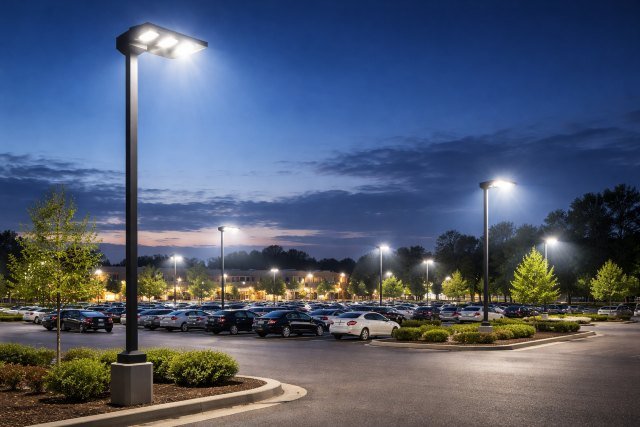
LED Pole Lights have become the gold standard for outdoor illumination in commercial, municipal, and industrial spaces. From parking lots and roadways to campuses and parks, these fixtures deliver dependable brightness while dramatically reducing energy consumption. As cities and businesses prioritize sustainability and long-term cost savings, LED pole lighting continues to replace traditional metal halide and high-pressure sodium systems.
- What Are LED Pole Lights?
- Why LED Pole Lights Are the Preferred Outdoor Lighting Solution
- Applications of LED Pole Lights Across Industries
- Key Features to Look for in LED Pole Lights
- LED Pole Lights vs Traditional Outdoor Lighting
- Smart and Solar LED Pole Lighting Options
- How to Choose the Right LED Pole Lights for Your Project
- Frequently Asked Questions About LED Pole Lights
- Future Trends in LED Pole Lighting
- Conclusion: Why LED Pole Lights Are a Smart Long-Term Investment
In this in-depth guide, you’ll learn how LED pole lights work, why they outperform legacy lighting, and how to choose the right solution for your outdoor environment. We’ll also explore real-world applications, answer common buyer questions, and reference trusted research to support key claims.
What Are LED Pole Lights?
LED Pole Lights are outdoor lighting fixtures mounted on tall poles, designed to illuminate large open areas with uniform, high-intensity light. Unlike older technologies that waste energy as heat, LED luminaires convert most electricity directly into light, making them significantly more efficient.
These lights typically range from 15 to 40 feet in mounting height and are engineered to withstand harsh outdoor conditions. Advanced optics allow precise light distribution, reducing glare and light pollution while improving visibility and safety.
According to the U.S. Department of Energy, LED outdoor lighting can use at least 50 percent less energy than traditional lighting technologies, while lasting up to five times longer.
Why LED Pole Lights Are the Preferred Outdoor Lighting Solution
Energy Efficiency and Cost Savings
One of the strongest reasons to invest in LED Pole Lights is energy efficiency. LEDs consume far less electricity than metal halide or sodium lamps, often cutting lighting energy costs by 50–70 percent. Over time, this reduction translates into substantial savings for property owners and municipalities.
Maintenance costs are also significantly lower. With lifespans commonly exceeding 50,000 hours, LED pole lighting reduces the frequency of lamp replacements and labor expenses. The International Energy Agency highlights that widespread LED adoption could reduce global electricity demand for lighting by 30 percent by 2030.
Superior Light Quality and Safety
LED pole lights provide brighter, more uniform illumination with higher color rendering. This means objects, signage, and people appear clearer at night, which enhances security and reduces accidents.
Well-lit outdoor spaces are proven to deter crime. A study published by the National Institute of Justice found that improved outdoor lighting can significantly reduce nighttime crime in public areas. Enhanced visibility also makes parking lots and roadways safer for pedestrians and drivers alike.
Applications of LED Pole Lights Across Industries
Commercial and Retail Properties
Shopping centers, office complexes, and business parks rely on LED Pole Lights to create welcoming and secure environments. Uniform lighting helps customers feel safe while improving visibility for surveillance cameras.
Retail property managers often report measurable drops in energy bills after retrofitting to LED pole lighting. In one U.S. case study, a large shopping plaza reduced lighting-related energy costs by over 60 percent within the first year of conversion.
Roadways and Municipal Infrastructure
Cities worldwide are upgrading streetlights to LED pole lights to lower operational costs and improve nighttime visibility. LEDs offer instant-on functionality and consistent light output, which is critical for traffic safety.
The World Bank estimates that LED street lighting projects can achieve payback periods of three to five years due to energy and maintenance savings.
Industrial and Campus Environments
Factories, warehouses, universities, and hospitals require dependable outdoor lighting for safety and navigation. LED Pole Lights are ideal for these settings due to their durability, high lumen output, and compatibility with smart controls such as motion sensors and dimming systems.
Key Features to Look for in LED Pole Lights
Lumen Output and Wattage Balance
Choosing the right brightness is essential. LED pole lights are measured in lumens rather than watts, which better reflects actual light output. For example, a 300-watt metal halide fixture can often be replaced by a 120-watt LED pole light delivering equal or better illumination.
Optical Distribution and Light Control
Modern LED pole lighting offers multiple beam patterns designed for roadways, parking lots, or open areas. Proper optical distribution ensures light goes where it’s needed without causing glare or skyglow. This is especially important in urban areas with light pollution regulations.
LED Pole Lights vs Traditional Outdoor Lighting
Traditional outdoor lighting systems waste a large portion of energy as heat and degrade quickly over time. In contrast, LED Pole Lights maintain consistent brightness throughout their lifespan.
LEDs also reach full brightness instantly, unlike metal halide lamps that require warm-up time. This makes LEDs ideal for use with motion sensors and adaptive lighting systems, further improving efficiency.
Smart and Solar LED Pole Lighting Options
Smart LED Pole Lights
Smart LED Pole Lights integrate with lighting control systems that allow remote monitoring, scheduling, and dimming. These features can reduce energy use by an additional 20–30 percent, according to data from Smart Cities Council.
Solar LED Pole Lights
Solar-powered LED pole lights are increasingly popular in remote locations or areas with high electricity costs. These systems use photovoltaic panels to store energy during the day and power the lights at night, offering complete grid independence.
How to Choose the Right LED Pole Lights for Your Project
Selecting the right LED Pole Lights starts with understanding the environment and lighting goals. Consider pole height, spacing, and local regulations. Climate also matters, as fixtures should be rated for temperature extremes and weather exposure.
It’s wise to work with manufacturers or lighting designers who provide photometric layouts. These simulations ensure proper coverage and compliance before installation begins.
For related guidance, you may also explore our internal resource on outdoor commercial lighting design principles, which expands on pole spacing and layout considerations.
Frequently Asked Questions About LED Pole Lights
How long do LED pole lights last?
Most LED Pole Lights last between 50,000 and 100,000 hours, depending on usage and environmental conditions. This can equal 10–20 years of typical nighttime operation.
Are LED pole lights suitable for all weather conditions?
Yes. Quality LED pole lighting fixtures are designed with weatherproof housings and carry IP65 or higher ratings, making them suitable for rain, snow, heat, and dust.
Do LED pole lights really save money?
Multiple studies confirm that LED Pole Lights reduce energy and maintenance costs significantly. Many projects recover their initial investment within three to five years.
Future Trends in LED Pole Lighting
The future of LED Pole Lights lies in smart city integration. As IoT technology advances, pole lights are evolving into multi-functional infrastructure supporting sensors, cameras, and even EV charging.
Human-centric lighting is another emerging trend, with adjustable color temperatures designed to reduce glare and improve nighttime comfort while maintaining safety.
Conclusion: Why LED Pole Lights Are a Smart Long-Term Investment
LED Pole Lights deliver unmatched reliability, efficiency, and performance for outdoor lighting applications. Their ability to reduce energy costs, improve safety, and support sustainability goals makes them the clear choice for modern infrastructure.
Whether you’re upgrading a parking lot, planning a municipal project, or designing a commercial property, LED pole lighting provides long-term value with minimal environmental impact. By choosing high-quality fixtures and thoughtful design, LED Pole Lights can transform outdoor spaces into safer, brighter, and more efficient environments for years to come.
If you’d like to explore related solutions, consider reviewing our internal guides on energy-efficient outdoor lighting systems and smart lighting controls to continue optimizing your lighting strategy.