Online competitive games like PUBG rely heavily on fair play systems to maintain balance and integrity. As bans and restrictions have become more sophisticated, many players search for tools that claim to restore access or bypass limitations. One of the most frequently searched names in this space is Infinite PUBG Spoofer. While the term is widely discussed across gaming forums and social platforms, there is significant confusion about what it actually is, how compatibility works, and what risks are involved.
- What Is Infinite PUBG Spoofer?
- How PUBG Anti-Cheat Systems Detect Spoofing
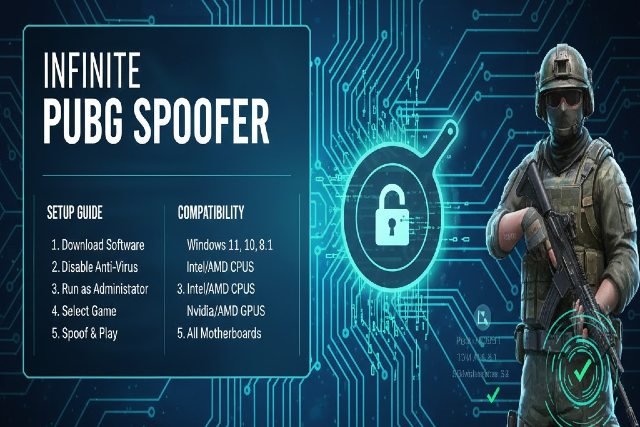
- Infinite PUBG Spoofer Compatibility Overview
- Common Misconceptions About Infinite PUBG Spoofer
- Risks and Consequences of Using Infinite PUBG Spoofer
- Why Compatibility Claims Often Fail Over Time
- Ethical and Competitive Impact on the PUBG Community
- Legitimate Alternatives to Spoofing in PUBG
- Frequently Asked Questions About Infinite PUBG Spoofer
- The Long-Term Reality of Spoofing Tools in Online Games
- Conclusion: Understanding Infinite PUBG Spoofer Before Making Decisions
This article provides a clear, non-instructional, and educational overview of Infinite PUBG Spoofer. It explains compatibility considerations, how spoofing is generally detected, and what players should realistically expect. The goal is to help readers make informed decisions while understanding the technical and ethical implications surrounding spoofing tools.
What Is Infinite PUBG Spoofer?
Infinite PUBG Spoofer is commonly described as a third-party software solution that claims to mask or alter system identifiers used by PUBG’s anti-cheat systems. These identifiers may include hardware fingerprints, system configurations, or network-related signals.
From a technical perspective, spoofers fall under the broader category of hardware ID masking tools. Similar concepts are used legitimately in cybersecurity research and device testing environments. However, when applied to online games like PUBG, they often conflict with the game’s terms of service.
According to Tencent Games and Krafton, PUBG’s developers, any attempt to manipulate system identifiers for the purpose of bypassing restrictions is considered a violation. This distinction is important because it directly impacts account safety and long-term usability.
How PUBG Anti-Cheat Systems Detect Spoofing
To understand compatibility claims around Infinite PUBG Spoofer, it is necessary to understand how PUBG detects unauthorized modifications at a high level.
PUBG uses advanced anti-cheat frameworks, including kernel-level monitoring and behavioral analysis. Research published by BattlEye and Easy Anti-Cheat indicates that modern systems rely on pattern recognition rather than single identifiers. This means changing one element rarely results in lasting success.
Anti-cheat software typically evaluates consistency across hardware profiles, operating system behavior, driver signatures, and gameplay patterns. When discrepancies appear repeatedly, automated enforcement actions are triggered. This explains why many users report short-term access followed by permanent bans.
Infinite PUBG Spoofer Compatibility Overview
Discussions around Infinite PUBG Spoofer compatibility often focus on operating systems and PUBG versions rather than effectiveness. Compatibility does not imply safety or reliability, and this distinction is often misunderstood.
Most claims revolve around Windows-based systems, particularly Windows 10 and Windows 11. PUBG PC is designed specifically for this environment, which is why spoofing tools are rarely discussed in console contexts. PUBG Mobile, on the other hand, uses entirely different detection mechanisms and is typically associated with emulator-based restrictions.
Compatibility also varies depending on updates. PUBG receives frequent security patches, and academic research from IEEE on software security shows that static spoofing tools degrade rapidly after updates. This makes long-term compatibility extremely unstable.
Common Misconceptions About Infinite PUBG Spoofer
One widespread misconception is that spoofing tools provide permanent protection. In reality, anti-cheat systems evolve continuously. According to a 2023 report by AnyBrain, over 90 percent of cheating-related software is detected within weeks due to behavioral analytics.
Another misunderstanding is that spoofers only affect hardware identifiers. In practice, modern detection systems correlate spoofing attempts with in-game behavior, account history, and network activity. This multi-layered approach makes full anonymity extremely difficult.
Finally, many users believe that compatibility equals endorsement. Just because a tool runs on a specific operating system does not mean it is supported or safe.
Risks and Consequences of Using Infinite PUBG Spoofer
The risks associated with Infinite PUBG Spoofer extend beyond simple account bans. Permanent bans often apply to both the account and associated identifiers, making recovery difficult.
There is also a security risk. Cybersecurity researchers at Kaspersky have repeatedly warned that unofficial game tools frequently contain malware, data loggers, or remote access components. These risks are amplified when software requires elevated system permissions.
From a legal standpoint, violating terms of service may also result in forfeiture of purchased in-game content. PUBG’s user agreement clearly states that accounts used with unauthorized software may lose all progression and purchases without compensation.
Why Compatibility Claims Often Fail Over Time
Compatibility is often advertised as a static feature, but in reality, it is dynamic. PUBG updates its detection methods frequently, sometimes multiple times per month. This creates a constant arms race where spoofing tools must be rewritten repeatedly.
A study from the University of Cambridge on software resilience highlights that closed-source security systems gain strength through unpredictability. This unpredictability is precisely why spoofing tools struggle to remain compatible for extended periods.
As a result, many players experience short windows of access followed by enforcement actions that are more severe than initial bans.
Ethical and Competitive Impact on the PUBG Community
Beyond technical risks, Infinite PUBG Spoofer raises ethical concerns within the gaming community. Competitive integrity is central to PUBG’s design philosophy. When some players attempt to bypass restrictions, it undermines fair matchmaking and player trust.
According to a survey published by the International Game Developers Association, over 80 percent of players believe cheating directly harms long-term game enjoyment. This community sentiment is one reason developers invest heavily in detection technologies.
Understanding these broader impacts helps contextualize why enforcement measures are strict and continuously improving.
Legitimate Alternatives to Spoofing in PUBG
Players facing restrictions often have legitimate paths forward that do not involve spoofing. PUBG offers appeal processes for certain ban types, particularly false positives. While success is not guaranteed, this method aligns with official policies.
Another alternative is starting fresh on compliant hardware while adhering strictly to game rules. Performance optimization, legitimate privacy tools, and network stability improvements are all allowed and do not risk enforcement.
Frequently Asked Questions About Infinite PUBG Spoofer
Is Infinite PUBG Spoofer safe to use?
From a security and account safety perspective, there is no verifiable evidence that Infinite PUBG Spoofer is safe. Most third-party spoofers carry both ban and malware risks.
Does Infinite PUBG Spoofer work after PUBG updates?
Compatibility often changes after updates. PUBG’s frequent security patches significantly reduce the lifespan of spoofing tools.
Can spoofing remove a permanent PUBG ban?
Permanent bans are designed to be irreversible. Developers and anti-cheat providers have repeatedly stated that bypass attempts usually result in stricter enforcement.
Is Infinite PUBG Spoofer legal?
While legality varies by jurisdiction, using spoofing tools violates PUBG’s terms of service, which can lead to permanent account and content loss.
The Long-Term Reality of Spoofing Tools in Online Games
The broader gaming industry trend suggests that spoofing tools face diminishing returns. AI-based detection, machine learning, and cross-session profiling make long-term evasion increasingly impractical.
Market data from Statista shows that anti-cheat spending has increased steadily since 2020, reflecting developers’ commitment to fair play. This investment directly impacts the viability of tools like Infinite PUBG Spoofer.
For players, this means focusing on skill development and legitimate gameplay remains the most sustainable approach.
Conclusion: Understanding Infinite PUBG Spoofer Before Making Decisions
Infinite PUBG Spoofer is widely discussed but often misunderstood. While compatibility claims may sound appealing, the technical, security, and ethical realities paint a much more complex picture. Anti-cheat systems are designed to adapt, and spoofing tools rarely offer lasting solutions.
Players considering such tools should weigh the risks carefully, including permanent bans, security threats, and lost progress. In most cases, legitimate alternatives provide safer and more sustainable outcomes.
By understanding how Infinite PUBG Spoofer fits into the broader anti-cheat ecosystem, players can make informed decisions that protect both their accounts and their systems.