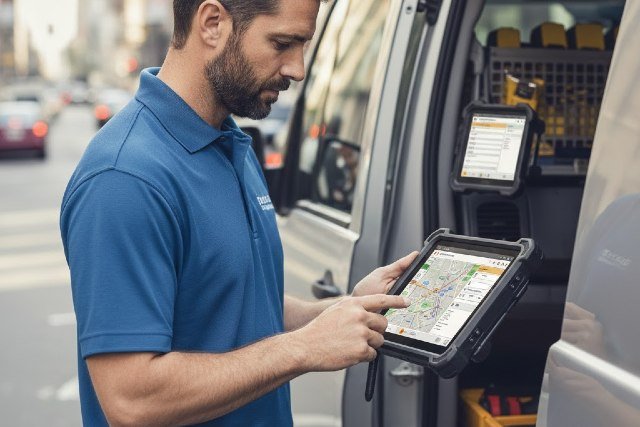
A Mobile Data Terminal has become a critical tool for organizations that rely on real-time information while operating in the field. In the first moments of using a Mobile Data Terminal, users typically notice how quickly data flows between vehicles, control centers, and cloud systems. Whether installed in police cars, ambulances, delivery trucks, or utility vehicles, a Mobile Data Terminal bridges the gap between mobile teams and centralized operations.
- What Is a Mobile Data Terminal?
- How a Mobile Data Terminal Works
- Why Mobile Data Terminals Are Essential Today
- Core Features of a Mobile Data Terminal
- Software Integration and Connectivity
- Mobile Data Terminal Security and Data Protection
- Applications of Mobile Data Terminals in Public Safety
- Mobile Data Terminal Use in Fleet Management
- Role of Mobile Data Terminals in Utilities and Field Services
- Healthcare and Emergency Medical Applications
- Transportation and Public Transit Use Cases
- Hardware Design and Mounting Options
- Touchscreen and User Interface Design
- Real-World Scenario: Emergency Dispatch in Action
- Benefits of Using a Mobile Data Terminal
- Challenges and Considerations
- Choosing the Right Mobile Data Terminal
- Maintenance and Lifecycle Management
- Common Questions About Mobile Data Terminals
- Future Trends in Mobile Data Terminal Technology
- Conclusion: Why the Mobile Data Terminal Matters
As industries increasingly depend on instant communication, location awareness, and digital reporting, the Mobile Data Terminal plays a central role in improving efficiency, safety, and decision-making. This guide explores what a Mobile Data Terminal is, how it works, its core features, and the real-world applications that make it indispensable across multiple sectors.
What Is a Mobile Data Terminal?
A Mobile Data Terminal is a rugged computing device designed for use in vehicles or field environments. It enables users to send, receive, and process data in real time while on the move. Unlike consumer tablets or laptops, Mobile Data Terminals are built to withstand vibration, temperature extremes, and continuous use.
Historically, Mobile Data Terminals gained prominence in public safety, where fast and secure communication is essential. Over time, advances in wireless connectivity and rugged hardware expanded their use into transportation, logistics, utilities, and emergency medical services.
Today, the Mobile Data Terminal is a cornerstone of mobile workforce technology.
How a Mobile Data Terminal Works
A Mobile Data Terminal connects to backend systems through cellular networks, Wi-Fi, or private radio systems. It typically integrates GPS, vehicle sensors, and secure software platforms to provide real-time data exchange.
When a user enters information or receives instructions, the terminal transmits data instantly to dispatch centers or cloud-based systems. This two-way communication allows for live updates, task assignments, and situational awareness.
The result is a continuous data loop that keeps mobile teams informed and coordinated.
Why Mobile Data Terminals Are Essential Today
Modern operations demand speed, accuracy, and accountability. A Mobile Data Terminal supports all three by eliminating delays associated with paper-based processes or voice-only communication. Field workers can access instructions, maps, and records instantly.
Research from transportation and logistics studies shows that real-time data access can improve operational efficiency by over 20 percent. By reducing manual reporting and miscommunication, Mobile Data Terminals help organizations respond faster and work smarter.
This efficiency advantage explains their widespread adoption.
Core Features of a Mobile Data Terminal
The most important feature of a Mobile Data Terminal is ruggedness. These devices are engineered to function reliably in harsh environments, including extreme temperatures and constant vehicle movement.
High-brightness touchscreens allow visibility in direct sunlight, while glove-friendly interfaces support use in demanding conditions. Integrated GPS enables real-time location tracking, and secure connectivity ensures sensitive data remains protected.
Together, these features distinguish Mobile Data Terminals from standard mobile devices.
Software Integration and Connectivity
A Mobile Data Terminal is only as powerful as the software it runs. Most terminals integrate with dispatch systems, fleet management platforms, and enterprise databases. This integration allows seamless data sharing across departments.
Connectivity options often include 4G or 5G cellular, Wi-Fi, and sometimes dedicated radio networks. According to telecommunications research published by GSMA, reliable mobile connectivity is a key factor in successful digital field operations.
Strong integration turns the terminal into a command center on wheels.
Mobile Data Terminal Security and Data Protection
Security is a top priority for any Mobile Data Terminal, especially in sectors like law enforcement and healthcare. These devices often handle sensitive personal and operational data that must be protected.
Security measures typically include encrypted communication, user authentication, and role-based access controls. Cybersecurity standards from organizations such as NIST emphasize encryption and access management for mobile systems, principles commonly applied in Mobile Data Terminal deployments.
Robust security builds trust and ensures regulatory compliance.
Applications of Mobile Data Terminals in Public Safety
Public safety agencies were among the first to adopt the Mobile Data Terminal. Police vehicles use MDTs to access records, receive dispatch information, and file reports without leaving the vehicle.
Fire departments rely on Mobile Data Terminals for routing, hydrant locations, and incident updates. In emergency medical services, MDTs help paramedics receive patient information and communicate with hospitals in real time.
These applications enhance response speed and situational awareness when seconds matter.
Mobile Data Terminal Use in Fleet Management
Fleet operators use Mobile Data Terminals to monitor vehicles, optimize routes, and manage driver performance. Real-time GPS tracking allows dispatchers to adjust routes based on traffic or urgent requests.
Industry research from fleet management associations shows that real-time tracking can reduce fuel costs and improve delivery accuracy. Mobile Data Terminals also support electronic logging and compliance reporting, simplifying regulatory requirements.
For logistics and delivery companies, MDTs are a competitive advantage.
Role of Mobile Data Terminals in Utilities and Field Services
Utility companies use Mobile Data Terminals to support technicians working in the field. Technicians can receive work orders, update job status, and access schematics or manuals directly from the terminal.
This immediate access reduces repeat visits and improves first-time fix rates. Studies in field service management indicate that digital work order systems significantly increase productivity and customer satisfaction.
The Mobile Data Terminal enables a more responsive and informed field workforce.
Healthcare and Emergency Medical Applications
In healthcare, the Mobile Data Terminal plays a critical role in emergency response. Ambulances equipped with MDTs can transmit patient data to hospitals before arrival, allowing medical teams to prepare in advance.
This early information sharing improves patient outcomes and reduces treatment delays. Health technology research consistently highlights the value of pre-arrival data in emergency care.
Mobile Data Terminals support faster, more coordinated medical responses.
Transportation and Public Transit Use Cases
Public transportation systems also benefit from Mobile Data Terminals. Drivers use MDTs for route updates, schedule adherence, and communication with control centers.
Real-time monitoring helps transit authorities respond to delays and service disruptions. Transportation studies show that digital communication tools improve punctuality and passenger satisfaction.
The Mobile Data Terminal contributes to smoother and more reliable transit operations.
Hardware Design and Mounting Options
The physical design of a Mobile Data Terminal is optimized for in-vehicle use. Units are typically mounted on dashboards, consoles, or specialized brackets that ensure stability and visibility.
Rugged casings protect internal components from vibration and shock. Passive or active cooling systems prevent overheating during long operating hours.
Thoughtful hardware design ensures usability without distracting the driver.
Touchscreen and User Interface Design
A well-designed interface is essential for safe and effective use of a Mobile Data Terminal. Touchscreens are often optimized for quick interactions, with large icons and simplified menus.
Voice prompts and alerts reduce the need for visual attention, enhancing safety. Human–machine interface research shows that intuitive design lowers cognitive load and error rates.
User-friendly interfaces improve adoption and performance.
Real-World Scenario: Emergency Dispatch in Action
Imagine a traffic accident reported during peak hours. A dispatcher sends details through a Mobile Data Terminal to nearby responders. The MDT displays the exact location, route guidance, and incident notes instantly.
As responders approach the scene, updates are transmitted in real time. This coordinated flow of information reduces response time and improves on-scene effectiveness.
Such scenarios demonstrate the real-world impact of Mobile Data Terminals.
Benefits of Using a Mobile Data Terminal
The benefits of a Mobile Data Terminal extend beyond convenience. Improved communication reduces errors, while real-time data access enhances decision-making.
Organizations also benefit from better documentation and accountability. Digital records created through MDTs are easier to store, analyze, and audit than paper forms.
These advantages contribute to measurable operational improvements.
Challenges and Considerations
Despite its advantages, deploying a Mobile Data Terminal requires careful planning. Hardware costs, software integration, and training must be considered.
Connectivity limitations in remote areas can affect performance, though offline modes help mitigate this issue. Organizations should assess network coverage and data security requirements before implementation.
Addressing these factors ensures successful deployment.
Choosing the Right Mobile Data Terminal
Selecting the right Mobile Data Terminal depends on the use case. Public safety agencies may prioritize security and ruggedness, while logistics companies may focus on GPS accuracy and software compatibility.
Screen size, processing power, and mounting options should match operational needs. Vendor support and update cycles also matter for long-term reliability.
A needs-based approach leads to better outcomes.
Maintenance and Lifecycle Management
Proper maintenance extends the life of a Mobile Data Terminal. Regular software updates keep systems secure and compatible with evolving networks.
Hardware inspections ensure mounts, power connections, and displays remain functional. Many organizations include MDTs in scheduled vehicle maintenance routines.
Lifecycle management reduces downtime and replacement costs.
Common Questions About Mobile Data Terminals
What is a Mobile Data Terminal used for?
A Mobile Data Terminal is used to access, transmit, and manage data in real time while operating in vehicles or field environments.
Are Mobile Data Terminals different from tablets?
Yes, Mobile Data Terminals are more rugged, vehicle-integrated, and designed for continuous professional use.
Do Mobile Data Terminals require internet access?
They typically use cellular or radio networks, but many support offline operation with data syncing when connectivity returns.
Are Mobile Data Terminals secure?
Yes, they use encryption and access controls to protect sensitive data when properly configured.
Future Trends in Mobile Data Terminal Technology
The future of the Mobile Data Terminal is closely tied to advances in connectivity and automation. The rollout of 5G networks promises faster data transfer and lower latency.
Integration with AI-driven analytics and vehicle telematics is also increasing. Industry forecasts from technology research firms suggest that smarter, more connected MDTs will play a larger role in autonomous and semi-autonomous operations.
Innovation continues to expand their capabilities.
Conclusion: Why the Mobile Data Terminal Matters
A Mobile Data Terminal is more than just a screen in a vehicle. It is a powerful tool that connects mobile workers to critical information, improves coordination, and enhances safety across industries.
From public safety and healthcare to logistics and utilities, the Mobile Data Terminal supports faster decisions and better outcomes. As organizations continue to digitize field operations, the Mobile Data Terminal will remain a key technology driving efficiency, reliability, and real-time insight.