Choosing the right lifting tool can make a significant difference in safety, efficiency, and ease of use. When beginners compare an Airbag Jack with a traditional hydraulic jack, the immediate question becomes which option offers better performance for everyday automotive tasks. Since both tools serve the same purpose but operate differently, understanding their design, functionality, and real-world behavior is essential. This comprehensive guide explains everything you need to know so you can select the right tool confidently.
- What Is an Airbag Jack?
- Understanding Hydraulic Jacks and Their Traditional Role
- Airbag Jack vs Hydraulic Jack: Key Feature Comparison
- Real-World Examples: When an Airbag Jack Works Best
- Real-World Examples: When a Hydraulic Jack Is the Best Choice
- Industry Trends and Data Supporting Each Choice
- Frequently Asked Questions About Airbag Jacks and Hydraulic Jacks
- Conclusion: Choosing the Right Lifting Tool for Your Needs
What Is an Airbag Jack?
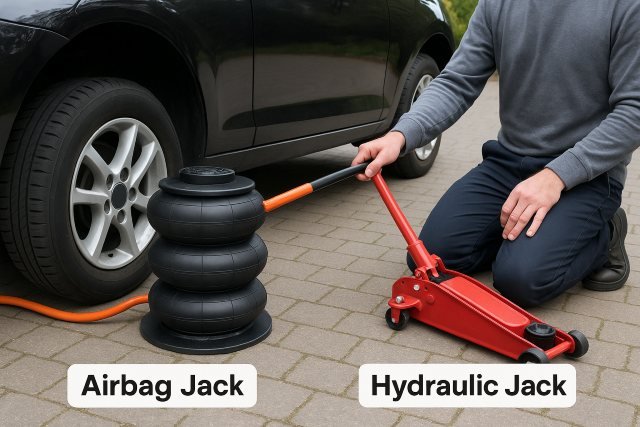
An Airbag Jack, sometimes referred to as an inflatable jack or air lift bag, uses compressed air to raise a vehicle off the ground. The design focuses on simplicity by replacing mechanical components with a durable, high-pressure inflatable structure. Once connected to an air compressor or exhaust source, the airbag expands, lifting the vehicle steadily. This mechanism removes the need for physical pumping motions or heavy mechanical leverage.
For users who want a tool that requires minimal effort and provides quick lifting, the Airbag Jack often feels more accessible than a hydraulic alternative. Its rising popularity is supported by smoother operation, less strain on the user, and stable lifting power when used correctly.
Understanding Hydraulic Jacks and Their Traditional Role
A hydraulic jack relies on hydraulic fluid and manual pumping to lift vehicles. This classic design has been used for decades in automotive workshops, tire service shops, and professional garages. Hydraulic jacks are known for their strength and precision, which is why many technicians prefer them for heavy-duty applications.
The mechanism works by increasing fluid pressure inside a piston, creating enough upward force to lift a vehicle. Despite requiring manual effort, many users trust hydraulic jacks because of their consistent performance and long-standing reputation in the automotive world.
Airbag Jack vs Hydraulic Jack: Key Feature Comparison
Ease of Use and User Experience
One of the most noticeable differences between the Airbag Jack and the hydraulic jack is ease of use. The Airbag Jack operates with minimal physical involvement, which benefits beginners, older users, or anyone with limited strength. Simply connecting it to a compressor and watching it inflate removes the need for strenuous pumping.
Hydraulic jacks demand more physical movement and require users to find a stable pumping rhythm. Although the effort is manageable, it still requires more time compared to the immediate expansion of an airbag model. Newer users might find the Airbag Jack more comfortable because of its simplicity.
Lifting Power and Stability
Both lifting tools offer strong performance, but they excel in different ways. High-quality Airbag Jacks are surprisingly capable, especially for light trucks, SUVs, and sedans. Their stability improves when used on flat, solid surfaces. Hydraulic jacks, on the other hand, offer traditional mechanical precision and may provide more controlled lifting in heavy-duty environments.
In real-world scenarios, vehicle weight distribution plays an important role. For instance, mechanics working on heavier vehicles often favor hydraulic jacks because of their rigid construction and focused lifting point. Meanwhile, Airbag Jacks work extremely well for off-road drivers who need quick recovery solutions on uneven ground.
Speed and Efficiency During Lifting
Speed is an area where Airbag Jacks generally outperform hydraulic jacks. Because they rely on air pressure, they can lift vehicles in seconds without the repetitive pumping that hydraulic models require. This is especially helpful in roadside emergency situations where time matters.
Hydraulic jacks offer slower lifting but allow precise control. This precision can be beneficial when working under the vehicle or performing tasks requiring accuracy. Users must choose between speed and mechanical fine-tuning based on their workflows.
Durability and Maintenance
Durability depends on materials, usage habits, and overall care. Airbag Jacks are made of reinforced rubber and require protection from sharp edges or extremely hot surfaces. Their maintenance is fairly simple, usually involving inspection for punctures or leaks.
Hydraulic jacks require periodic inspection of seals, hydraulic fluid levels, and mechanical joints. They may last many years when well maintained, which explains why professionals still rely on them. Each tool demands its own set of maintenance routines, so users should determine which one suits their maintenance comfort level.
Real-World Examples: When an Airbag Jack Works Best
In practical situations, many off-road enthusiasts use Airbag Jacks because they work well on sand, mud, snow, and uneven terrain. For example, drivers stuck in remote areas can deploy an airbag lift even when a traditional hydraulic jack cannot maintain stable ground contact. This flexibility makes airbag models ideal for adventurous environments.
Daily drivers also appreciate Airbag Jacks for quick tire changes. Their fast expansion speeds up the process, making roadside tasks less stressful. The simple setup is especially useful for beginners who may feel intimidated by mechanical jacks.
Real-World Examples: When a Hydraulic Jack Is the Best Choice
Professional mechanics and automotive technicians often prefer hydraulic jacks because of their precision and power. In workshops where vehicles must be lifted routinely, hydraulic systems provide predictable results and long-lasting reliability.
A mechanic performing brake inspections, suspension repairs, or under-car maintenance benefits from the controlled lifting motion of hydraulic jacks. In structured working environments where the surface is flat and stable, hydraulic jacks continue to outperform most alternatives.
Industry Trends and Data Supporting Each Choice
Automotive trends show a growing interest in portable lifting solutions. Airbag Jacks fit this trend well because they offer mobility and convenience. The rise of off-road vehicles and recreational driving has contributed to their popularity.
Hydraulic jacks remain the industry standard for workshops. Their familiarity, reliability, and ability to handle repetitive tasks make them indispensable. According to statistics from automotive equipment reports, hydraulic lifting tools remain the most commonly used devices in professional garages worldwide.
These trends demonstrate that both tools have a strong presence but serve different types of users with different needs.
Frequently Asked Questions About Airbag Jacks and Hydraulic Jacks
Is an Airbag Jack safe for beginners?
Yes. Airbag Jacks are beginner-friendly because they require minimal physical effort and have straightforward operation instructions.
Do hydraulic jacks lift heavier vehicles more reliably?
In many cases, hydraulic jacks provide greater precision and stability for heavy-duty lifting, especially in workshop environments.
Which jack is faster?
Airbag Jacks generally lift vehicles faster because they rely on air expansion rather than mechanical pumping.
Are Airbag Jacks durable?
High-quality Airbag Jacks are very durable when used on proper surfaces and maintained correctly.
Which option is better overall?
The answer depends on your environment, skill level, and lifting needs. Airbag Jacks excel in speed and convenience, while hydraulic jacks offer precision and professional-grade lifting power.
Conclusion: Choosing the Right Lifting Tool for Your Needs
Deciding between an Airbag Jack and a hydraulic jack depends entirely on your lifting environment, experience level, and expectations. The Airbag Jack is ideal for beginners, roadside emergencies, and off-road conditions where speed and ease of use matter most. Meanwhile, the hydraulic jack remains the dependable choice for mechanics, technicians, and seasoned users who rely on precision and long-term durability. Each tool brings unique advantages to the table, making the best choice the one that fits your lifestyle and lifting demands. By understanding their strengths and limitations, you can make a confident and informed decision that keeps you safe and prepared for any vehicle-related task.