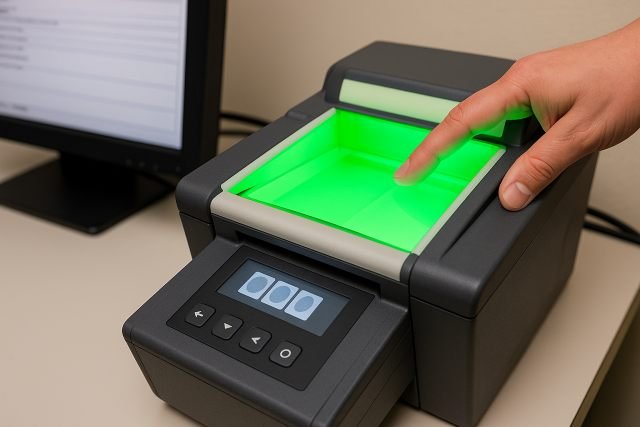
A Live Scan fingerprinting machine is an essential tool for businesses, law enforcement agencies, background check facilities, HR departments, licensing organizations, and security firms that rely on fast, accurate, and compliant digital fingerprinting. Unlike traditional ink methods, live scan machines capture high-resolution electronic fingerprints with minimal mess, quick processing, and direct submission to agencies such as the FBI, DOJ, FINRA, and state-level background systems.
- 1. High-Resolution Fingerprint Sensor
- 2. FBI Appendix F Certification
- 3. Intuitive Software Interface
- 4. Secure Data Encryption
- 5. Connectivity & Integration Options
- 6. Rugged Build Quality
- 7. Portability Options
- 1. HID/Lumidigm (Top Choice for Accuracy)
- 2. Integrated Biometrics (Best for Portable Devices)
- 3. Futronic (Best Budget-Friendly Option)
- 4. Digital Persona/ Crossmatch
- 5. Suprema BioMini
- 1. Install Software and Drivers
- 2. Calibrate the Scanner
- 3. Connect to Your Agency Portal
- 4. Train Operators
- 5. Test Submissions
In this guide, we break down the top features to look for, typical pricing, setup requirements, compliance considerations, and expert tips to help you choose the right live scan fingerprinting machine for your organization.
What Is a Live Scan Fingerprinting Machine?
A live scan fingerprinting machine is a digital biometric device that electronically captures an individual’s fingerprints using a specialized optical, capacitive, or multispectral sensor. The captured prints are processed, encrypted, and transmitted to background check authorities for identification, licensing, or employment screening.
Common Uses
- Criminal background checks
- Employment screenings
- Professional licensing (teachers, nurses, contractors)
- Immigration and visa applications
- FBI Channeler submissions
- Security clearances
- Volunteer programs
Live scan machines are designed for high accuracy, quick turnaround, and compliance with national biometric standards.
Top Features of a Live Scan Fingerprinting Machine
1. High-Resolution Fingerprint Sensor
The sensor is the core component. Look for:
- 500 DPI or higher (FBI standard)
- Multispectral imaging (captures difficult fingerprints)
- Anti-spoofing technology
- Fast capture speed (1–2 seconds per finger)
Machines with multispectral LED sensors can capture fingerprints from dry, wet, or worn skin — common issues in law enforcement and healthcare.
2. FBI Appendix F Certification
Any machine intended for official background checks must meet the FBI Appendix F Image Quality Standards.
Why It Matters
- Ensures high-quality prints
- Required for legal compliance
- Reduces fingerprint rejections
Appendix F certification is a non-negotiable requirement.
3. Intuitive Software Interface
Most live scan devices come with software for:
- Finger capture
- Submission to agencies
- Quality control checks
- Demographic data entry
Look for systems with:
- User-friendly displays
- Guided workflows
- Real-time feedback
- Automatic error detection
4. Secure Data Encryption
Security is critical. Top machines offer:
- AES-256 encryption
- Secure storage
- Compliant data transmission
- Audit logs
- Built-in privacy safeguards
This protects sensitive biometric information during capture and submission.
5. Connectivity & Integration Options
Look for compatibility with:
- FBI Channelers
- DOJ systems
- State identification bureaus
- Local background check portals
- IT security networks
- Cloud-based submission systems
USB, Ethernet, and Wi-Fi options are common.
6. Rugged Build Quality
If used heavily (police stations, field offices, mobile units), choose a device with:
- Durable glass platen
- Shock-resistant casing
- Scratch-resistant surface
- Easy cleaning
7. Portability Options
Some live scan fingerprinting machines are lightweight and compact.
Choose portable units when needed for:
- Mobile background checks
- Remote job fairs
- Police field operations
Types of Live Scan Fingerprinting Machines
| Type | Best For | Key Benefit |
|---|---|---|
| Desktop Live Scan Units | Law enforcement, high-volume centers | Most accurate and durable |
| Portable Live Scan Devices | Mobile fingerprinting, small businesses | Lightweight and cost-effective |
| All-in-One Live Scan Systems | Agencies wanting plug-and-play operation | Built-in software + hardware |
| Kiosk-Based Live Scan Machines | Public fingerprint stations | Self-service automation |
Best Live Scan Fingerprinting Machine Brands (2025)
Below are industry-leading brands known for accuracy, compliance, and long-term reliability.
1. HID/Lumidigm (Top Choice for Accuracy)
Features:
- Multispectral sensors
- Excellent capture quality
- FBI Appendix F certified
Best for: Law enforcement agencies and high-volume centers.
2. Integrated Biometrics (Best for Portable Devices)
Features:
- Lightweight optical scanners
- High DPI
- Rugged design
Best for: Mobile fingerprinting providers and field agents.
3. Futronic (Best Budget-Friendly Option)
Features:
- Affordable
- FBI-certified options
- Good image quality
Best for: Small businesses and low-volume operations.
4. Digital Persona/ Crossmatch
Features:
- Excellent software integration
- Easy to use
- High capture consistency
Best for: HR departments and screening agencies.
5. Suprema BioMini
Features:
- High-quality imaging
- Compact design
- Flexible API
Best for: Developers integrating biometrics into custom systems.
Live Scan Fingerprinting Machine Pricing Breakdown
Prices vary widely based on features and certifications.
| Category | Price Range | Best For |
|---|---|---|
| Entry-Level Units | $800–$2,500 | Small businesses, low-volume screenings |
| Mid-Range Machines | $3,500–$6,500 | Mobile fingerprint operators, staffing firms |
| Advanced Desktop Systems | $7,000–$12,000 | Police stations, background check agencies |
| All-in-One Kiosk Systems | $10,000–$20,000 | Public access sites, government facilities |
Additional Costs
- Software license fees: $200–$1,000/year
- Maintenance & support: $150–$500/year
- Certification fees (state-specific): Varies
- Training & onboarding: Optional, recommended
How to Set Up a Live Scan Fingerprinting Machine
Setting up a live scan fingerprinting machine is straightforward if you follow proper guidelines.
1. Install Software and Drivers
Most machines ship with:
- Capture software
- Scanner drivers
- Installation guide
Ensure compatibility with Windows, Mac, or proprietary systems.
2. Calibrate the Scanner
Calibration ensures accuracy by:
- Adjusting lighting
- Checking platen cleanliness
- Ensuring correct DPI
Most machines include auto-calibration tools.
3. Connect to Your Agency Portal
You may need:
- ORI number
- Billing code
- Agency license keys
- Web portal login
Follow your local DOJ, FBI, or state background check instructions.
4. Train Operators
Training should include:
- Proper finger rolling technique
- Hygiene and cleaning
- Data entry
- Error resolution
- Secure data handling
5. Test Submissions
Always perform:
- Test captures
- Test submissions
- Quality checks
This minimizes rejections and delays.
Compliance & Legal Considerations
Compliance varies by region, but most agencies require:
- FBI Appendix F certification
- Use of approved software
- Secure encryption
- ORI linkage
- Proper operator training
Refer to:
FBI CJIS Division – Biometric Specifications
https://www.fbi.gov/services/cjis/fingerprints-and-other-biometrics
Common Problems & Troubleshooting Tips
1. Poor Fingerprint Quality
Solutions:
- Clean platen
- Apply lotion or alcohol wipe
- Adjust lighting
2. Software Crash or Delays
Solutions:
- Update drivers
- Restart scanner
- Free system memory
3. Smudged Prints
Solutions:
- Ask user to relax
- Use proper finger rolling technique
- Lower pressure on the glass
FAQ: Live Scan Fingerprinting Machines
1. Are live scan machines better than ink fingerprinting?
Yes — live scan is faster, cleaner, and more accurate, reducing rejection rates.
2. How long does live scan fingerprinting take?
Typically 5–15 minutes, depending on software and agency requirements.
3. Do I need certification to operate a live scan machine?
Some states require operator certification; check local regulations.
4. Can I use one machine for multiple agencies?
Yes, if the software supports multi-agency submissions.
5. How long does a live scan machine last?
With proper maintenance, 5–10+ years.
Conclusion
A live scan fingerprinting machine is an invaluable investment for organizations that require fast, accurate, and secure biometric identification. Whether you’re running a fingerprinting business, managing HR screenings, or operating a law enforcement agency, choosing the right device can dramatically improve efficiency, compliance, and customer satisfaction. By understanding key features, pricing, and setup requirements, you can confidently select the best machine for your needs.