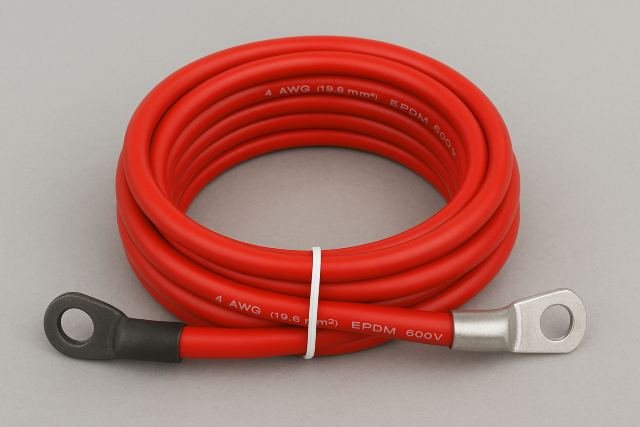
A 4 AWG battery cable is one of the most reliable and commonly used wiring options for automotive, marine, RV, and solar power systems. Known for its ideal balance of thickness, flexibility, and current-carrying capacity, 4 AWG cable delivers consistent power to high-demand electrical components. Whether you’re upgrading a car battery, wiring an inverter, or installing a boat battery system, choosing the right cable can significantly affect performance, safety, and long-term durability.
- 1. Automotive Applications
- 2. Marine Applications
- 3. RV and Camper Wiring
- 4. Solar Power and Off-Grid Systems
- Copper (OFC) Cable — Best Performance
- CCA (Copper-Clad Aluminum) Cable — Budget Option
- 1. WindyNation 4 AWG Battery Cable (Best Overall)
- 2. InstallGear 4 AWG Cable (Best Budget Option)
- 3. Selterm Marine-Grade 4 AWG Cable (Best Marine Choice)
- 4. Schumacher 4 AWG Booster/Battery Cable (Best for Automotive)
- 1. Choose the Right Material
- 2. Consider Your Environment
- 3. Check Insulation Rating (Heat/Cold Resistant)
- 4. Measure the Exact Length Needed
- 5. Confirm Compatibility with Lugs and Terminals
- 1. Use a Quality Crimper
- 2. Heat-shrink All Connections
- 3. Avoid Sharp Bends
- 4. Secure With Clamps
- 5. Test Voltage Before Use
- 1. Can a 4 AWG cable handle 200 amps?
- 2. Is CCA safe for car batteries?
- 3. Is 4 AWG thick enough for a 2000W inverter?
- 4. What’s the difference between welding cable and battery cable?
- 5. Can I use 4 AWG battery cable for solar?
This guide breaks down everything you need to know about the 4 AWG battery cable, including specifications, common applications, material types, and top brand comparisons backed by expert insights.
What Is a 4 AWG Battery Cable?
A 4 AWG (American Wire Gauge) battery cable is a thick, multi-strand copper cable designed to carry high current loads with minimal resistance. AWG numbers decrease as thickness increases — meaning 4 AWG is thicker than 6 AWG but thinner than 2 AWG or 0 AWG.
Key Specifications of 4 AWG Battery Cable
- Diameter: ~5.19 mm (wire only; insulation adds size)
- Ampacity: Typically 100–150 amps, depending on insulation and temperature
- Resistance: Approx. 0.248 ohms per 1,000 feet
- Material: OFC copper or CCA (copper-clad aluminum)
Because of its capacity and flexibility, 4 AWG cable is widely used across different industries.
Common Uses for a 4 AWG Battery Cable
A 4 AWG cable handles medium-to-high current loads, making it ideal for both consumer and commercial applications.
1. Automotive Applications
4 AWG is frequently used for:
- Car battery replacements
- Alternator wiring
- Starter cables
- Big 3 Upgrade
- Aftermarket sound systems (medium-power amplifiers)
Its low resistance helps reduce voltage drop under heavy load.
2. Marine Applications
Boats require corrosion-resistant cable materials. A 4 AWG marine-grade cable often includes:
- Tinned copper
- Salt-resistant insulation
- Heat-resistant sheathing
Common uses include:
- Battery banks
- Trolling motor hookups
- Bilge pumps
- Navigation electronics
3. RV and Camper Wiring
RVs rely heavily on DC power. 4 AWG is often used for:
- Inverter/charger wiring
- House battery banks
- Solar system connections
- Power distribution panels
4. Solar Power and Off-Grid Systems
4 AWG cable is compatible with:
- 12V and 24V solar battery banks
- Charge controller connections
- Inverter wiring (up to moderate wattages)
Solar Code Requirements (NEC 690) often recommend low-resistance cable for efficiency — making 4 AWG a popular choice.
4 AWG Battery Cable: Copper vs. CCA
One of the biggest decisions is choosing between OFC copper and CCA (Copper-Clad Aluminum).
Copper (OFC) Cable — Best Performance
Pros
- Lowest resistance
- Highest conductivity
- Maximum ampacity
- Extremely durable
- Heat-resistant and flexible
Cons
- More expensive
- Heavier
Ideal for: automotive, marine, RV, and solar systems requiring consistent, safe power.
CCA (Copper-Clad Aluminum) Cable — Budget Option
Pros
- Cheaper
- Lightweight
- Adequate for low-to-medium power
Cons
- Lower conductivity (~60% of copper)
- Higher voltage drop
- Less durable
- Not recommended for marine use
Ideal for: budget audio systems, light-duty wiring.
Top 4 AWG Battery Cable Brands: Comparison Guide
Below are industry-recognized brands known for durability and reliability.
1. WindyNation 4 AWG Battery Cable (Best Overall)
Features
- 100% OFC copper
- Marine-grade tinned wires
- PVC insulation
- Pre-crimped options
Best For
Solar, marine, RV, automotive
2. InstallGear 4 AWG Cable (Best Budget Option)
Features
- CCA wiring
- Flexible insulation
- Multiple color options
Best For
Car audio, light-duty battery runs
3. Selterm Marine-Grade 4 AWG Cable (Best Marine Choice)
Features
- UL-listed
- Tinned copper
- Thick insulation
Best For
Boats, marine battery banks, saltwater environments
4. Schumacher 4 AWG Booster/Battery Cable (Best for Automotive)
Features
- High-strand copper
- Heat-resistant insulation
- Designed for engine bays
Best For
Starter wiring, alternator upgrades
Brand Comparison Table: Best 4 AWG Battery Cables
| Brand | Material | Best Use Case | Flexibility | Price Level |
|---|---|---|---|---|
| WindyNation | OFC Copper | Solar, marine, RV | High | $$$ |
| InstallGear | CCA | Automotive audio | Very High | $ |
| Selterm | Tinned Copper | Marine environments | Medium | $$$ |
| Schumacher | OFC Copper | Cars & trucks | High | $$ |
4 AWG Battery Cable: Recommended Amp Loads
| Voltage | Max Safe Amp Load (Copper) | Max Safe Amp Load (CCA) |
|---|---|---|
| 12V | 100–150A | 60–90A |
| 24V | 75–125A | 50–75A |
| 48V | 40–70A | 25–50A |
Note: Always refer to manufacturer specifications for accuracy.
How to Choose the Best 4 AWG Battery Cable
1. Choose the Right Material
Copper > CCA for power reliability.
2. Consider Your Environment
Marine systems require tinned copper + corrosion protection.
3. Check Insulation Rating (Heat/Cold Resistant)
Look for 105°C-rated insulation in automotive applications.
4. Measure the Exact Length Needed
Long cables increase voltage drop.
5. Confirm Compatibility with Lugs and Terminals
Use properly sized lugs (4 AWG ring terminals).
Installation Tips for 4 AWG Battery Cable
1. Use a Quality Crimper
Poor crimps can cause overheating.
2. Heat-shrink All Connections
Prevents corrosion and moisture intrusion.
3. Avoid Sharp Bends
Maintain natural cable curvature.
4. Secure With Clamps
Prevents rattling and damage.
5. Test Voltage Before Use
Use a multimeter to verify system performance.
Common Questions About 4 AWG Battery Cable
1. Can a 4 AWG cable handle 200 amps?
Not safely. 4 AWG copper supports around 100–150 amps, depending on insulation.
2. Is CCA safe for car batteries?
It can work but is not recommended for high-load systems or engine wiring.
3. Is 4 AWG thick enough for a 2000W inverter?
Sometimes — depends on length and voltage.
For most 2000W setups, 2 AWG or 0 AWG is recommended.
4. What’s the difference between welding cable and battery cable?
Welding cable is more flexible, but battery cable has thicker insulation for engine bays and harsh environments.
5. Can I use 4 AWG battery cable for solar?
Yes — especially for 12V and 24V systems up to mid-range wattages.
Conclusion
The 4 AWG battery cable is a versatile, durable, and efficient wiring choice for automotive, marine, RV, and off-grid power systems. Its capacity to handle moderate to high current loads makes it ideal for battery banks, inverters, alternators, and demanding electrical applications. When selecting a cable, prioritize OFC copper, quality insulation, correct length, and trusted brands to ensure long-lasting, safe performance. With proper installation, a high-quality 4 AWG cable delivers reliable power where it matters most.