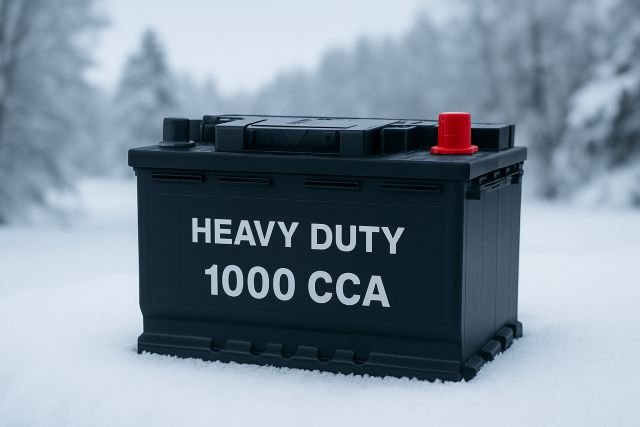
A 1000 CCA Battery is one of the most powerful starting batteries available for vehicles that demand high cranking performance. Designed for diesel engines, heavy-duty trucks, off-road vehicles, and equipment operating in extreme climates, these batteries provide exceptional starting power — even in freezing conditions. Within the first 100 words, it’s clear: if reliability, cold-weather performance, or rugged durability are priorities, a 1000 CCA battery stands out as a top choice.
- 1. Reliable Starts in Freezing Temperatures
- 2. Consistent Voltage Delivery in Harsh Weather
- 3. Longer Cranking Time for Hard-Starting Engines
- 1. Thicker Lead Plates
- 2. Vibration Resistance for Off-Road and Work Vehicles
- 3. Longer Service Life Under Heavy Loads
- 1. Better for Diesel Engines
- 2. Supports Power-Hungry Accessories
- 3. Ideal for Extreme Climates and Heavy-Duty Use
In this detailed guide, we’ll break down how a 1000 CCA battery performs in cold temperatures, what makes it durable, and why it’s known for unmatched reliability in demanding real-world scenarios.
What Is a 1000 CCA Battery?
Before diving into performance, it’s important to understand Cold Cranking Amps (CCA).
CCA measures how many amps a battery can deliver at 0°F (-17.8°C) for 30 seconds while maintaining at least 7.2 volts.
A 1000 CCA battery means:
- It delivers 1000 amps of starting power in freezing temperatures
- It is ideal for large engines
- It offers superior performance for cold starts
- It withstands higher stress levels than standard batteries
Why Cold Weather Performance Matters
Cold temperatures slow down chemical reactions inside a battery. According to Battery Council International, at 32°F (0°C) a battery loses roughly 35% of its power, and at 0°F (-17.8°C) it can lose over 60%.
This is why high-CCA batteries matter — especially for:
- Diesel trucks
- SUVs
- Tractors
- Heavy machinery
- RVs and large motorhomes
- Work trucks
Without sufficient CCA, your vehicle may struggle — or fail — to start in winter conditions.
Cold Weather Performance of a 1000 CCA Battery
1. Reliable Starts in Freezing Temperatures
A 1000 CCA battery provides significantly more starting power than traditional automotive batteries (usually 550–750 CCA).
Benefits in cold climates:
- Stronger engine cranking in below-zero temperatures
- Reduced risk of slow or failed starts
- Supports glow plugs and auxiliary heaters in diesel engines
- Maintains performance despite winter power loss
Example:
A diesel truck in North Dakota operating at −10°F typically needs 850–1000 CCA to ensure a reliable cold start. Standard batteries often fail at this range.
2. Consistent Voltage Delivery in Harsh Weather
Low temperatures increase internal resistance inside a battery.
A 1000 CCA battery ensures:
- Stable voltage supply
- Faster crank rotation
- Better ignition performance
- Reduced strain on starter motors
This reduces long-term wear on your vehicle’s electrical system.
3. Longer Cranking Time for Hard-Starting Engines
Cold engines need longer cranking periods because:
- Oil thickens
- Fuel atomization weakens
- Combustion is delayed
A high-CCA battery supports longer, more powerful cranks — critical for large diesel engines and older vehicles.
Durability of a 1000 CCA Battery
Durability is a key factor for anyone choosing a high-performance battery. 1000 CCA batteries are built stronger than typical car batteries.
1. Thicker Lead Plates
High-CCA batteries often use:
- Extra-thick lead plates
- Denser plate material
- Specialized grid structures
This increases:
- Strength
- Conductivity
- Resistance to vibration
2. Vibration Resistance for Off-Road and Work Vehicles
Construction vehicles, tractors, and 4×4 trucks experience heavy vibration.
A 1000 CCA battery typically includes:
- Reinforced casing
- Anti-vibration mounting systems
- Heavy-duty internal connections
This improves lifespan by reducing mechanical wear.
3. Longer Service Life Under Heavy Loads
High-CCA batteries can withstand:
- Frequent starts
- High accessory loads (winches, lights, audio systems)
- Extreme temperature fluctuations
Many models last 4–6 years, even under strenuous use.
Reliability of a 1000 CCA Battery
1. Better for Diesel Engines
Diesels require more cranking power because:
- Higher compression ratios
- Glow plug operation
- Larger engine components
A 1000 CCA battery ensures reliable ignition even in harsh environments.
2. Supports Power-Hungry Accessories
A 1000 CCA battery is ideal if your vehicle uses:
- Plows
- Winches
- Air compressors
- Light bars
- Inverters
- Aftermarket audio systems
With more instant power, electrical components stay stable during start-ups.
3. Ideal for Extreme Climates and Heavy-Duty Use
These batteries are designed to operate consistently in:
- Arctic conditions
- Desert heat
- High-altitude environments
- Construction sites
- Rural or remote areas
They excel where standard batteries fail.
Comparison Table: 1000 CCA Battery vs Standard Car Battery
| Feature | 1000 CCA Battery | Standard Car Battery |
|---|---|---|
| CCA Rating | 1000 | 550–750 |
| Cold Start Reliability | Excellent | Moderate |
| Lifespan in Harsh Conditions | Long | Average |
| Best For | Diesel, trucks, equipment | Sedans, small cars |
| Vibration Resistance | High | Medium |
| Cost | Higher | Lower |
Common Questions About 1000 CCA Battery Performance (FAQ)
Do I really need a 1000 CCA battery?
Yes — if you drive a diesel engine, heavy-duty vehicle, or live in a cold climate.
Will a 1000 CCA battery damage my vehicle?
No. A vehicle only draws the power it needs. Higher CCA simply means more available starting power.
Is a 1000 CCA battery good for hot weather?
Yes. High-CCA batteries also perform well in heat due to superior internal construction.
Can I replace a 700 CCA battery with a 1000 CCA battery?
Yes — if it physically fits your vehicle, the upgrade improves reliability.
How long does a 1000 CCA battery last?
Typically 4–6 years, depending on usage, climate, and maintenance.
Real-World Example: Diesel Truck in Cold Climate
A driver in Minnesota switched from a 750 CCA battery to a 1000 CCA model. Their truck:
- Started faster in −15°F conditions
- No longer needed jump starts at job sites
- Showed reduced strain on glow plugs
- Improved electrical system stability
This demonstrates the real-world reliability a higher-CCA battery provides.
Choosing the Right 1000 CCA Battery
When selecting a 1000 CCA battery, consider:
1. Battery Type
- AGM (best durability + cold weather performance)
- Flooded lead-acid (more affordable)
- Lithium (premium, lightweight, long-lasting)
2. Reserve Capacity (RC)
Higher RC = better support for accessories.
3. Vibration Resistance
Important for off-road and work vehicles.
4. Warranty & Brand Reputation
Look for at least a 3-year warranty.
Recommended Uses for a 1000 CCA Battery
- Diesel pickup trucks
- 18-wheelers
- Tow trucks
- Construction equipment
- Agricultural machinery
- Large SUVs
- High-performance audio vehicles
- Vehicles in cold climates
Conclusion
A 1000 CCA Battery offers exceptional cold-weather performance, outstanding durability, and industry-leading reliability for heavy-duty vehicles, diesel engines, and drivers who need maximum starting power. Its ability to deliver strong cranking currents in freezing temperatures, resist vibration, and support demanding electrical systems makes it one of the best investments for long-term vehicle performance.
If you live in a cold climate, operate heavy equipment, or drive a powerful diesel engine, a 1000 CCA battery ensures your vehicle starts with confidence — every time.